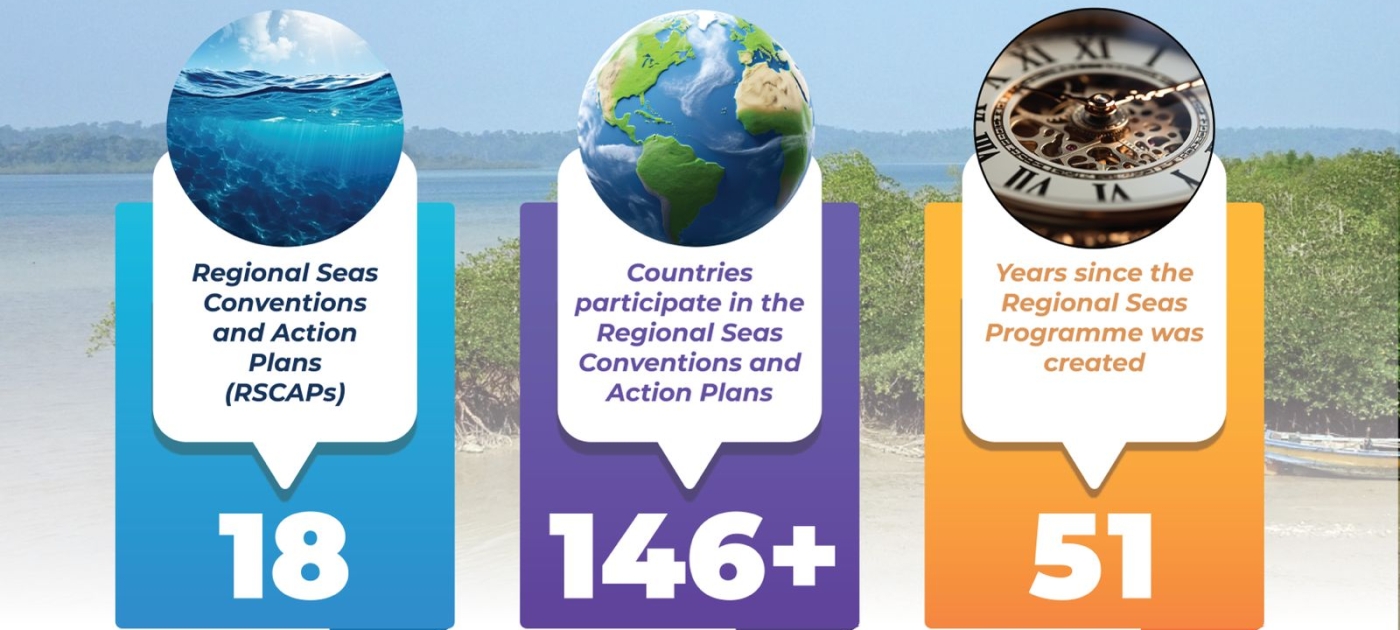
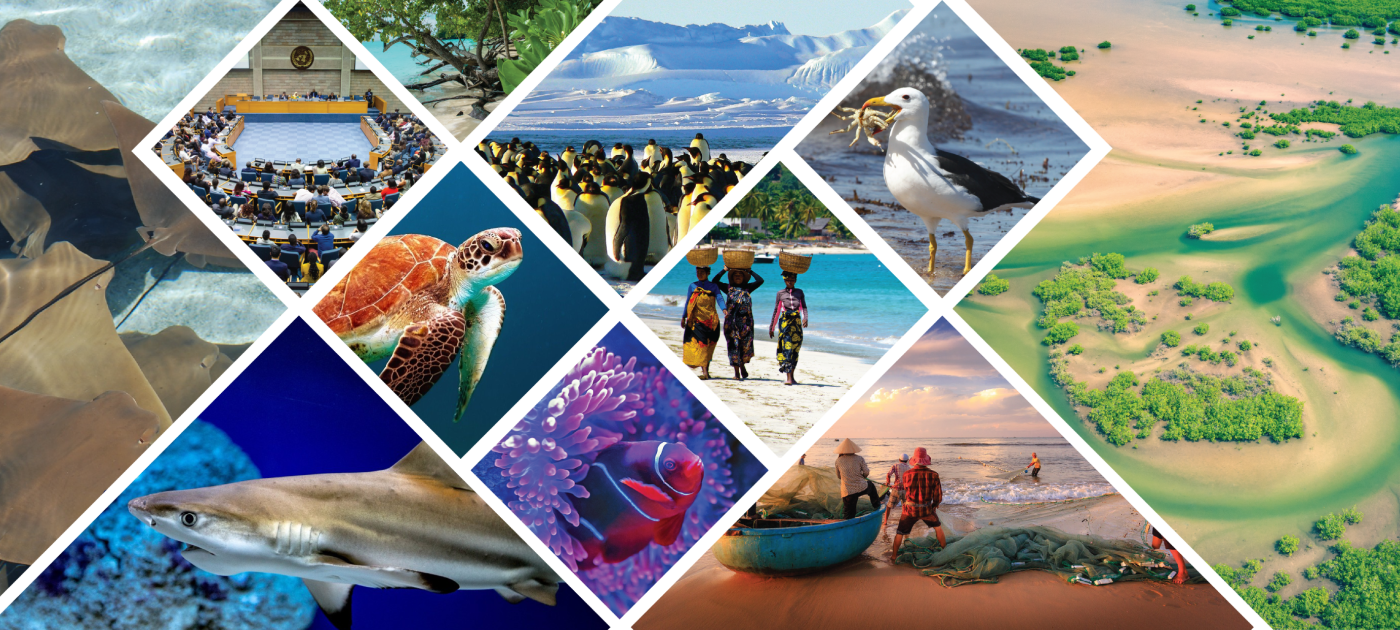
The UNEP Regional Seas Programme is UNEP’s most important regional mechanism for conservation of the marine and coastal environment since its establishment in 1974. It is an action-oriented programme that implements region-specific activities, bringing together stakeholders including governments, scientific communities and civil societies. These Multilateral Environmental Agreements are governed by their own meetings of the Contracting Parties.

The Regional Seas Conventions and Action Plans (RSCAPs) provide inter-governmental frameworks to address the degradation of the oceans and seas at a regional level, initially focusing on pollution at sea, such as oil spills and movement of hazardous waste, as well as land-based sources of pollution, for example plastics, wastewater and excess nutrients. Now, many have embraced the ecosystems approach to managing marine resources and have protocols on protected areas, marine litter, combating oil spills, pollution from ships, transboundary movement of waste including their disposal, integrated coastal zone management (ICZM) and land-based sources of pollution (LBS) through which disaster reduction, climate change adaptation and sustainable consumption and production issues can be addressed. The focus is on promoting regional oceans governance to deliver the global oceans agenda and respond to emerging issues, new policies and initiatives such as the Blue Economy.
The Regional Seas and their governance processes, with regular meetings of governing bodies (CoPs, IGMs), senior officials as well as technical bodies (such as thematic working groups), contribute to strengthening UNEP’s strategic regional presence, propelling the work of UNEP towards regional and global consensus and policy coherence on key issues relating to the environmental dimension of sustainable development, as envisaged in the UNEP Medium Term Strategy 2018-2021.
The individual Regional Seas Conventions and Action Plans have both a normative and implementation mandate. They provide an expression of common regional priorities, including those in the delivery of global mandates such as the 2030 Agenda, provisions of Multilateral Environmental Agreements (MEAs) and United Nations Environment Assembly (UNEA) resolutions. They also provide platforms for taking action, including through integrated assessment, policy development, capacity building and exchange, as well as through implementation of projects.
By building on the mandates of Regional Seas in addressing adverse impacts to the marine and coastal environment, UNEP can enhance impact and sustainability of efforts by utilization of advantages of the Regional Seas under the programme of work at the regional level.
To date, UNEP’s Regional Seas Programme consists of three types of Regional Seas Conventions and Action Plans (RSCAPs), across 18 different regions:
- UNEP-administered – These RSCAPs have been established and are directly administered by UNEP who provides Secretariat functions, managing of finances and technical assistance. UNEP administers 5 regional seas conventions and 2 action plans. These are: Caribbean Region, East Asian Seas, Eastern Africa Region, Mediterranean Region, North-West Pacific Region, Western Africa Region.The Regional Office for Europe administers the Tehran Convention (Caspian Sea)
- Non-UNEP administered – These RSCAPs have been established under the auspices of UNEP, but another regional body provides the Secretariat and administrative functions. These are: Black Sea Region, North-East Pacific Region, Red Sea and Gulf of Aden, ROPME Sea Area, South Asian Seas, South-East Pacific Region, Pacific Region
- Independent – These RSCAPs have not been established by UNEP but cooperate with the Regional Seas Programme and attend regular meetings. These are: Arctic Region, Antarctic Region, Baltic Sea, North-East Atlantic Region
Evolution of the Regional Seas Programme