


• Overview
  • Why does it matter?
  • About the project
  • Countries

dental facts

Eliminating dental amalgam and promoting oral health worldwide. 

Learn more why it matters and explore the catalogue of resources, news and events.

Resources

News

Events

Spread the word and contribute to #PhaseDownDentalAmalgam by sharing this project website widely www.unep.org/phasedowndentalamalgam

Dental caries is the most common non-communicable disease worldwide, affecting more than 2.5 billion people, including 514 million school-aged children. Therefore, central to the phase down of dental amalgam use are efforts to strengthen public health approaches on dental caries prevention and oral health promotion, representing an important shift from the traditional restorative dental model. A renewed global focus on disease prevention would be a fundamental step towards better oral health, thereby reducing the need for restorative oral health care and fillings (including dental amalgam). Moreover, a focus on prevention and treatment of dental caries can be further supported by creating an enabling environment for the use of quality mercury-free products and minimal intervention.

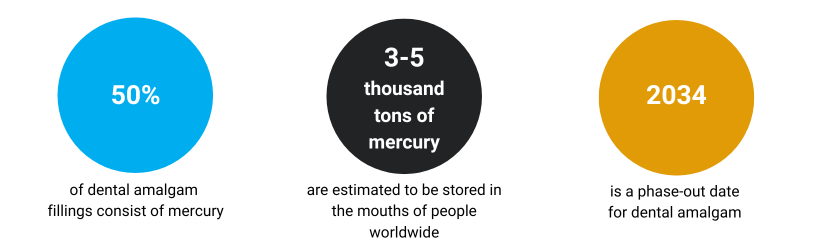
Dental amalgam is a restorative material used to fill cavities caused by dental caries (tooth decay). Dental amalgam is a common filling material that has been a mainstay of dental restorative care around the world for over 175 years due to its ease of placement, material strength, longevity and cost-effectiveness. It is composed of a mixture of metals, consisting of elemental mercury (~50%) and a powdered alloy composed of silver, tin, and copper.  Mercury pollution may occur during the amalgam life cycle from production, supply, cavity placement, removal of fillings and disposal. Estimates suggest 30 to 40 per cent of mercury in amalgam enters solid waste streams, accumulates in water, soil and the atmosphere without breaking down. In this context, promoting the environmentally sound management of dental amalgam waste alongside prevention is key to reduce risks to human health and the environment. Furthermore, estimates suggest that between 3,000 to 5,000 metric tons of mercury are stored in the mouths of people worldwide in the form of dental amalgam, making the waste amalgam created by the dental industry a global issue.

smiles

A global shift away from dental amalgam is underway under the Minamata Convention on Mercury.

At COP‑6, countries agreed on a clear phase‑out date of 2034 for the manufacturing, import, and export of dental amalgam. In the meantime, countries must take steps to significantly reduce its use, while allowing dentists to use it when medically necessary.

Countries are also required to track and report their progress: they must develop national action plans or submit regular updates. 

These decisions mark a major step toward safer, mercury‑free dental care worldwide.


The Global Environment Facility (GEF) funded project Accelerate implementation of dental amalgam provisions and strengthen country capacities in the environmental sound management of associated wastes under the Minamata Convention (GEF 7 Phasing Down Dental Amalgam Project) is a 3-year project implemented by the United Nations Environment Programme (UNEP) and executed by the World Health Organization (WHO) with targeted technical assistance from the UNEP Global Mercury Partnership. 

The project officially started on 1 March 2023 and a global project kick-off meeting was held on 28 April 2023 at WHO headquarters in Geneva.

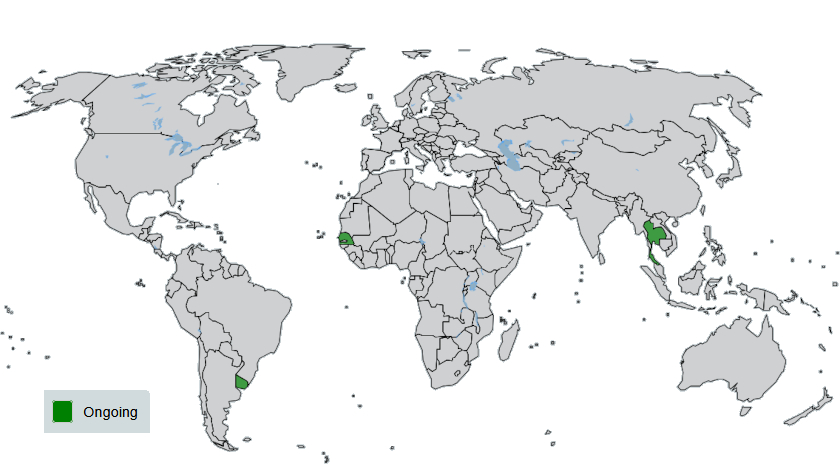
The project supports the implementation of the Minamata Convention on Mercury in both global and national contexts, with several activities to be implemented in three countries: Senegal, Thailand and Uruguay.

The project consists of the following components:

phasing down mercury dental amalgamPhase down of dental amalgam use through improved policies and technical capacity, focusing on technical guidance and regulatory strengthening in the three target countries through multi-sectoral collaboration;

life-cycle of mercury dental amalgamImprove management of mercury and hazardous waste from dental use, focusing on the environmentally sound lifecycle management of dental amalgam wastes to reduce emissions to air and releases to land and water of mercury and mercury compounds;

raise awarenessKnowledge management and global awareness, focusing on the dissemination at global level of the lessons learned and products developed at the national and global level
 

Project countries

Dental amalgam project countries map
Map showing the 3 countries where the project is implemented.
Senegal flag
Senegal project page
Thailand flag
Thailand project page
Uruguay flag
Uruguay project page

Country pages