



The estimated prevalence of untreated caries in Thailand is 44.7% for deciduous teeth (primary teeth or milk teeth) and 27% for permanent teeth. A 2018-19 survey conducted in the Ministry of Public Health facilities revealed that most of the dental fillings were restored with alternative materials to dental amalgam. Furthermore, the material of choice for primary teeth in children aged under 15 years old was resin-based composite. There has been a declining trend in the use of dental amalgam for fillings; however, additional efforts could even further accelerate phasing down its use and implementing practices to adequately manage its waste.
Thailand has made substantial progress in reducing dental amalgam use through strong oral health policies, widespread adoption of mercury-free alternatives, and comprehensive healthcare coverage. The main remaining challenge is strengthening the collection, transport, and environmentally sound management of amalgam and mercury waste, while continuing the transition toward mercury-free dentistry.
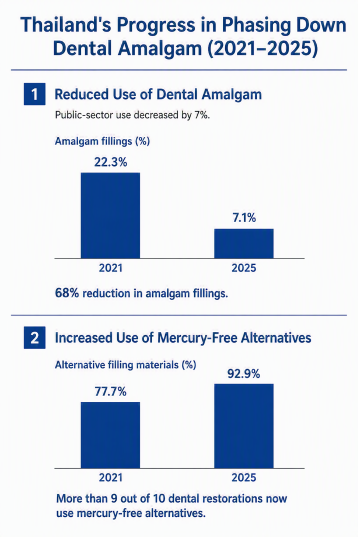
Thailand is actively advancing the phase-down of dental amalgam use through strengthened regulations, market controls, professional guidance, and healthcare waste management measures. Public-sector amalgam use has declined by 7%, while approximately 180 licenses remain authorized for its use and distribution. At the same time, the use of alternative filling materials has steadily increased, rising from 77.7% of dental restorations in 2021 to 92.9% in 2025. Over the same period, amalgam fillings fell significantly from 22.3% to 7.1%, demonstrating a clear national shift toward mercury-free dental care. This transition is supported by updated policies, supply-chain oversight, workforce guidance, and environmentally sound waste management practices aimed at achieving the safe and effective eventual phase-out of dental amalgam in Thailand.
Thailand National Situation Assessment 2024 - under the project titled "Accelerating implementation of dental amalgam provisions and strengthen country capacities in the environmental sound management of associated wastes under the Minamata Convention- highlights few key advancements of the project:
1. Policy and Regulatory Framework
Thailand ratified the Minamata Convention in 2017 and has already implemented five measures to phase down dental amalgam use, including promoting prevention, mercury-free alternatives, and best environmental practices. Existing regulations are generally adequate, but clearer guidance is needed for amalgam waste management and implementation at local level.
2. Insurance Policies and Programmes
Thailand's universal health coverage system provides access to both preventive dental services and restorative treatments, including mercury-free alternatives. Although dental care is widely covered and affordable, utilization of dental services remains relatively low, particularly among adults.
3. Oral Health Workforce Education and Training
Thailand has a sufficient number of dentists and dental hygienists, and all dental schools now emphasize mercury-free restorative materials while reducing practical training with amalgam. However, further education is needed on mercury risks, amalgam waste management, and the Minamata Convention.
4. Mercury and Amalgam Waste Management
Amalgam waste is classified as hazardous waste and is regulated under several national laws and guidelines. Despite this framework, healthcare facilities still face challenges in the collection, transport, and environmentally sound treatment of mercury-containing waste.
5. Import, Use and Mercury Releases
Thailand is steadily transitioning toward mercury-free restorative materials. In 2023, dental amalgam was estimated to release about 19.4 kg of mercury into the environment, with water being the main release pathway.
Key project activities in Thailand include:
- Conduct a comprehensive assessment of the national context with regards to the use of dental amalgam and the management of its associated waste to identify country-specific strategic interventions for implementing the Minamata Convention on Mercury, including decisions made by the Conference of the Parties;
- Develop measures to reduce the use of amalgam fillings in all age groups, especially in pregnant women and children under 15-year-old;
- Build capacity and foster a supportive environment for reducing the use of dental amalgam, with a focus to promote the use of mercury-free materials for the prevention and treatment of dental caries;
- Improve dental amalgam waste management practices;
- Cancel the production, import and export of amalgam tablet and limiting the use of amalgam material in capsule form only;
- Study the feasibility of amalgam separator installation in dental clinics;
- Share information and knowledge with other countries.