



Resources
Showing 26 - 50 of 495
495 results found
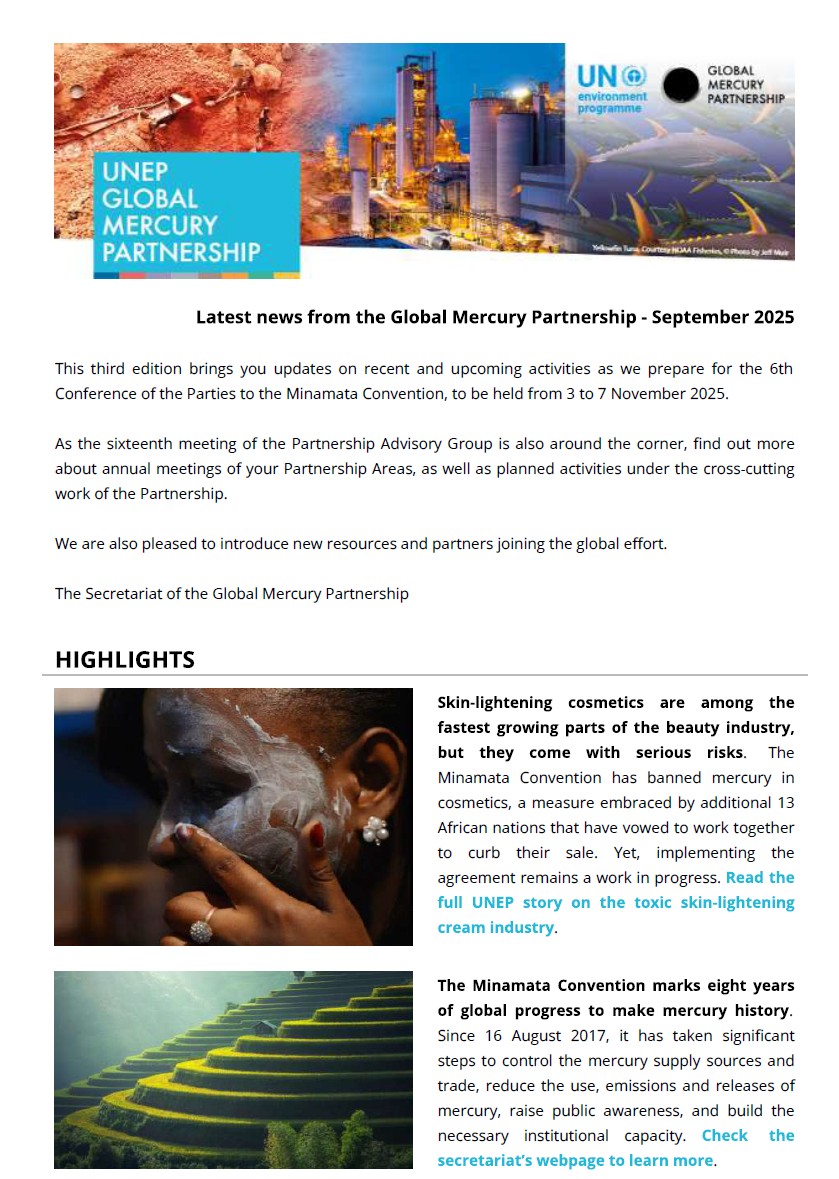
This third edition brings you updates on recent and upcoming activities as we prepare for the 6th Conference of the Parties to the Minamata Convention, to be held from 3 to 7 November 2025. As the sixteenth meeting of the Partnership Advisory Group is also around the corner, find out more

This WHO initiative page, guided by the Global Oral Health Action Plan 2023–2030, promotes environmentally sound oral health practices by addressing key challenges such as mercury use in dental amalgam, plastic waste, and carbon emissions.

Danger doesn't always look dangerous. Sometimes it is hiding in fish, in face cream, even in the air. Mercury. For thousands of years, humans have put mercury to work. Ancient alchemy, rituals, gold mining, batteries. It travels through the air and water. It lingers. it turns into methylmercury, slips into the food chain and into us. But this is not a horror story. This is a comeback story.
This report evaluates current and future estimates from coal-fired utility and industry plants in specified emerging economies. Using coal characteristics and plant-specific data, projections have been created for emissions of carbon dioxide (CO2), and mercury (Hg) under different future energy scenarios.
The annex to the present note sets out a report on activities undertaken within the Global Mercury Partnership of the United Nations Environment Programme (UNEP) during the period from January 2024 to July 2025.
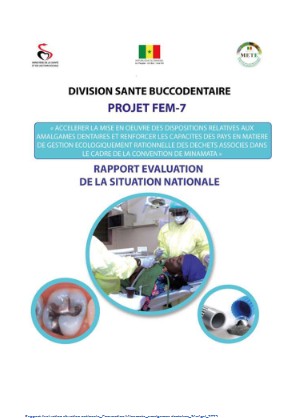
Rapport de l’évaluation de la situation nationale de l’utilisation des amalgames dentaires - Sénégal
Le rapport de l’évaluation de la situation nationale de l’utilisation des amalgames dentaires et de la gestion des déchets associés est élaboré par la DSBD de la DLM, dans une approche participative multisectorielle.

In this short video, the National Poisons Information Centre of Sri Lanka is raising awareness about hidden toxic risks in skin-lightening products.
The video was released on youtube during the Poisoning Prevention week organised on 11-17 August 2025.
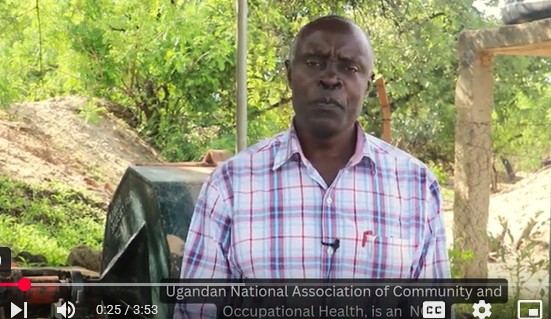
The Uganda National Association of Community and Occupational Health (UNACOH), with support from the European Environmental Bureau (EEB) and the Zero Mercury Working Group (ZMWG), is training miners in mercury-free gold extraction using gravity concentration technology.
This case study funded by the African, Caribbean, and Pacific Multilateral Environmental Agreements Phase 3 (ACP MEAs III) Programme presents key insights from the market assessment of mercury-free products and the development of three targeted mercuryfree procurement policies—for medical measuring devices, dental amalgam, and lighting products—in the three participating countries: St.
The planetGOLD newsletter shares updates from a global effort to make artisanal and small-scale gold mining safer and more responsible. Each issue highlights project milestones, mercury-free technologies, policy progress, and stories from miners and communities working toward a cleaner gold sector.
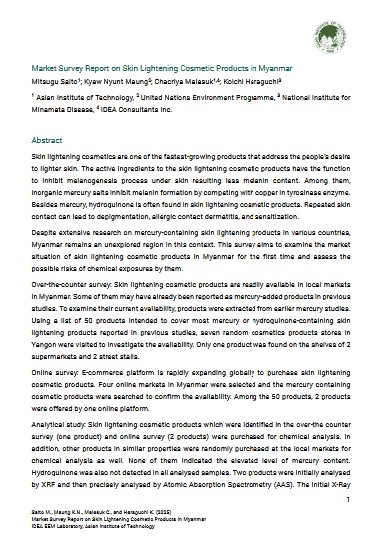
Skin lightening cosmetics are one of the fastest-growing products that address the people’s desire to lighter skin. The active ingredients to the skin lightening cosmetic products have the function to inhibit melanogenesis process under skin resulting less melanin content. Among them, inorganic mercury salts inhibit melanin formation by competing with copper in tyrosinase enzyme.

The growing demand for minerals amplifies risks of crime, corruption and supply chain instability. A global push for renewable energy technologies like electric cars and wind turbines brings benefits for the environment and economic opportunities for countries along the supply chain.

The Role of Gold Processing Plants in Artisanal and Small-Scale Mining report explores the potential role of gold processing plants in driving the sustainable formalization, legitimization, and professionalization of artisanal and small-scale gold mining (ASGM) value chains.

The Minamata Convention on Mercury recognizes the interconnections between mercury pollution and biodiversity loss and underscores the need for coordinated action to protect ecosystems and human health.

The Minamata Convention on Mercury requires Parties to control and reduce mercury emissions to air from point sources such as coal-fired power plants, industrial boilers, and certain metal production facilities. It requires the use of best available techniques and environmental practices to control mercury emissions.

The Minamata Convention on Mercury requires parties to phase down the use of dental fillings containing mercury, called dental amalgam. It restricts its use in vulnerable populations, including children and pregnant women.
Explore Insights, Resources and Intersessional Work gathered in the Minamata Convention on Mercury Topic: Dental amalgam.

The Minamata Convention bans the use of mercury in cosmetics, including skin-lightening products. Although manufacture, import and export of mercury-containing cosmetics is prohibited, Parties face challenges in addressing informal manufacturing and sales.
Explore Insights, Resources and Intersessional Work gathered in the Minamata Convention on Mercury Topic: Mercury in cosmetics

The Minamata Convention on Mercury requires Parties to manage mercury waste in an environmentally sound manner, taking into account the technical guidelines for waste management. It also restricts the recovery of mercury and transport of mercury waste across international boundaries.

The Minamata Convention on Mercury prohibits the manufacture, import, and export of listed mercury-added products, including batteries, switches, certain lamps, cosmetics and measuring devices, with limited exemptions. It also requires Parties to phase down the use of dental amalgam.

[ EN / FR / SP ]

Public health laboratories play a leading role in the ongoing, successful responses to these threats. While limited resources restrict a laboratory’s ability to address every threat, mercury is a global health crisis that merits attention not only due to its toxicity and prevalence, but also because of environmental concerns affecting communities disproportionately.
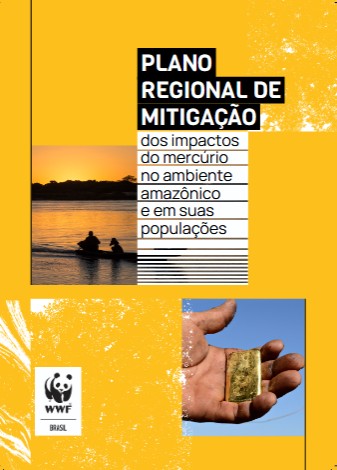
The document proposes priority actions for health, food and water security, and was developed with input from traditional communities and regional environmental experts

These infographics have been designed for the project “Eliminating Mercury Skin Lightening Products”.

As the world observes the International Day for the Elimination of Racial Discrimination on 21 March 2025, the United Nations Environment Programme, the Secretariat of the Minamata Convention and the Secretariat of the Global Mercury Partnership, are releasing a set of messages for public use and engagement that highlight the urgent need to stop the production and use of skin-l

These social media posts are designed to share #MercuryFreeCosmetics campaign, especially for the International Day for Elimination of Racial Discrimination on 21 March.
Showing 26 - 50 of 495



The overall goal of the UNEP Global Mercury Partnership is to protect human health and the environment from the releases of mercury.