News Sustainable Development Goals

Funding partner spotlight

Credit: Todd Brown/UNEP

The United Nations Environment Programme (UNEP) is the world’s leading authority on the environment, working with all of society across 193 countries to protect and restore human and planetary health. But action at scale depends on funding, and UNEP relies on voluntary contributions for more than 95 per cent of its work. This includes contributions to UNEP’s core fund, the Environment Fund; to the three UNEP Planetary Funds for climate, nature and pollution; and earmarked contributions that provide direct support to specific projects. 

Flexible and sustained funding ensures UNEP can keep advancing critical priorities, and every contribution helps accelerate progress toward a cleaner, safer and more sustainable future for all. See how to partner with UNEP to invest in people and planet, and read below for regular funding updates.

Related: Status of contributions
10 Sep 2025 15:12

In African airports, new $82.5 million FIRE project aims to eliminate toxic foams

Firefighting foam
Credit: U.S. Air Force/Senior Airman Brett Clashman


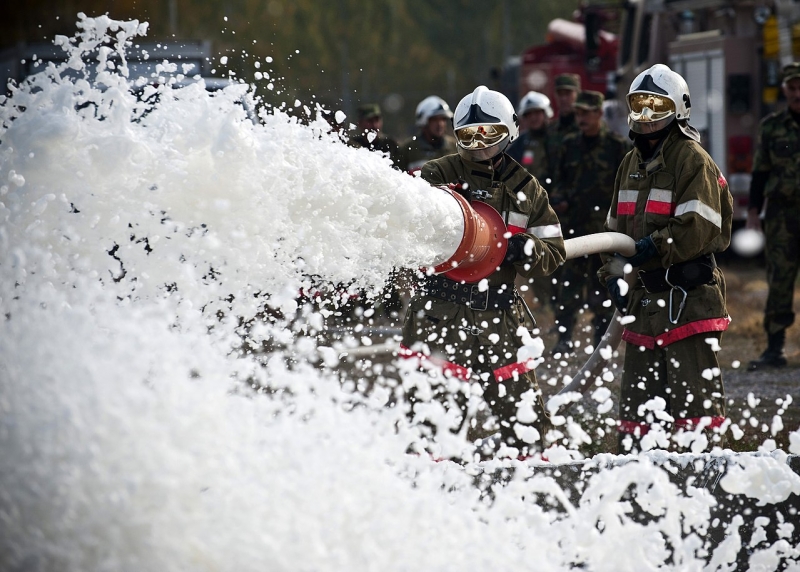
A new $82.5 milion project, Fortifying Infrastructure for Responsible Extinguishment (FIRE), aims to phase out toxic fluorinated firefighting foams and introduce safer alternatives across major airports in Egypt, Ethiopia, Kenya, Nigeria, and South Africa. Launched by the UN Environment Programme and the International Civil Aviation Organization (ICAO), FIRE is funded by a $10 million grant from the Global Environment Facility (GEF) and $72.5 million in co-financing from partners. 


Many firefighting foams contain PFAS (per- and polyfluoroalkyl substances), hazardous “forever chemicals” that carry significant risks for human and environmental health. By helping airports transition to fluorine-free foams, the project is expected to remove 4,500 tonnes of PFAS-contaminated material from fire trucks and safely dispose of 130 tonnes of PFAS-based foam concentrate. Read more here.

25 Aug 2025 16:50

Small Island Developing States couple economic development with climate resilience

Credit: UNEP / Georgina Athamandia
Credit: UNEP / Georgina Athamandia Avlonitis


In 2024, the world adopted the Antigua and Barbuda Agenda for Small Island Developing States as a pathway for the sustainable, resilient development of some of the world's most environmentally vulnerable nations. Through its close partnership with small island developing states – 20 of which are full-share contributors the the Environment Fund – the UN Environment Programme is helping translate the Agenda's global targets into ambitious actions across SIDS' ecosystems

25 Aug 2025 16:21

Madagascar launches coastal resilience project with GEF and UNEP

Credit: UNEP / Lisa Murray


In mid-July, Madagascar launched a landmark initiative to boost climate resilience in four coastal regions by restoring ecosystems and improving livelihoods. Funded by a USD 7.1 million grant from the Global Environment Facility and USD 27 million in cofinancing, the project – Scaling Up Ecosystem-Based Adaptation for Coastal Areas in Madagascar – will be executed by Malagasy Ministry of Environment and Sustainable Development with the UN Environment Programme (UNEP) as its implementing partner. As part of its longstanding partnership with Madagascar, which is also a full-share contributor to UNEP's Environment Fund, UNEP assisted the Government in developing the project.

Coastal regions support more than 75 per cent of the Malagasy population, and the initiative aims to restore 3,000 hectares of mangroves and coastal forests and rehabilitate 2,000 hectares of degraded watersheds.

Read more here.

04 Jul 2025 17:21

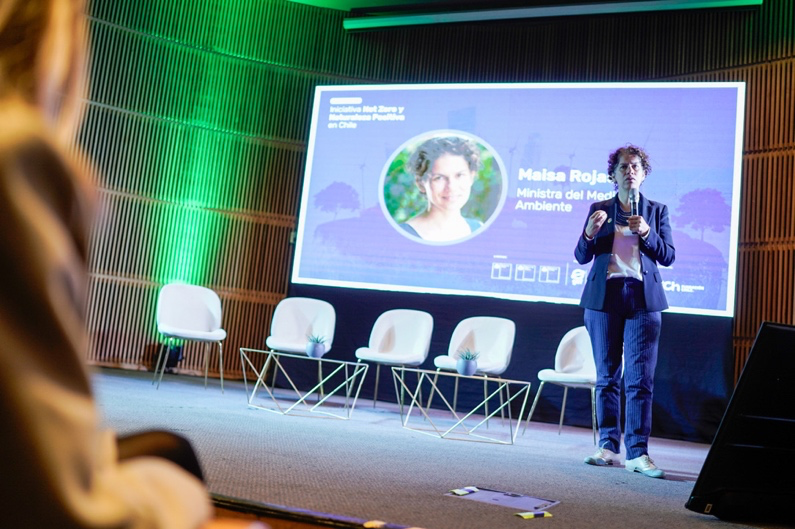
GEF and UNEP advance climate action and biodiversity protection with the launch of the Net-Zero Nature-Positive Accelerator Programme in Chile

A woman speaking on a stage
Credit: UNEP/Luis Ignacio Simon Zinno


The Government of Chile has launched the Net-Zero Nature-Positive Accelerator Programme—a four-year, USD 5.3 million initiative designed to accelerate climate action and halt biodiversity loss. Led by the United Nations Environment Programme (UNEP) and funded by the Global Environment Facility (GEF), the programme seeks to advance integrated action across the energy sector, with a particular emphasis on decarbonizing energy demand, promoting sustainable land use, and enhancing conservation efforts to reduce greenhouse gas emissions and mitigate global warming.

A key component of the initiative is the promotion of policy coherence, fostering coordinated action among multiple Chilean ministries to ensure a unified and effective national response. This effort forms part of the broader USD 100 million GEF-funded global Net-Zero Nature-Positive Accelerator Programme, which supports countries in their pursuit of a carbon-neutral, nature-positive future. 

Read more

02 Jul 2025 15:04

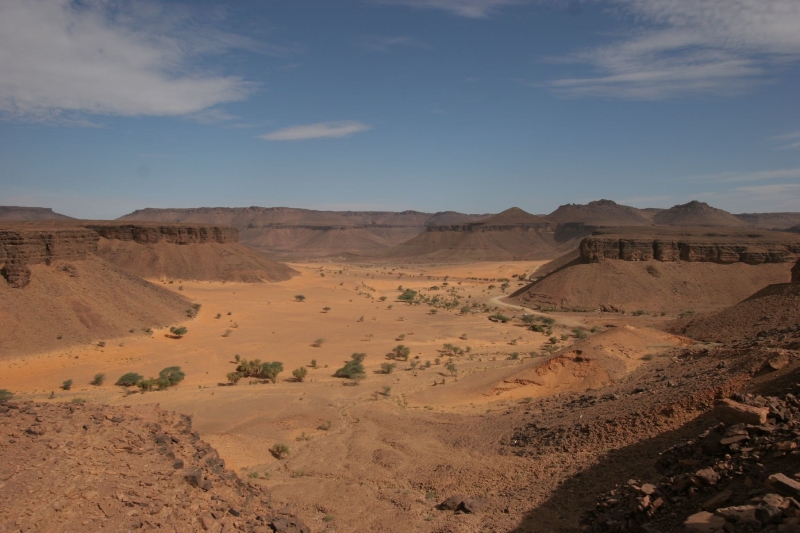
Green Climate Fund and UNEP enhance climate adaptation with new USD 120 million investment

Bare land
Credit: Flickr/John Spooner


The Green Climate Fund (GCF) has approved over USD 120 million to boost climate resilience in Ghana, the Maldives, and Mauritania. Developed by the UN Environment Programme (UNEP) at the request of these countries, the projects will support vulnerable communities through nature-based solutions, climate-resilient agriculture, early warning systems, and improved water security.

These initiatives, targeting the most vulnerable areas, including Small Island Developing States (SIDS) and the Sahel, are expected to benefit over 3.5 million people.

Read more 

25 Jun 2025 11:52

Japan pledges IMEO support, deepening methane collaboration in East Asia

View over Tokyo
Credit: Getty Images / Unsplash+


Japan is strengthening its engagement in the global effort to reduce methane emissions in collaboration with the UN Environment Programme’s International Methane Emissions Observatory (IMEO)

In 2025, the Government of Japan, through the Ministry of Economy, Trade and Industry, will contribute to UNEP’s IMEO, supporting data-driven methane transparency and mitigation efforts. This funding will help IMEO deliver actionable data to the people who can drive down methane emissions, strengthening energy security, climate progress and market stability. The announcement was made at the LNG Producer-Consumer Conference in Tokyo on 20 June.

“We look forward to benefitting from Japan’s leadership and technical expertise to accelerate progress toward our shared goal: a measurable, science-based reduction in methane emissions that buys us precious time in the climate fight,” said Ruth Coutto, Deputy Director of UNEP’s Climate Change Division.

This announcement also deepens collaboration between UNEP’s Oil and Gas Methane Partnership 2.0 and the Coalition for LNG Emission Abatement towards Net-zero (CLEAN) initiative, advancing methane transparency across global gas supply chains.

04 Jun 2025 11:33

Republic of Korea hosts World Environment Day 2025

eju Province in the Republic of Korea was chosen as the host location for World Environment Day
Credit: Artan Jama / UNEP


UNEP extends its gratitude to the Republic of Korea, a valued funding partner of UNEP, for this year furthering its support by hosting World Environment Day 2025. This marks the second time the country serves as host for the global observance, which takes place annually on 5 June and stands as the world’s largest platform for environmental awareness and action.

As host country, the Republic of Korea has provided funding for the global campaign and key activities, which this year centre on the theme #BeatPlasticPollution. It has also designated Jeju Special Self-Governing Province – committed to ending plastic pollution by 2040 – as the venue for World Environment Day celebrations. Events include forums, keynote addresses, interactive dialogues, and engagements featuring the three World Environment Day 2025 Supporters.

Learn more about World Environment Day, take part in the #BeatPlasticPollution campaign, and watch live updates from Jeju and across the world.

29 May 2025 16:39

UNCDF, UNEP and CAFI partner to launch new $15 million Congo Basin initiative

Forest Near Kinshasa
Credit: David Tansey / Wikimedia Commons


One of the world's largest carbon sinks, the Congo Basin rainforest is home to over 75 million people who depend on the ecosystem for their livelihoods. A new initiative called ProCongo aims to foster local entrepreneurship for micro-, small- and medium-sized enterprises in Cameroon, Democratic Republic of the Congo, Gabon, and the Republic of Congo whose business models support the health of the rainforest.

To unlock the potential of blended finance, the UN Capital Development Fund (UNCDF), the UN Environment Programme (UNEP), and the Central African Forest Initiative (CAFI) are partnering to make an initial investment of $15 million in ProCongo, helping to catalyse the target amount of $30 million in contributions from both public and private sectors.
The initiative is further supported by a coalition of CAFI donors – including Germany, Belgium, France, Norway, Sweden, the European Union, the Netherlands, the Republic of Korea, and the United Kingdom – alongside the six Central African partner countries in the Congo Basin. 

Read more here.

15 May 2025 15:58

Thank you to the Netherlands for being a top funding partner of UNEP

09 May 2025 13:27

UNEP–Nordic consultations work to advance global environmental governance

Courtesy of the Danish Government


Nordic countries (Denmark, Finland, Iceland, Norway, and Sweden) are key contributors to UNEP's Environment Fund, and their strong partnership with UNEP highlights their shared commitment to addressing the triple planetary crisis - climate change, biodiversity loss, and pollution.

This week’s annual consultations, hosted by Denmark, reaffirmed Nordic support for critical areas, including multilateral environmental governance, transition to circular economy, and UNEP’s strategic planning. Discussions focused on tackling plastic pollution, enhancing pollution governance, and ensuring impactful outcomes at the 7th UN Environment Assembly (UNEA-7), scheduled to take place in December 2025.

The Nordic countries' leadership in promoting sustainable consumption, combating pollution, and advancing climate action remains vital, particularly through their financial contributions and advocacy for science-based policies.