
Sydney, 17 July 2013 - For the first time ever in Australia, OzHarvest as the official Australian partner of the United Nations Environment Programme (UNEP) on the global Think.Eat.Save - Reduce your Foodprint campaign, will host the international event, Feeding the 5000 in Sydney's Martin Place on Monday, 29 July from 12 noon until 2pm.
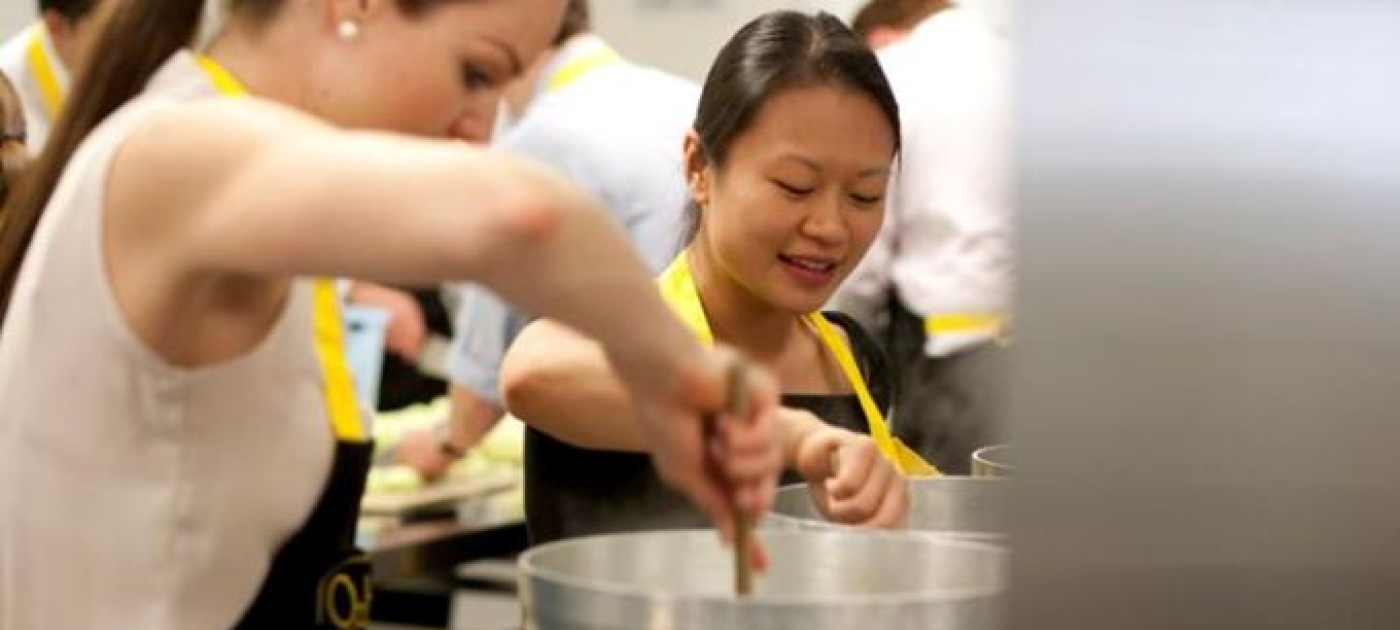
Some of the nation's top chefs and hundreds of volunteers will join OzHarvest, Australia's leading food-rescue organisation, in serving 5000 members of the public, a free, delicious hot lunch made from rescued ingredients that would otherwise have ended up as landfill.
As a nation, Australians waste $7.8 billion dollars of food or four million tonnes per annum - that is, we throw away one in every five shopping bags that we buy. Feeding the 5000, will highlight how easy it is to reduce these unimaginable levels of food waste and how individuals, producers, supermarkets and governments can do a lot more to reduce food waste in our country.
Founder and CEO of OzHarvest, Ronni Kahn, said the aim behind the Feeding the 5000 events globally is to help raise awareness about the disturbing amount of food wasted around the world, where roughly one third of food produced for human consumption (approx. 1.3 billion tonnes) gets lost or wasted . The Australian event highlights the amount of food that we waste as a nation, and the direct impact this has on the environment.
"Food waste is a huge challenge that needs to be addressed locally and be embraced within our own homes first, so that we can affect incremental change globally. Our challenge is to create a sustainable food culture that can be shared by all. It's a paradox that we produce enough food to feed all seven billion of us, yet so many in this world go hungry," Kahn said.
"The aim of this event is to educate all people - producers, consumers and businesses alike. We should not buy into the fact that fruit and veg needs to be cosmetically beautiful before we'll buy it, because for every bendy or blemished carrot thrown out - we throw away embedded water, energy and fuel," she said.
Nick Nuttall, UNEP spokesperson, added: "The way humanity manages or mismanages its food supply will in many ways define the 21st century-currently we know that we are not doing a great job with at least one third of all food produced lost or wasted. It is an ethical and economic challenge but also an environmental one: for example if food waste and loss was a country it would be the third largest emitter of greenhouse gases."
"We are delighted that OzHarvest and people across Australia are partnering with the UN on the global Think.Eat.Save - Reduce Your Foodprint campaign. All of us are connected to food and every one of us can make a difference in the lives of those in need and the health of our planet," he said.
The menu on the day will include items such as surplus vegetable curry and rice, chapatti, saved potato soup with smoked ham hock, rescued bread and butter pudding, relish, gazpacho, yoghurt and lemonade from a number of top chefs.
Should there be any 'excess' food left on the plates of the public, 'clean stations' and the Closed Loop organic waste recycling machine will be on-site to educate people on how to manage waste at home.
This event is supported by the NSW Environment Protection Authority's Love Food Hate Waste campaign which will be represented at the event to provide tips to consumers on how to reduce food waste.
To register to attend Feeding the 5000 visit www.feedingthe5000sydney.eventbrite.com.au
For more media information, images or interviews with Ronni Kahn, CEO of OzHarvest, please contact:
Louise Tran at OzHarvest on louise.tran@ozharvest.org
02 9516 3877
0466 620 744
Sylvia Fonseca at Liquid Ideas on sylviafonseca@liquidideas.com.au
02 9667 4211
0422 703 607
Event details:
What: Feeding the 5000 - an event by OzHarvest partnered with the United Nations Environment Programme (UNEP)
Why: To highlight food waste - a free hot lunch open to the public using surplus food
Date: Monday, 29 July 2013
Time:
- 12 noon - 2pm: lunch service
- 12.10pm: Official opening and Welcome to Country
- 1pm: Q&A Panel Discussion on Food Waste, Food Sustainability & Food Security
Dignitaries: OzHarvest Patron - Ms Thérèse Rein
Lord Mayor of Sydney - Clover Moore
Chefs/guests: Three Blue Ducks chefs, Martin Boetz - formerly Longrain, James Viles - Biota, Kylie Kwong, Lauren Murdoch, Somer Sovrigliu, Hungry Mondays and more
Panel guests: Ronni Kahn (CEO & Founder OzHarvest), Joost Bakker (sustainable architect), Indira Naidoo (Author), Professor Veena Sahajwalla (University of New South Wales), Annabella Sao (Grower)
Menu Items:
- Surplus vegetable curry served with rescued rice - vegetables provided by local growers from the Sydney Markets, rescued sauce provided by MARS Food
- Saved potato and ham hock soup - by Martin Boetz of Cooks Co-Op and James Viles of Biota
- Rescued bread and butter pudding served with vanilla Chantilly cream - by DessertMakers, Pepe Saya, Brasserie Bread and Heilala Vanilla
- Carrot Halwa by OzHarvest Chef for a Cause Brett Young
- Other items include: Relish - by Three Blue Ducks
Salvaged watermelon, tomato and capsicum gazpacho - by Hungry Mondays
Spiced lemonade - by Salvatore Mammoti from 42 Bannerman
Yoghurt - by Kristen at the Full Circle
Chapatti - Sydney Sikh community
Key Food Waste Facts:
- Australians throw out $7.8 billion of food every year. As a nation we waste four million tonnes per annum of food which ends up in landfill.
- Australians throw out one out of every five shopping bags, which equates to every Australian household throwing out $1038 worth of groceries each year
- Australia produces enough food to feed approx. 60 million people, yet two million people still rely on food relief every year
- Food relief agencies are not able to meet demand. Nearly 90% of agencies reported not having enough food to meet total demand. 6 in 10 agencies require at least 25% more food with almost 3 in 10 agencies requiring double the food.
- Roughly one third of the food produced in the world for human consumption every year - approximately 1.3 billion tonnes - gets lost or wasted.
- Every year, consumers in rich countries waste almost as much food (222 million tonnes) as the entire net food production of sub-Saharan Africa (230 million tonnes).
- Food loss and waste also amount to a major squandering of resources, including water, land, energy, labour and capital and needlessly produce greenhouse gas emissions, contributing to global warming and climate change.