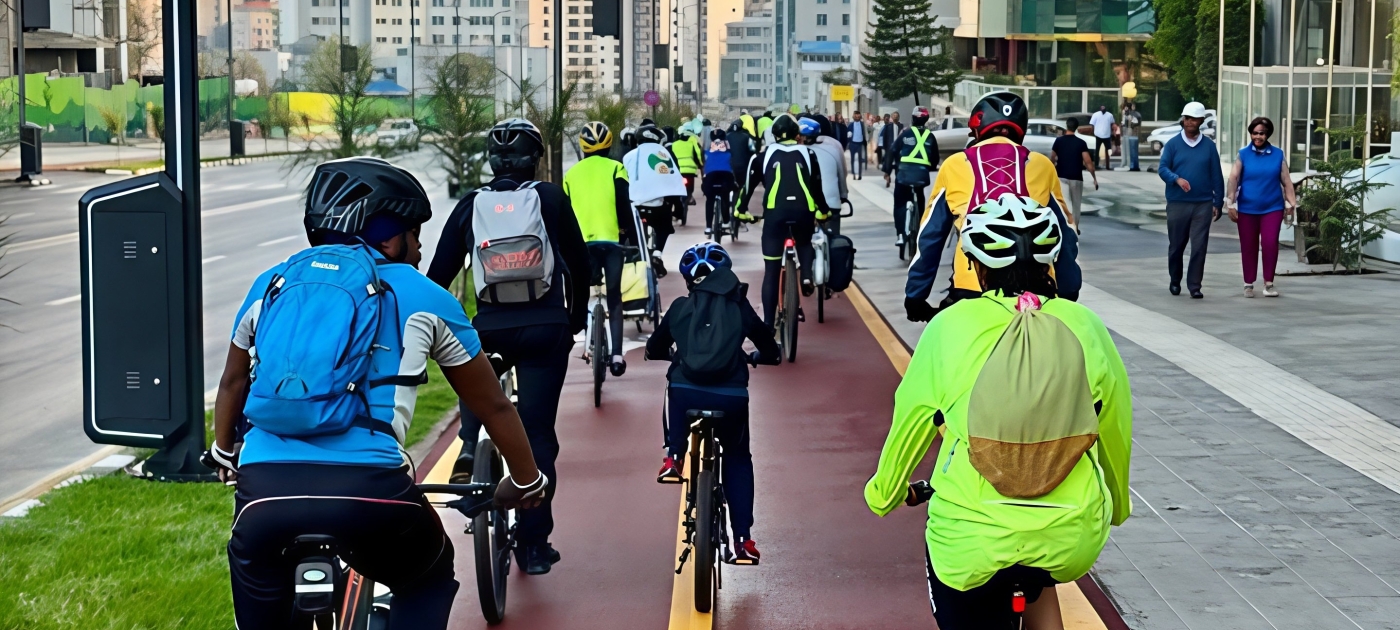
Phano Liphoto was in his early twenties when he started commuting by bicycle in Johannesburg, South Africa in 2022. The then-university student rode 15 kilometres to campus on lanes painted more than a decade earlier. Many were scattered, poorly maintained and often blocked by minibus taxis.
Today, the urban planner’s commute is very different. Much of it is along protected bike lanes and through cyclist-friendly intersections. Sometimes Liphoto pairs cycling with a trip on Johannesburg’s metrorail for a seamless citywide journey.
"I have benefitted physically, financially and socially,” he says of Johannesburg’s cycling infrastructure upgrades.
The city is one of a growing number of African metropolises that are striving to make themselves more bike friendly. The shift is designed to ease gridlock, reduce pollution, counter climate change and make the continent’s notoriously dangerous roads safer.
In April 2026, transport and energy ministers from across Africa gathered in Johannesburg to endorse a continent-wide blueprint for investment in cycling and walking. The document, formally known as the Pan-African Action Plan for Active Mobility, was shaped through consultations with more than 1,300 stakeholders across the continent and is co-led by the UN Environment Programme (UNEP), UN-Habitat and the World Health Organization (WHO).
Where policy paved lanes
More than 1 billion Africans walk or cycle nearly an hour each day, yet the continent’s roads were built for cars – and are often unsafe. Africa has 3 per cent of the world’s vehicles and 24 per cent of its road deaths. Pedestrians and cyclists represent more than a third of those killed.
Addis Ababa, Ethiopia’s capital, is at the forefront of Africa’s urban cycling movement. Three years ago, biking there meant darting between buses and traffic lights – “a bit thrilling but not accessible or comfortable for most people,” said Maren Ahlers. She is the co-founder of an urban mobility non-profit organization. Today, about 70 per cent of her daily ride is on protected cycle paths. She often sees families teaching children to ride, delivery riders working into the evening and skateboarders out after dark.

For many Ethiopians, bikes have become even more important amid the war in the Middle East. The conflict has led to fuel shortages, wreaking havoc on bus schedules and leaving cars stranded in petrol queues for hours. “On my bicycle, I can move past traffic jams, long fuel queues and crowded streets with ease,” Ahlers said.
Henok Adane, 37, an event organizer in Addis Ababa, started cycling two years ago as protected lanes appeared and transport costs rose. His eight-kilometre commute takes 30 to 35 minutes, predictable regardless of traffic, and he feels more energetic. As he rides, he also swerves around what most drivers on the continent cannot: sharply higher fuel prices across Africa, driven by the war.
In some places, connectivity remains a work in progress. Ahlers and Adane both describe lanes that end abruptly, pushing riders back into traffic. Abel Hailegiorgis, an Ethiopian engineer who builds bamboo bikes, says better public transport links are the missing piece.
Addis Ababa’s Cycle Network Plan – along with Egypt’s newly launched Active Mobility Strategy Framework, developed with support from UNEP and others – aim to weave cycling into citywide transit networks. The hope is that it will help ease automotive traffic and thus air pollution, while loosening the continent's dependence on imported fossil fuels. The rise of cycling could also help counter climate change. Just over 30 per cent of Africa’s carbon dioxide emissions come from the transport sector, according to the International Energy Agency.
Riders ahead of roads
Kenya is also embracing cycling. With UNEP and UN-Habitat technical assistance, the country’s Ministry of Transport is developing a national active mobility policy, with working groups being formalized and a roadmap underway.
That is music to the ears of shipping consultant John Kimani, who lives in the humming coastal city of Mombasa. Since 2017, he has been riding 20km to work and back. The bike has cut his two-hour commute in roughly a quarter but he says there are few bicycle lanes on his route.
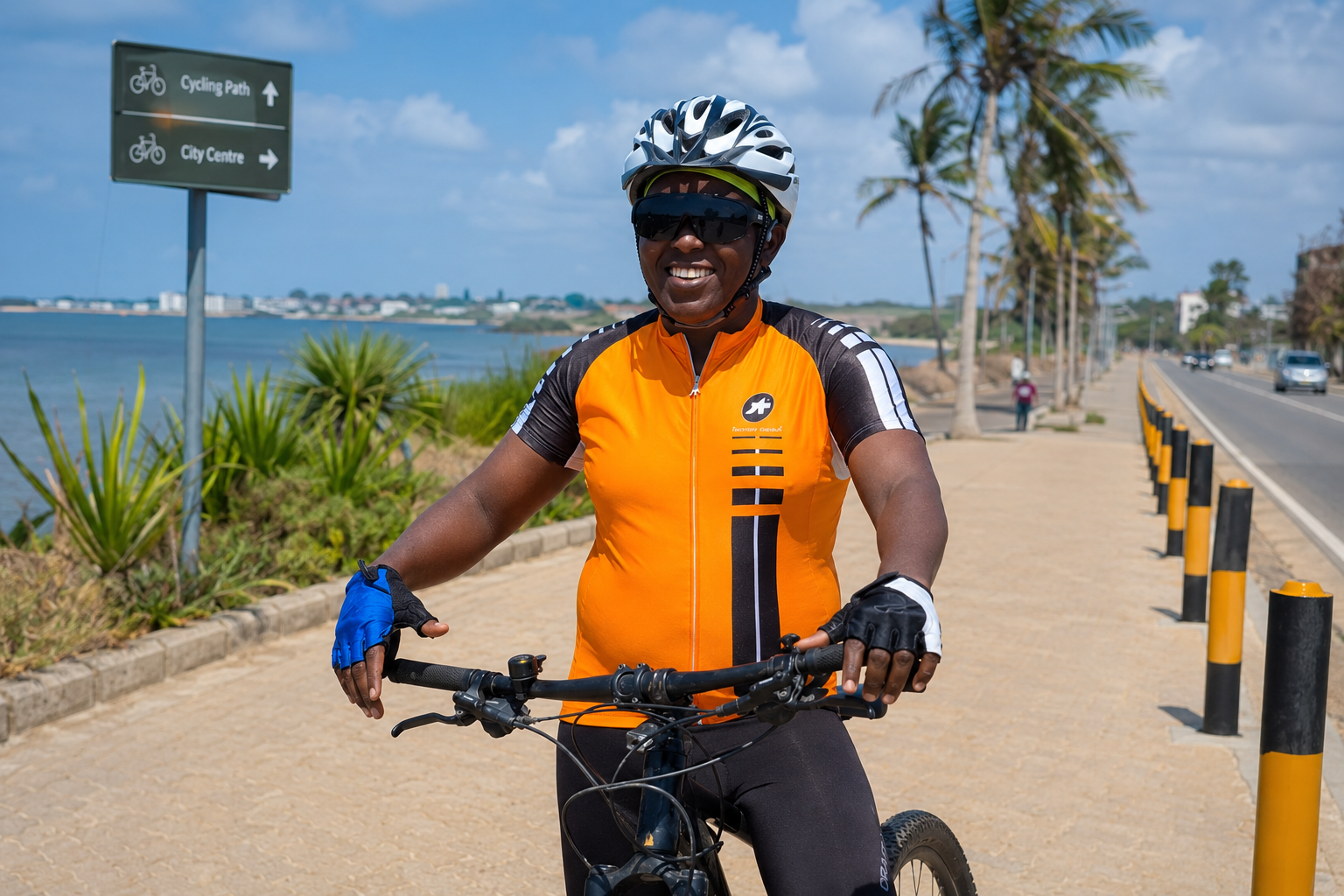
In Nairobi, lawyer Wendy Sigey has a similar experience. She covers 13km a day on roads with no cycle lanes. But she says biking to work has been a transformative experience. Along with saving money, her physical and mental health have improved. (Data shows active commuting leads to better cardiovascular health, lower stress and fewer sick days.)
“In terms of my mental health, I have been much happier since I started using my electric bicycle,” she says.
Other countries are following Kenya’s path. Ghana's transport and roads ministries have approved a bike-friendly work plan and Malawi is moving to embed non-motorized transport into its national transport policy.
As well, Morocco held a kick-off workshop in April and is planning interventions in multiple cities. In June, a French-language edition of the Pan-African Action Plan for Active Mobility will launch at a regional workshop that will feature representatives from nine countries.
“With the plan now endorsed, the question is no longer whether African cities should invest in cycling and walking — it is how fast they can,” said Rob de Jong, head of UNEP’s Sustainable Mobility Unit. “The task ahead is to turn its adoption into safe, connected lanes for the 1 billion Africans who walk and cycle every day.”
About the Pan-African Action Plan for Active Mobility
Adopted on 30 April by Transport and Energy Ministers from across Africa during a session of the African Union, the action plan is a comprehensive framework aimed at transforming mobility across Africa by prioritizing the needs of pedestrians, cyclists, and other non-motorized transport users. Its five goals cover safety, accessibility, comfort, user satisfaction, and increased commitment and investment. Developed through direct engagement with over 1,500 stakeholders, the action plan is co-led by the United Nations Environment Programme, UN-Habitat, and the World Health Organization, with support from the FIA Foundation.
About World Environment Day
World Environment Day, celebrated annually on 5 June, is one of the planet's largest platforms for environmental outreach and is led by the United Nations Environment Programme (UNEP). This year's edition, hosted by Azerbaijan, will focus on solutions to the climate crisis. See how you can get involved.
Story written by Ludmilla Souza
Reviewed by Janene Tuniz, Rob de Jong and Sheila Aggarwal-Khan.