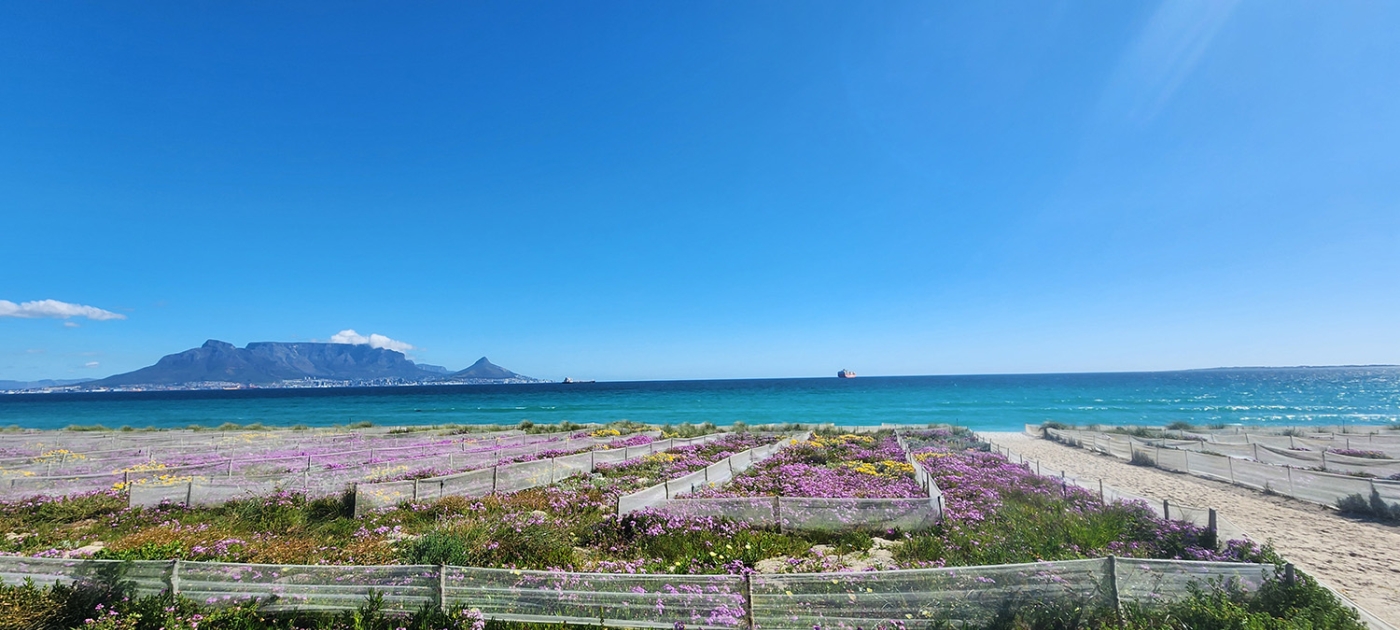
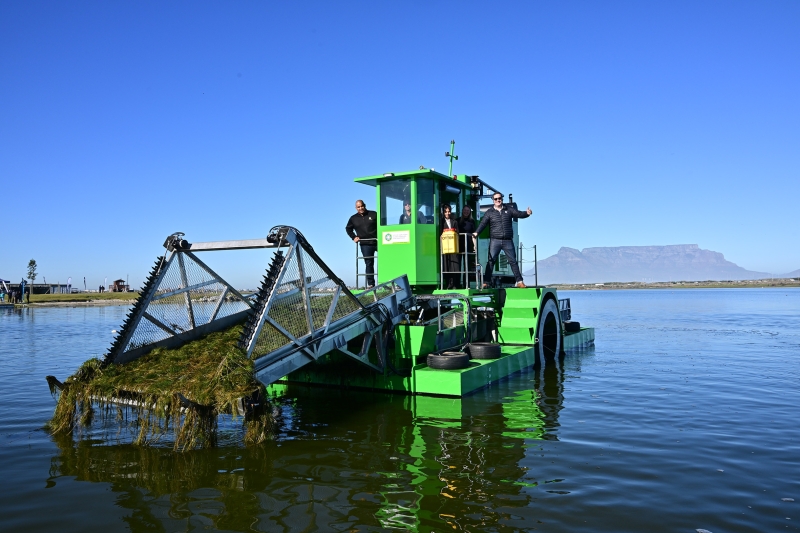
Visit a nature reserve in Cape Town, and you may see a locally famous otter removing a surprising volume of vegetation from one of the city’s wetlands.
Rather than a civic-minded animal, “Otter” is the name bestowed by residents of the South African city on a weed-harvesting machine that is helping restore shallow lakes or “vleis” popular with sailors, birdwatchers and picknickers.
The naming of the bright green machine is a highly visible example of how the municipality works closely with local communities to halt and reverse the degradation of urban ecosystems, from its Atlantic beaches to the foothills of its famous landmark, Table Mountain.
Cape Town’s initiatives, including its community engagement, have caught the eye of the United Nations Environment Programme (UNEP), which has selected it as a role model for other municipalities and regions looking to restore urban ecosystems around the world.
"Our focus as a city is to foster resilience, equity and growth, through sustainable practices supporting the protection and rehabilitation of natural assets,” said Eddie Andrews, Cape Town’s Deputy Mayor. “We know that we cannot do this alone. No city can.”
Working with communities as well as government entities, academic institutions and international partners “ensures our work is scientifically credible, socially grounded and globally relevant,” he added.
Engaging residents
With a dramatic shoreline of sweeping ocean bays and mountainous peninsulas, Cape Town boasts numerous green spaces and natural areas enjoyed by many of its 4.9 million residents. But, as in cities everywhere, its ecosystems have suffered degradation from pressures including urbanization, pollution and climate change.
The municipality has responded with a wide-ranging restoration drive, including numerous initiatives focused on its shoreline and the waterways that cut through the city to reach it. In each of them, efforts have been made to engage residents.
“Otter” and two more weed harvesters (named “Cape Shoveler” and “Spoonbill” after species of waterbird) are removing excess pondweed to improve water quality and boost the ecological health of Zandvlei and Rietvlei, two wetland nature reserves in the city.
The municipality had invited residents to propose names for the vessels in any of the region’s local languages. The winners were assigned to each of the two reserves.
As independent bodies representing local stakeholders, the protected area advisory committees are another demonstration of community involvement. As well as residents’ associations, conservation organizations and academic bodies, the committees often include “friends” groups made up of individuals keen to see particular areas protected.
Working with the municipality, friends groups have raised funds and donated labour for restoration work in many of the city’s 24 nature reserves, for instance by removing invasive plant species, restoring indigenous vegetation, carrying out wildlife surveys and maintaining trails.
Public information and consultation – a legal requirement anchored in the South African constitution – has flanked an initiative to rehabilitate degraded dunes on the city’s heavily used beaches. Five projects are underway, boosting natural protection against storm surges and sea-level rise, as well as preventing wind-blown sand from piling up on roads and private property.
For example, the municipality held an open day and engaged with homeowners, entrepreneurs and others on the restoration of the Table View beachfront, a kitesurfing hotspot where authorities have planted more than 100,000 native plants, provided irrigation and installed wind nets on 5.5 hectares of reprofiled dunes.
Participation is also built into the Liveable Urban Waterway Programme, which is readying projects for implementation in two city catchments. In four co-design workshops, residents used plasticine, wire, lollipop sticks and other materials to shape a 3-D model of how they would like their re-greened neighbourhood to look.
“We try to be inclusive from the beginning, rather than just presenting people with a finished plan for their approval,” said Lorraine Gerrans, Director of Environmental Management.
A global community
UNEP is showcasing Cape Town as part of its Generation Restoration project to help cities and towns around the world to value, restore and protect urban ecosystems, including by integrating them into their planning and development processes.
Funded by the German Federal Ministry for Economic Cooperation and Development (BMZ), the project is part of the UN Decade on Ecosystem Restoration, a global initiative whose aims include helping countries deliver on their commitments to restore 1 billion hectares of land.
The UNEP project is providing technical and financial support for restoration drives in more than a dozen pilot cities and helping them to network with eleven role model cities that can provide insights and inspiration.
Other role model cities that have placed a strong emphasis on community participation and engagement include Paris and Yangzhou, China.
Inspired by an exchange with Seattle, Paris has launched a volunteer programme to engage residents alongside professional foresters in managing the Bois de Vincennes and the Bois de Boulogne parks. This year, more than 2,000 people have taken part in workshops on subjects including forest management, urban biodiversity inventories, waste collection, forest plot restoration and small-scale maintenance.
In Yangzhou, city authorities have engaged with communities and volunteers in the Zhuxi neighbourhood to separate solid waste and use more of it for composting, an initiative that has become a role model for municipalities across the country. Residents have also engaged in citizen science and education projects to help protect urban wetlands.
Pilot cities building up their capacity in this area include Mexico City, which has engaged residents in programmes to support agroecological food production in urban gardens, train community fire brigades and promote community-led restoration efforts.
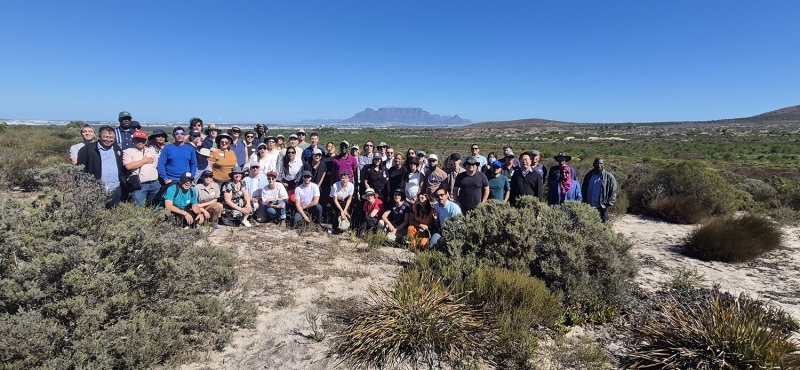
Cities participating in the Generation Restoration project have shared solutions and experiences through a series of online and in-person events, including multi-day workshops in Paris and Cape Town.
“City leaders can prioritize restoration when residents feelhow it will improve their lives as well as the health of the planet,” said Mirey Atallah, Chief of the Adaptation and Resilience Branch in UNEP’s Climate Change Division. “By engaging people at every step of their restoration projects, cities like Cape Town turn communities into advocates for the resilient cities that we all need, now and in the future.”
About the UN Decade on Ecosystem Restoration
The UN General Assembly has declared 2021–2030 a UN Decade on Ecosystem Restoration. Led by the UN Environment Programme and the Food and Agriculture Organization of the UN, together with the support of partners, it is designed to prevent, halt, and reverse the loss and degradation of ecosystems worldwide. It aims at reviving billions of hectares, covering terrestrial as well as aquatic ecosystems. A global call to action, the UN Decade draws together political support, scientific research, and financial muscle to massively scale up restoration.