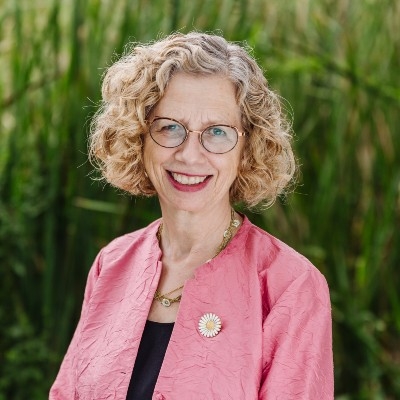
Inger Andersen is Under-Secretary-General of the United Nations and Executive Director of the United Nations Environment Programme, headquartered in Nairobi, Kenya.
Between 2015 and 2019, Ms. Andersen was the Director-General of the International Union for Conservation of Nature (IUCN).
Ms. Andersen has more than 30 years of experience in international development economics, environmental sustainability, strategy and operations. She has led work on a range of issues including agriculture, environmental management, biodiversity conservation, climate change, infrastructure, energy, transport, and water resources management and hydro-diplomacy.
Between 1999 and 2014, Ms. Andersen held several leadership positions at the World Bank including Vice President of the Middle East and North Africa; Vice President for Sustainable Development and Head of the CGIAR Fund Council.
Prior to her 15 years at the World Bank, Ms. Andersen worked 12 years at the United Nations, first on drought and desertification, beginning with the UN Sudano-Sahelian Office. In 1992, she was appointed UNDP’s Water and Environment Coordinator for the Arab Region.
Ms. Andersen holds a Bachelors from the London Metropolitan University North and a Masters in Development Economics from the School of Oriental and African Studies, University of London.
Staff Position Level: USG
Region: Western European & Others