UNEP InTex factsheets developed with the support of the European Union showcases how small and medium-sized enterprises (SMEs) in Kenya, South Africa, and Tunisia are transforming the textile sector toward sustainability and circularity.
From tackling chemical pollution, resource use and managing waste better, to creating circular, socially conscious businesses, fostering partnerships for circularity, and building transparent, traceable value chains; each factsheet highlights real-world examples of innovation, impact, and collaboration. Together, they highlight how life cycle approaches and eco-innovation can reduce environmental impacts while boosting business resilience and profitability with concrete examples.
#BeatPollution
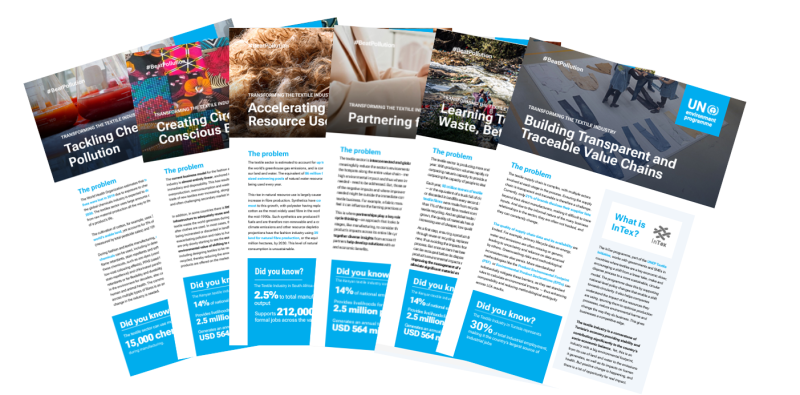
The #BeatPollution series on textiles, spotlighting actions achieved through the UNEP InTex programme, was launched in conjunction to the Twentieth Session of the African Ministerial Conference on the Environment (AMCEN-20), an instrumental gathering in steering the continent towards sustainable development.
Read the story featuring examples from the factsheets here: 'As fashion's environmental toll mounts, these small clothes makers embrace sustainability'. And watch the video on ‘Circular fashion: the $700 billion opportunity to #Beatpollution’ below:
As part of the UNEP Textile Initiative, the InTex Programme works with governments and SMEs in countries where textiles are a key economic driver, to produce more sustainably, through better data.