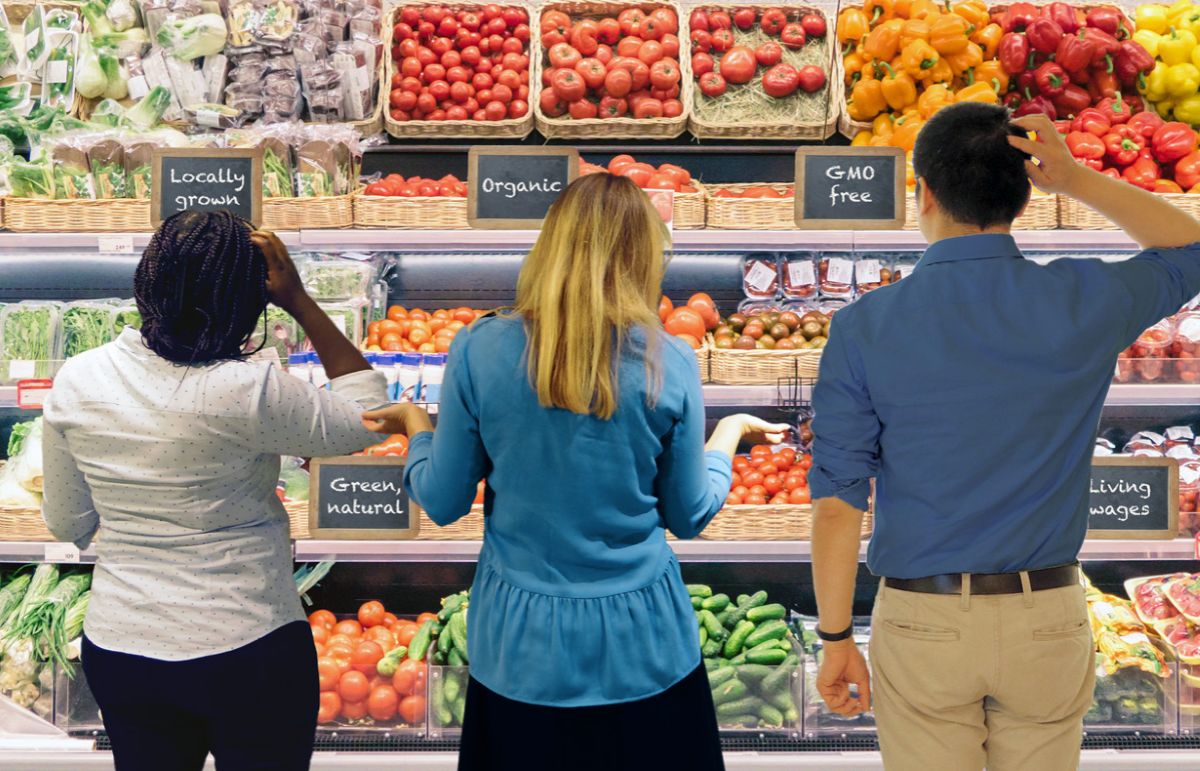
Consumer information seeks to empower consumers to make informed and sustainable choices. This requires the provision of accessible, reliable and verifiable sustainability information by market suppliers. Information about product sustainability should be reliable, relevant, clear, transparent and accessible, backed by credible science, communicated in a user-friendly manner.
Consumer information tools encompass ecolabels, voluntary sustainability standards, environmental product declarations, footprints and marketing claims (based on self-declaration). These tools are based on life cycle approaches which provide information on the impacts of goods and services over their lifetime, from the extraction phase to the end-of-life, looking at environmental and social attributes. The value of these tools relies on their ability to make the information about product sustainability available to the end-users.
10YFP Consumer Information Programme for Sustainable Consumption and Production
The 10-Year Framework of Programmes on Sustainable Consumption and Production (10YFP) hosts six programmes, one of which is the Consumer Information Programme for Sustainable Consumption and Production (CI-SCP). It supports the provision of quality information on goods and services, and the identification and implementation of effective strategies to engage consumers in sustainable consumption. It empowers and raises the profile of relevant policies, projects and partnerships, and provides opportunities for collaboration between all sectors and stakeholders.
UNEP is a member of the Programme’s Multi-stakeholder Advisory Committee and contributes to the Programme’s objectives and work plan through a number of activities to increase demand for sustainable and circular products in high impact sectors:
-
Digital Product Information Systems (DPIS)
 Digital Product Information Systems (DPIS), such as Digital Product Passports, are designed to enable the exchange of sustainability and circularity data across all stages of a product’s lifecycle. Their core function is to systematically manage product information, serving as a digital infrastructure layer that facilitates the flow and accessibility of data across value chains. DPIS support resource conservation, the implementation of R-strategies (e.g., reuse, remanufacturing, recycling), and address broader environmental and social sustainability goals. They empower consumers and businesses to make informed, sustainable decisions and facilitate the transition to a circular economy.
 Under the Digitalization for Circular Economy (D4CE) Initiative, launched in 2023 by the One Planet Network and the Coalition for Digital Environmental Sustainability (CODES), UNEP aims to harmonize existing and emerging DPIS initiatives in collaboration with partners such as ITU, UNIDO, WBCSD, the Wuppertal Institute, and Plan A. Specific objectives include: 1) Achieve global consensus on the data categories of DPIS giving a voice to the global south; 2) Uptake of principles on the governance and technology architecture (accessibility, interoperability, traceability and open source technology), and 3) Recommend the adoption of financial mechanisms and incentives for the implementation of DPIS.
-
Trustworthy Green Claims
 The Guidelines for Providing Product Sustainability Information are the outcome of an international multi-stakeholder process led by UNEP and the International Trade Center (ITC) under the 10YFP Consumer Information Programme. They offer value chain and public sector professionals clear guidance on making effective, trustworthy claims to consumers on product-related sustainability information. The Guidelines are applicable to all regions and companies of all sizes. Ultimately, they aim to empower consumers to make reliable, informed sustainable choices. The Guidelines provide a comprehensive set of high-level principles, ranging from fundamental to aspirational, and guidance on how to apply them.
In 2025, UNEP launched the Retail4Impact Initiative. Building upon the Guidelines for Providing Product Sustainability Information, the initiative aims to unite the retail sector in providing effective, trustworthy claims on product sustainability information to consumers at the point of sale. Technical support has been provided to companies through a series of capacity building workshops in key emerging markets and regional groups. The initiative is strengthened by the engagement of partners ranging from retail or consumer associations, business networks, certification schemes, research institutes, universities and NGOs. To learn more about the initiative and its upcoming activities, visit the Retail4Impact webpage.
-
Ecolabels and Certification Schemes
Ecolabels and certification schemes are designed to provide information about the sustainability attributes of products or services, based on environmental and social criteria. They help consumers, businesses, and public procurers make more informed choices by indicating the sustainability performance of products. They are credible (third party certified), relevant (using a life cycle approach), and science-based. Consumers can easily identify leading, front-running products and services and businesses can communicate in a clear and simple way the sustainability credentials of a product.
By supporting ecolabels and certification schemes in high-impact sectors, UNEP seeks to create incentives for cleaner production by addressing a major barrier to changing consumption and production patterns: the complexity of conveying the environmental impacts of products and services to consumers and public authorities. With self-declared and often weak product labels proliferating in national markets, it is difficult for consumers and public procurement authorities to know if their choices are sustainable. Strong voluntary sustainability standards help to reduce complexity and provide reliable information to guide decisions. For more information, look at our hub on ecolabels and certification schemes.
 The Environmental Alliance of America is the first regional labelling programme of its kind, backed by regulatory, standardization, and accreditation bodies. It aims to harmonize and promote eco-labeling efforts in Latin America and the Caribbean to boost sustainable trade and better-informed consumer choices. The alliance holds a strategic position to empower nearly 450 million consumers with verified information, drive business innovation and competitiveness, and support governments in meeting their climate, biodiversity, and pollution commitments. UNEP supports the Alliance in navigating the future of eco-labeling and product sustainability information in the region.
 The Eco-Advance project (2022-2026) is funded by the German International Climate Initiative (IKI) and is implemented by GIZ, UNEP, and Öko-Institut. It aims to increase the use of sustainable public procurement (SPP) and Type-1 Ecolabels as tools to improve climate mitigation, biodiversity, and resource protection, through ambitious ecolabels, improved policy and legal frameworks, increased engagement of the private sector, as well as regional and global exchange. By supporting Type-1 ecolabels, the project helps to create incentives for cleaner production in high impact sectors by addressing the complexity of conveying the environmental impacts of products and services to consumers and public authorities.
News
Stay informed on the latest updates and events on consumer information. Access here.
Resources
Explore guidelines, policy briefs and tools on consumer information. Access here.
Contact us
Laetitia Montero, Programme Management Officer - laetitia.montero@un.org