Check against delivery
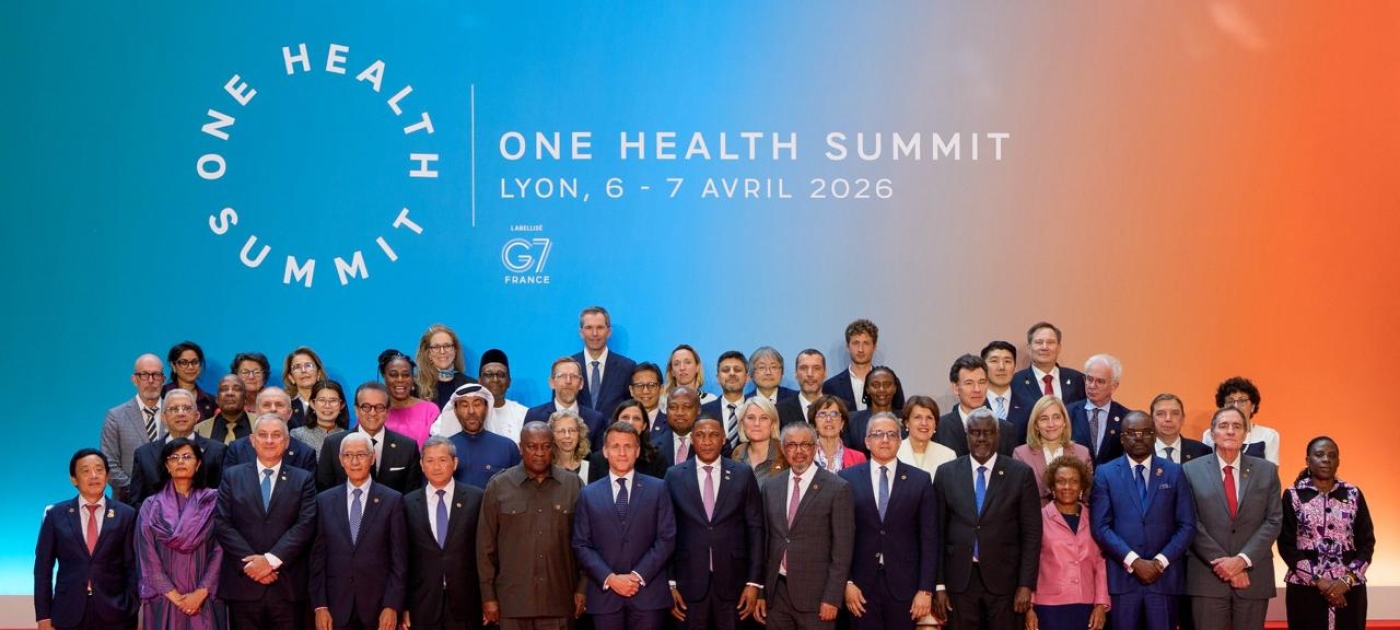
Let me start by giving my deep thanks to France, and of course, to President Macron for hosting this important Summit. Let me also express my ongoing thanks to our dear colleagues joining us here today who are part of the Quadripartite Secretariat for One Health.
This panel session invited us to expand the boundaries of One Health. It invited us to talk about the health of humans, the health of domesticated animals, the health of wild animals, and the health of our biodiversity. The biodiversity on which we stand – that feeds us, that gives us our water and our lives as we know it.
The reality is we stand or fall on nature. We must all understand that we are sharing this earth with other species, and when they are in a bad way, so are we.
Too often One Health can be too narrow. Yes, we must focus on infectious diseases, which are of course very important, but we also must make sure that we go beyond that.
Because this cannot just be a human centric conversation. We are sharing this planet with 8 other million species – species on which we depend more than they depend on us. Because if we were to disappear, frankly, I am sure those other species would be just fine.
The issue that we must truly recognize and understand is quite simple: we have been rather careless with the Earth. We have degraded it significantly, and that degradation is now sending us invoices. Invoices we are struggling to understand – invoices that come in the form of climate change, fires, droughts, floods, zoonotic diseases, desertification and lands that are no longer fertile, or waters that are increasingly polluted.
In 2022, the United Nations General Assembly agreed that there is a universal human right to a clean, healthy, and sustainable environment. This right was then taken up by the United Nations Environment Assembly (UNEA), which began to examine how Nature-based Solutions can support a healthy planet. And, of course, when we agreed on the Kunming-Montreal Global Biodiversity Framework – the Paris Agreement equivalent for the biodiversity convention – it was very clear that human health should be embedded within the targets of the agreement.
We were also very encouraged to see that, at COP26 in 2021, human health was given a significant lift within the process. Building on the strong work of the World Health Organization, we saw the essential requirement of resilient health systems and a greater recognition of the co-benefits of climate action and health which came to the forefront of the conversation.
At the United Nations Environment Programme (UNEP), we speak about a triple planetary crisis: the crisis of climate change, the crisis of biodiversity loss and land degradation, desertification, and water issues, as well as the crisis of pollution and waste.
So, when we speak about One Health and only speak about pollution, we are missing the full picture. Because desertification, droughts, sand and dust storms, biodiversity loss, phenological shifts – all these escalating environmental impacts can have significant health impacts. Sand and dust storms, for example, are strongly correlated with childhood asthma – an impact that, in affected regions, can be as severe as that of pollution.
But a few words on pollution, because we do need to understand that our own careless interaction with the planet – emissions from fossil fuels, increasing chemical pollution, heavy metals and more – are all contributing to respiratory diseases and cardiovascular conditions, as well as contributing to strokes and cancer incidence.
In 2022, The Lancet published data showing that tackling pollution could help reduce premature deaths by 9 million each year.
Antimicrobial resistance (AMR) is, of course, another critical dimension of the environmental challenge. But we must not focus only on the overuse of antibiotics in humans and domesticated animals. We must also ask: how are we managing our pharmaceutical production? What happens to the effluent? What do we do with agricultural runoff? What occurs within our health sectors? How do we handle bio-waste? And what are we doing with antivirals, antifungals, and antiparasitics that are, at times, applied to our fields? All of this is part of the AMR story.
So, let us broaden our perspective when we speak about non-communicable diseases. Let us ensure that we educate health professionals, because it is no longer enough to understand only the health dimension, we must also understand the nature dimension. How do we integrate ecological health into medical practice?
We know today that there are doctors who are well informed, who understand that, for conditions such as diabetes, stress, and cardiovascular disease, sometimes the best medicine is exposure to nature; what some doctors refer to as Rx Nature. Take a walk, get moving – and preferably do so in nature. It can bring down blood pressure, help manage diabetes, and most certainly lower stress levels.
On food systems, it is critical that we are well nourished – both for our health and for our resilience. At the same time, our food systems must not be those that poison us. We must ensure that our food systems are nature positive.
On water, let us continue to address water supply and sanitation, but also speak about “the broader hydrological cycle – “big water” – that which is sustained by nature. Nature “sweats it out,” releasing moisture through evaporation which goes into the atmosphere and returns as rain. If we do not protect our rainforests and tropical forests, we risk losing this vital system. In this context, let me give a shout out to the UAE and Senegal for hosting the UN Water Conference later this year, something UNEP looks forward to.
And finally, we must consider nature as medicine. I mentioned the value of walking in nature, but we must also recognize that roughly 80 per cent of modern medicine is derived from nature – from plants, from natural compounds, or inspired by what nature teaches us. This is just yet another reason why protecting nature is so essential.
There is a landmark MRI study on nature and neurodevelopment, published in 2018, which examined differences in brain volume based on children’s residential exposure to greenness. The study, focusing on children aged seven to nine, found greater volumes of both grey and white matter in brain regions linked to improved cognitive performance. This suggests that regular exposure to natural environments supports healthy brain development.
This is not for the faint hearted, though of course, not really a surprise. If you take a tiger cub and place it in a concrete enclosure, or allow it to grow in the wild, which will develop more fully? We understand this instinctively in nature. The question is: why do we not apply the same understanding to our own children?
The message, therefore, is clear: a healthier planet means healthier people. Preventing environmental degradation can reduce premature deaths, lessen the global burden of disease, and ease pressure on health systems.
From UNEP, I take this opportunity to reaffirm our commitment to supporting countries in integrating biodiversity and health linkages. We are working with around 70 countries as they prepare their National Biodiversity Strategies and Action Plans (NBSAPs) – comparable, for those more familiar with climate policy, to Nationally Determined Contributions (NDCs). These plans are critical, and we will work to strengthen the health and One Health dimensions within them.
I also want to affirm our commitment to strengthening our work on wastewater and environmental surveillance. We do a lot of such surveillance in priority countries across Africa to support efforts to strengthen capacity to detect health- and environment-related risks.
The bottom line is this: the Quadripartite One Health Joint Action Plan is our roadmap. It calls for holistic, collaborative solutions – and that is how we will succeed.
If we leave this agenda solely with health ministers, we will have done a disservice. As we have heard from distinguished ministers here today, the environment dimension cuts across all sectors. One Health is not a narrow environmental issue. It is the foundation beneath our feet, the food we consume, and the system that nurtures us all.
In the end, this is about the health of our future – and if we fail to protect it, we are failing to protect not just our future, but the future of our children and our children’s children.
I thank you.