Your Excellency Mr. Ibrahim A. Munir, Minister of Environment of Libya and President of AMCEN,
Your Excellency Mr. Abdullah Bin Ali Al-Amri, Chair of the Environment Authority of Oman and President of UNEA-7,
Ms. Zainab Hawa Bangura, Director-General of the United Nations Office at Nairobi,
Mr. Ibrahim Thiaw, Executive Secretary of the United Nations Convention to Combat Desertification,
Your Excellency Mr. Moses Vilakati, Commissioner for Agriculture, Rural Development, Blue Economy and Sustainable Environment, African Union Commission,
Your excellency, Deborah Mlongo Barasa, Cabinet Secretary for Environment, Climate Change and Forestry.
All protocols observed!
Honorable Ministers, Partners, stakeholders and major groups, youth, all other distinguished delegates, esteemed colleagues, friends –
Let me begin by expressing my sincere gratitude to the Government of Kenya for generously hosting us in this beautiful compound, home to our UNEP Headquarters.
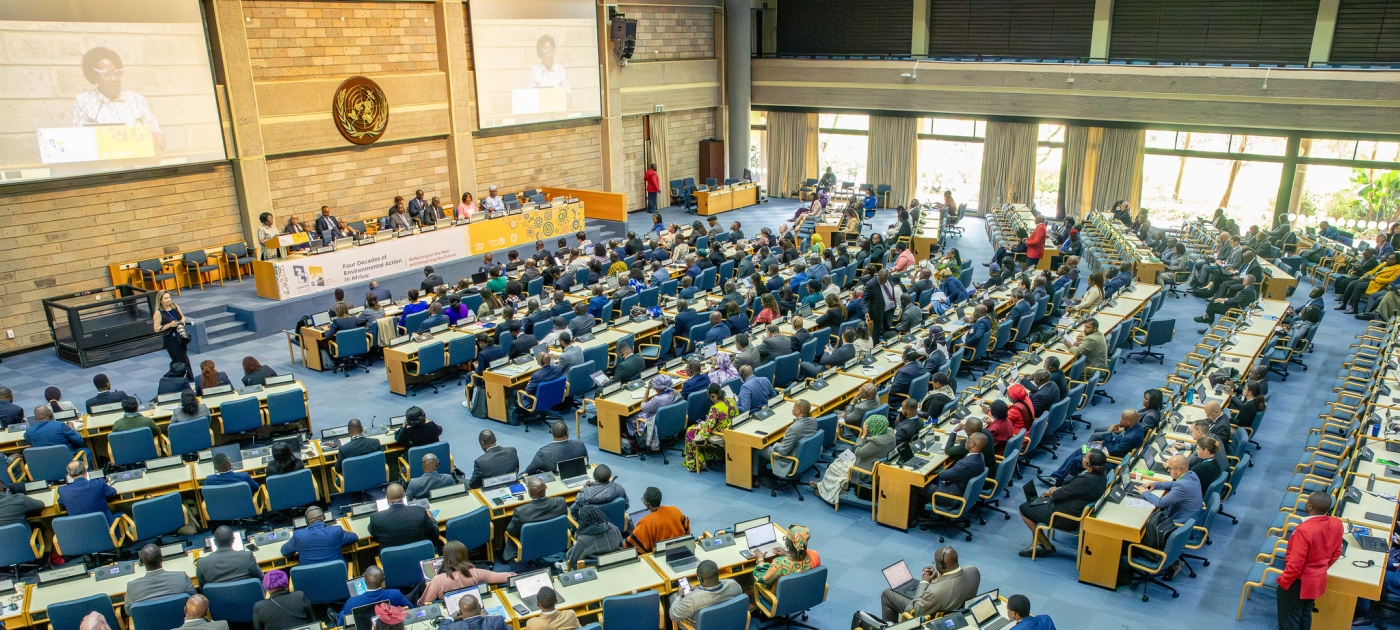
It is a great honour to join you today as we celebrate the 40 years of environmental leadership by the African Ministerial Conference on the Environment — AMCEN, it is time to reaffirm your commitment to protecting Africa’s natural heritage and promoting sustainable development. For four decades, AMCEN has stood as a beacon of leadership and collaboration, uniting Africa in the vital pursuit of environmental sustainability.
We recognise and warmly congratulate all past AMCEN Presidents and Bureau members. Their dedication and leadership have laid the foundation for the achievements we celebrate today. Their collective efforts have made AMCEN the continent’s foremost platform for environmental coordination.
Over decades when global divisions threatened progress, AMCEN allowed Africa to speak with a unified voice. By setting forward Common African Positions and empowering the African Group of Negotiators across climate change, biodiversity, chemicals, desertification, and plastic pollution, AMCEN has ensured Africa’s priorities are heard and acted upon at the global level.
As AMCEN pushed for the Paris Agreement to recognise, the continent is uniquely vulnerable to climate change.
According to the World Meteorological Organisation, in sub-Saharan Africa, the cost of climate adaptation is estimated to be between 30-50 billion USD annually over the next decade, or 2-3 percent of the region's GDP.
By 2030, it is estimated that up to 118 million extremely poor people will be exposed to drought, floods and extreme heat in Africa, if adequate response measures are not put in place.
That’s why AMCEN’s advocacy is vital. The group played a pivotal role in securing agreement on the Loss and Damage Fund at Climate Change COP27. AMCEN has provided a strong and unified presence in many multilateral environmental agreements, such as CITES, the Convention on Biological Diversity, the UN Convention to Combat Desertification, and the Strategic Approach to International Chemicals Management. And AMCEN is exerting its influence in the global plastics treaty negotiations.
AMCEN’s leadership extends beyond diplomacy to advancing science-based policy. The Africa Environment Outlook and the Africa Waste Management Outlook have provided essential evidence-based assessments guiding informed decision-making. The Africa Environmental Information Network has harmonised data gathering across the continent, while tools such as the Africa Atlas of Natural Capital have enabled smarter planning.
In the arena of ecosystem restoration and land management, AMCEN has driven continental action. It provided political leadership for the Great Green Wall initiative, transforming it into a flagship program combating desertification and fostering resilience. AMCEN’s adoption of the Pan-African Action Agenda on Ecosystem Restoration supports biodiversity and climate goals, while backing Land Degradation Neutrality targets and integrating restoration into national climate commitments.
AMCEN has also opened up financial opportunities and support for human development and wellbeing. As the late, great Wangari Maathai said: “The environment and the economy are really two sides of the same coin. If we cannot sustain the environment, we cannot sustain ourselves.”
So the launch of the Africa Green Stimulus Programme aligned recovery efforts from the COVID-19 pandemic with sustainable, green investments. The programme has mobilised over USD 1 billion in blended finance for off-grid solar systems; clean cookstoves; energy-efficiency retrofits; and ecosystem restoration and climate-smart agriculture.
Meanwhile, AMCEN’s Climate Finance and Adaptation Advocacy has helped secure a New Collective Quantified Goal of USD 300 billion per year of climate finance by 2035.
And support for the African Circular Economy Alliance promotes resource efficiency.
Initiatives like the Ecosystem-Based Adaptation for Food Security Assembly and the One Health approach highlight the critical connections between environment and human wellbeing.
AMCEN’s role in strengthening multilateral environmental agreements and regional governance has been fundamental. From advocating ratification and implementation of conventions on hazardous waste, chemicals, and pollution, to supporting regional seas conventions and shaping the Africa Ocean Governance Strategy.
The promotion of the Africa Blue Economy Strategy and Africa’s engagement in the BBNJ Agreement underscore AMCEN’s commitment to protecting marine biodiversity beyond national jurisdiction.
Finally, I warmly welcome the High-Level Statement on AMCEN@40, which will be adopted later today. This declaration will set the tone for our future work, reaffirming our shared commitment to an environmentally sustainable, resilient, and prosperous Africa.
As we mark this important milestone, let us draw inspiration from AMCEN’s legacy and renew our dedication to the environmental challenges and opportunities ahead. Together, we can build on this strong foundation to secure a sustainable future for generations to come. And the next 40 years hold immense potential for Africa’s environmental progress. Let us harness our collective expertise, innovation and determination to create sustainable future for all.
Thank you.