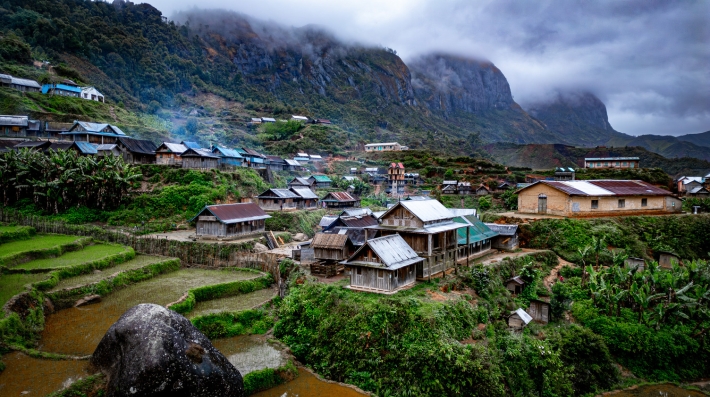
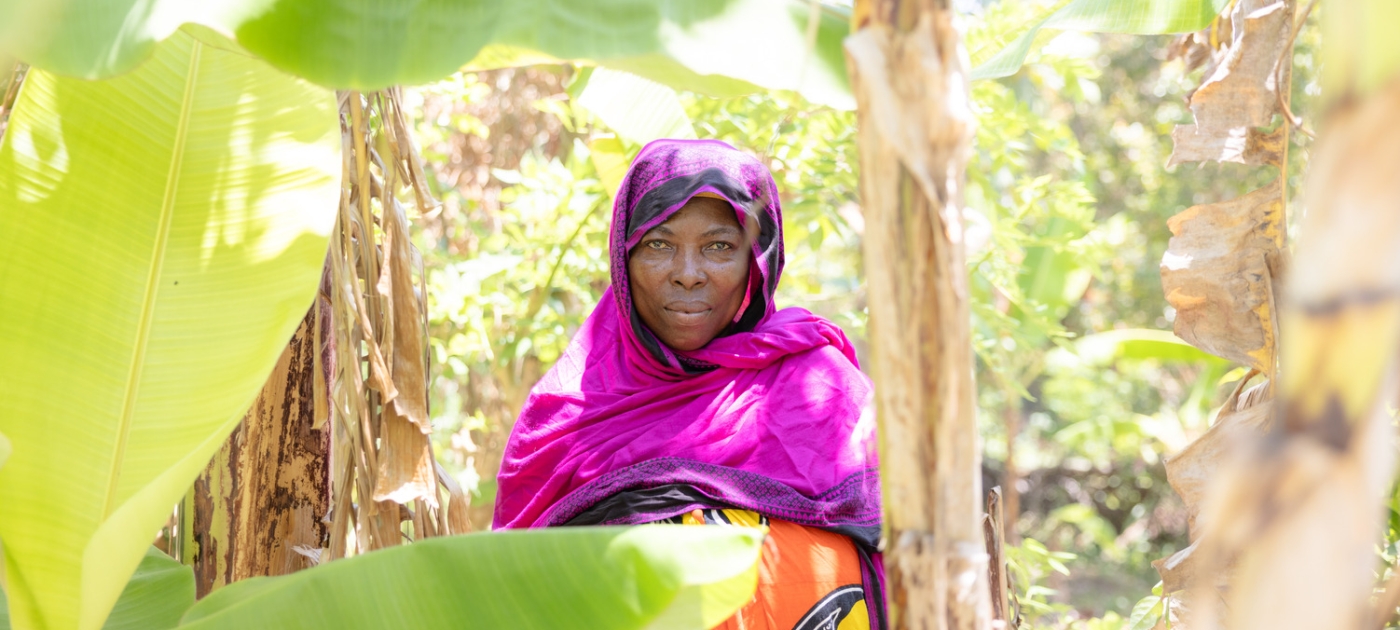
Toybu Ahmed’s green rain jacket blends into the lush jungle as he climbs a steep slope enveloped in milky fog on the island of Anjouan in the Comoros. He moves carefully along narrow paths carved into the hillside. Around him, new trees rise from the soil – a fragile sign of recovery.
Ahmed is one of many who have replanted thousands of trees on Anjouan’s denuded slopes, part of an effort to reverse decades of deforestation that have pushed the island to the brink of environmental collapse. “When the forest disappeared, the dry land stopped giving,” Ahmed says.
Anjouan has been losing its forests at a staggering rate. One of the three main islands that make up the Comoros, it has seen its tree cover shrink by 28 per cent over the past 20 years. The loss has triggered cascading effects: soil erosion, dwindling freshwater supplies and collapsing harvests. It has also accelerated coastal erosion.
For Anjouan, a densely populated volcanic island of just 400 square kilometres, the disappearance of forests has become a ticking time bomb.

“I remember a football field by the beach where I played as a kid,” says Ahmed Gamao, who manages climate change adaptation projects at the Ministry of Environment. “Today, this place no longer exists because of the erosion. This is scary.”
For the past several years, Gamao has worked with local farmers to replant 1.4 million trees and restore 7,500 hectares of watersheds, benefitting some 38,000 people across the three Comorian islands. The work was part of a project supported by the United Nations Environment Programme (UNEP) and Global Environment Facility (GEF) that ran from 2017 to 2022.
Bringing water close to home
Anjouan’s forests act like sponges, absorbing rainwater and releasing it slowly into rivers and streams. Their loss has devastated freshwater supplies, and over the past few decades, 40 of Anjouan’s 50 perennial rivers have dried up, becoming intermittent streams.
Climate change has intensified these pressures. Rising temperatures and shifting rainfall patterns have made rain scarce and unpredictable, forcing families to buy water during peak dry seasons, a huge expense for many.

Besides restoring forest cover, the GEF Least Developed Countries Fund and UNEP project installed rainwater-harvesting tanks in 15 villages, making water more accessible to more than 38,000 people. “Before the tank was installed, we had to walk 10 kilometres among the cliffs to fetch water,” says Hadija Souf, the head of a cooperative in Kyo village. “Having the tank made things better, but the water is still precious.”
Reviving soil
Without trees, rain falls on bare soil and rushes downhill, carrying fertile earth away with it. Rapid deforestation has degraded around 65 per cent of agricultural land in Anjouan, which because of its topography had little arable soil to begin with. In Comoros, where 70 per cent of the population lives in rural areas and depends on farming for food and income, the consequences are enormous.
“Many trees were cut to make room for cloves,” Ahmed says. “And then, when I planted cassava and other crops, they wouldn’t grow as they used to.”

Farming of cash crops like cloves, vanilla and ylang-ylang makes up nearly 90 per cent of Comoros’ agricultural exports and forms the backbone of its economy. For families with few alternatives, it is an economic lifeline. Yet clearing forests for farming and cutting trees for firewood — often the only affordable energy source — have also driven deforestation.
To help break that cycle, communities played a central role in restoring degraded land by replanting trees in forests areas and adopting climate-smart farming methods. These techniques helped farmers produce more from existing plots, putting less pressure on forests. The project trained local villages in agroforestry, including how to plant fruit trees and nitrogen-fixing crops, such as cassava. The training also focused on crop terracing and live fencing, which helps improve soil fertility.

Along with reviving forest cover and restoring agricultural land, the UNEP-GEF initiative has helped 1,000 local families find alternative livelihoods, Some set up home spice gardens while others branched out into poultry farming and the production of plant-based health supplements. This meant households were not relying only on a narrow set of cash crops and helped raise average annual incomes by 20 per cent.
“My lemon trees began to bear fruit,” says Kiladati Houmali, a 30-year-old mother of four. “I can sell it at the market and even share it with the neighbours.”
Reinforcing natural protection against climate shocks
Across Anjouan, rusting carcasses of abandoned cars, overtaken by vines and moss, serve as quiet reminders of nature’s capacity to heal. Yet the battle for local forests is far from over.
“Anjouan shows, in miniature, a pattern playing out across the planet, when short-term survival choices undermine the survival itself,” says Mirey Atallah, the Head of UNEP’s Adaptation and Resilience Branch. “Forests act as climate shock absorbers, helping communities withstand droughts, floods and heatwaves. As these events become the new normal, protecting ecosystems and investing in adaptation is the only reliable and economically sound strategy.”

According to the World Bank’s Climate Risk Profile for Comoros, by mid-century, rainfall extremes once expected only once every hundred years could occur almost twice as often. In a country where 40 per cent of the population lives below the poverty line and infrastructure is scarce, such events could be deadly and erase hard-won development gains.
Building on the success of the restoration efforts from 2017 to 2022, UNEP and the GEF, along with other donors, will support local authorities in launching a larger ecosystem-based adaptation project with a US$10 million grant from the GEF. This initiative aims to enhance the climate resilience of 140,000 coastal residents by restoring 6,200 hectares of mangroves, beaches and upper watersheds, which act as the islands' natural defence system against cyclones and rising sea levels.
Against mounting odds, Comoros communities continue fighting to restore and preserve their natural environment, as their future depends on it. “People now understand what is at stake,” Gamao says. “Their lives – and the lives of their children.”
Written by Alyona Synenko
Technically reviewed by Marcus Nield, Jessica Troni and Mirey Atallah