Juba – A two-day workshop on Vulnerability Assessment and Adaptation to climate change was held from 28th February to 1st March 2017, organised by the Government of the Republic of South Sudan through the Ministry of Environment and Forestry in collaboration with the UN Environment’s South Sudan Office. The workshop was part of an ongoing process to prepare South Sudan’s Initial National Communication (INC) document to the United Nations Framework Convention on Climate Change (UNFCCC).
The objective of the workshop was to develop the vulnerability and adaptation content for the INC through a consultative process with various stakeholders. The meeting was attended by more than 50 participants from a cross section of government ministries, departments, development partners, academia and civil society.
The workshop was opened by Mr. Joseph Africano Bartel, the Under-Secretary, Ministry of Environment and Forestry. He emphasised the importance of the workshop and added that South Sudan is expected to fulfil its obligations to the UNFCCC, having joined as a Party in 2014. Progress in addressing adaptation to climate change has already begun through the development and launch of the National Adaptation Plan of Action (NAPA, 2016). The plan identifies 28 projects which when implemented will address vulnerability to the already changing climatic conditions in South Sudan.

In his opening remarks, UN Environment South Sudan Country Programme Manager Arshad Khan outlined the impacts of climate change. These vary from rising temperatures to reducing or increasing rainfall in different areas of the country.
The UN Environment consultants presented the current and future trends of temperature and rainfall patterns from the Intergovernmental Panel on Climate Change which provided the participants with useful information on climate change impacts.
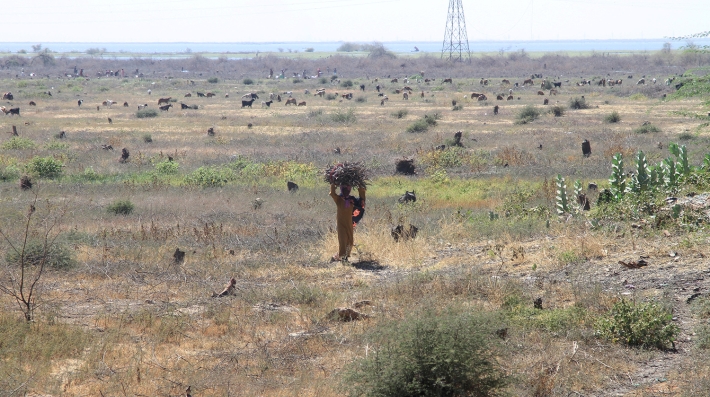
The participants thereafter discussed current and future vulnerabilities and impacts, covering the seven agro-ecological zones of South Sudan. Frequent drought episodes and flooding were identified as the main hazards affecting livelihoods of agro-pastoralists and pastoralists. Additionally, social, economic and environmental impacts of a changing climate were discussed for each of the agro-ecological zones and ranked in order of importance.

Frequent drought episodes and flooding were identified as the main hazards affecting livelihoods of
agro-pastoralists and pastoralists
An assessment of ongoing adaptation actions by various actors in the vulnerable areas was done on the second day of the workshop, which provided a clearer picture of existing adaptation gaps. To fill these gaps, participants proposed various adaptation initiatives using pre-agreed criteria. Participants also ranked and prioritised the proposed actions in order of their importance.
The inputs from participants of the workshop generated rich content for the vulnerability and adaptation chapter of the INC. Additional information will be collected from secondary sources and key individuals to enhance the content from participants. The draft vulnerability and adaptation chapter will be developed by the consultants and the Adaptation Thematic Group will be reconvened to validate the content before its inclusion in the final INC later this year.