News Climate Action

Spotlight on climate action

Credit: UNEP

At a time of profound geopolitical and economic uncertainty—when governments and societies are navigating multiple, overlapping crises—keeping climate action at the top of the global agenda is more important than ever. The world cannot afford further delays or inaction, especially when climate solutions can deliver wider benefits for economies, jobs, public health and resilience.

Climate Live Feed is your daily pulse on climate action—tracking how progress is being made across sectors, finance, technology and resilience. It brings together the latest science, policy developments and practical solutions, from clean energy expansion and climate finance to adaptation efforts and innovation on the ground.

Explore the latest climate news, announcements, reports and events from the United Nations and partners—because when it comes to climate, the heat is on to deliver solutions.


5 hours ago

With NDC 3.0, Niger is charting a clearer path toward a more resilient future

Niger has taken a major step forward in its climate action efforts, officially validating its updated Nationally Determined Contribution (NDC 3.0) - a new five-year plan to tackle climate change and protect its people and economy.

Adopted during a national workshop in Niamey on 19 May, the plan reflects Niger’s commitment to stronger, more inclusive climate action under the Paris Agreement.

Niger's NDC 3.0 is built on three key priorities: aligning climate action with national development goals, strengthening resilience for the most vulnerable communities, and scaling up access to the finance needed to respond to growing climate risks.

Supported by UNEP together with its Copenhagen Climate Centre, the plan places a strong focus on those most affected by climate change including rural populations, farmers, women, youth, nomadic groups, and displaced communities while also addressing emerging challenges such as climate-related migration, security risks, and health impacts.

The validation marks the culmination of a year-long, nationwide consultation process, bringing together stakeholders across sectors to shape a more ambitious and people-centered climate plan. Read more here.


22 hours ago

The climate crisis is accelerating, but so are the solutions.

photo of cities
Evgeny Matveev/Unsplash

The climate crisis is accelerating, but so are the solutions.

A new UNEP policy brief, Cheaper. Cleaner. Unstoppable., highlights five climate technologies and approaches that are already gaining momentum and helping cut emissions: renewable energy, electric vehicles, passive cooling, heat pumps and reducing food waste.

The message is clear: progress is possible. With the right policies, investment and public support, these solutions can reach tipping points where change becomes self-reinforcing.

Read the Q&A

02 Jun 2026 09:40

50 Cities for climate action: avoiding and adapting to a 50°C world

Credit: Municipality of Paris

More than 50 cities across the globe have joined UNEP's new 50@50 activation to confront one of the fastest-growing and deadliest climate risks: extreme heat.  

From Lagos to Paris, Melbourne to Mendoza, cities are sharing practical solutions, strengthening preparedness and accelerating action to protect people while cutting emissions. Together, they are showing that climate resilience starts long before a heat emergency strikes. 

Read the press release. 

29 May 2026 16:51

2026 Methane Summit

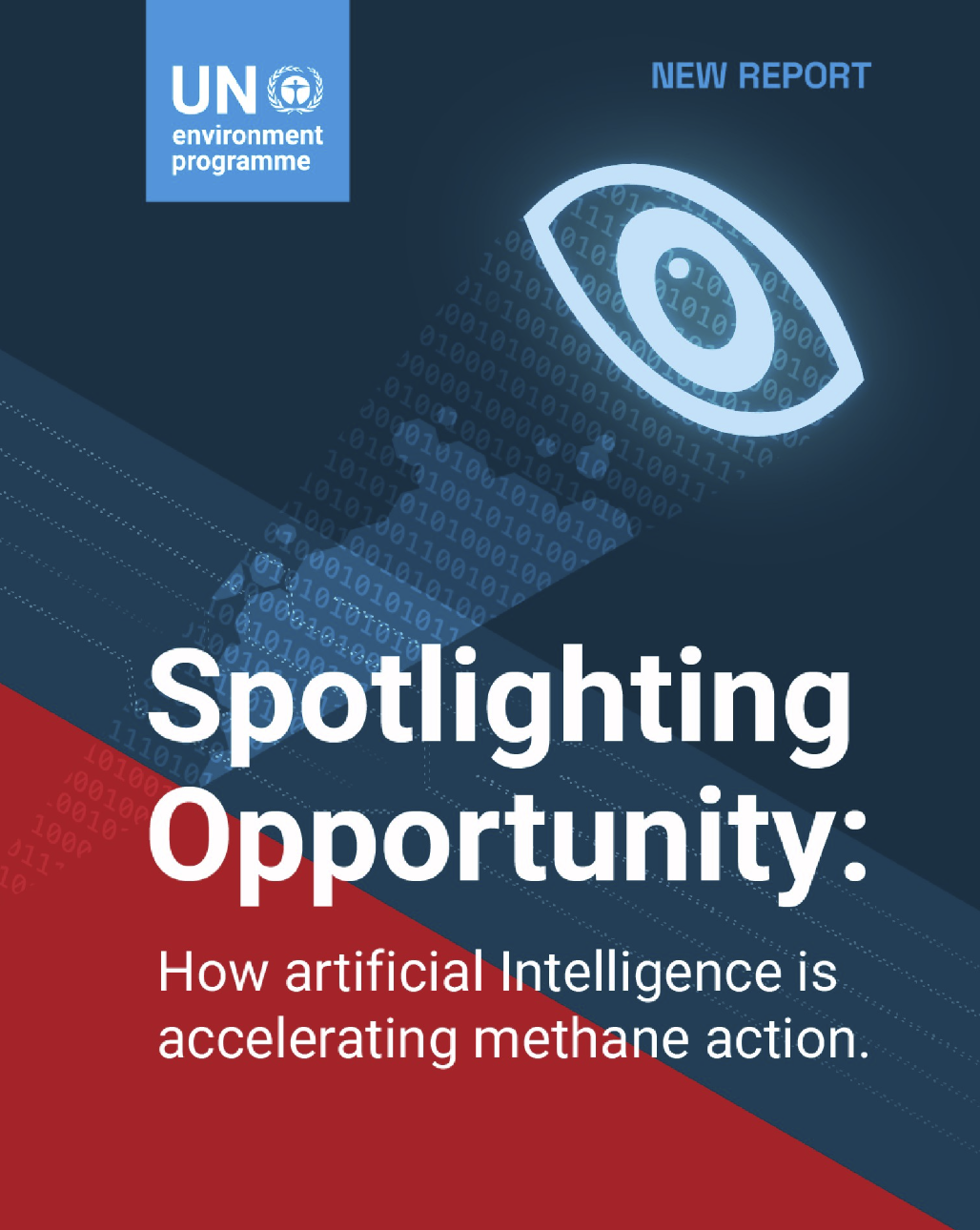
At the China Methane Summit in Beijing, UN Environment Programme Climate Division Deputy Director Ruth Zugman do Coutto highlighted methane as one of the fastest opportunities to slow near-term warming, noting that “if decarbonization is the marathon, methane is the sprint.” China’s leadership in renewable energy and electrification has already reshaped global climate progress, and applying that same ambition and scale to methane mitigation could deliver major benefits for climate, energy security and public health.

UNEP’s International Methane Emissions Observatory (IMEO) is working with scientific and institutional partners in China to strengthen methane transparency and support practical, data-driven action — from satellite monitoring and methane alert systems to coal mine methane mitigation and methane measurement research. IMEO collaborations with institutions including China University of Mining and Technology and Nanjing University are helping advance scientific understanding of methane emissions and strengthen global methane knowledge.

China is uniquely positioned to help shape the next chapter of methane action through advanced monitoring systems, coal mine methane mitigation and stronger engagement across global methane initiatives such as IMEO’s Methane Alert and Response System (MARS), the Steel Methane Programme and OGMP 2.0. Strong international collaboration will be essential to accelerate methane transparency and turn data into meaningful climate action.

28 May 2026 18:26

Now launched: Rooted in nature – Advancing Nature-based Solutions from national policy to subnational climate action

Developed under UNEP’s Generation Restoration project by the UNEP Copenhagen Climate Centre, Rooted in Nature: Advancing Nature-based Solutions from National Policy to Subnational Climate Action  is a practical guide designed to help governments bridge the persistent gap between national commitments and local implementation of Nature-based Solutions (NbS). The guide shows how urban action can significantly accelerate progress across climate, biodiversity, pollution reduction, and resilience agendas.

It provides policymakers with clear pathways to integrate urban NbS into national frameworks such as NDCs, NAPs, and NBSAPs—ensuring that global commitments translate into tangible local impact. It offers a roadmap for aligning national ambitions with the realities, opportunities, and constraints faced by cities.

Drawing on real-world experiences from UNEP-supported cities—including Manaus, Curitiba, Iloilo, Quezon City, Seattle, Montréal, Lusaka, and Port Louis—the Guide highlights how local governments are already leveraging ecosystem restoration to reduce climate risks, enhance urban biodiversity, and improve public wellbeing. These case studies showcase replicable practices, from nature-positive urban planning to integrated watershed management and community-driven restoration.

For policymakers, the Guide offers three key contributions:

  • Clarity on how national policy levers can unlock and scale urban NbS
  • Concrete steps for embedding subnational action within climate and biodiversity strategies
  • Practical tools and insights drawn from UNEP’s on-the-ground support to cities worldwide
21 May 2026 22:12

Day 4 at WUF13: From ambition to implementation in resilient cities

Building on Day 3’s focus on the climate–housing nexus, Day 4 at WUF13 shifted strongly toward implementation, showcasing how policies, finance, and technical support can be translated into action on the ground.

Discussions on low-carbon housing highlighted the importance of multilevel governance and collaboration between national and local governments to reduce emissions in the housing sector while maintaining affordability, with practical examples from countries advancing implementation of the Belém Call for Action.

Across sessions, UNEP and partners also explored how technical assistance can unlock climate adaptation projects in cities with limited capacity, and how climate, biodiversity, and pollution action can help address urban fragility and strengthen inclusive resilience, including in contexts affected by insecurity and inequality.

Further dialogues reinforced housing as a determinant of health and well-being, and advanced multi-level governance approaches to support cities in operationalizing global environmental agreements. Water-responsive urbanism and nature-based “sponge city” approaches were also highlighted as scalable solutions for climate resilience, particularly in rapidly growing and informal urban areas.

Day 4 underscored a clear message: building resilient, low-carbon, and inclusive cities requires moving from global commitments to practical, financed, and locally owned implementation pathway

21 May 2026 16:00

WUF13 highlights local and regional action within the Rio Conventions

At WUF13 in Baku, UNEP and IHS-Erasmus University Rotterdam are highlighting how local and regional governments engage with the three Rio Conventions: the UNFCCC, CBD, and UNCCD.

Insights shared at the Forum point to key institutional barriers, governance gaps, and opportunities to strengthen multilevel environmental action, drawing on a broad evidence base including peer-reviewed research and expert input.

Discussions highlighted the central role of local and regional governments to climate and environmental governance. More than 70% of climate solutions fall within their jurisdictions, while 81% of NDCs 3.0 now include urban content—nearly double the previous cycle.

These themes were explored during the WUF13 session “From Global Agreements to Local Action: Multi-Level Governance for Sustainable Housing and Resilient Communities”, which also showcased the UNEP-IHS Tracker—a framework designed to help policymakers and city networks assess and advance local and regional engagement in multilateral environmental processes.

This work, developed in collaboration with ICLEI and UN-Habitat, is set to inspire dialogue at upcoming events such as Daring Cities 2026 and Innovate4Cities and contribute to reflections ahead of the next Rio Convention COP cycle. 

21 May 2026 08:10

General Assembly backs world court climate crisis ruling

A landmark UN General Assembly resolution reaffirmed the International Court of Justice’s 2025 advisory opinion, stating that States have a legal obligation to respond to climate change—a move described as “a victory for our planet.

  • The resolution was adopted with 141 in favor, 8 against, and 28 abstentions.
  • It calls on UN Member States to prevent significant harm to the climate and align with their Paris Agreement commitments.
  • States are reminded that policies must protect the rights to life, health, and an adequate standard of living.

Secretary-General António Guterres emphasized that this marks a powerful affirmation of international law, climate justice, and science, urging a rapid, equitable transition from fossil fuels to renewable energy to keep 1.5 °C within reach.

Read the full UN News article: General Assembly backs World Court climate crisis ruling
View Secretary General's full statement: Statement by the Secretary-General on the adoption of the General Assembly resolution on the ICJ climate obligations

20 May 2026 20:37

Day 3 at WUF13: Advancing the Climate-Housing-Urban Nexus

UNEP continued its engagement at WUF13, advancing discussions on how cities can deliver climate action while strengthening resilience, affordability and inclusion.

A key moment was the High-Level Dialogue on the Climate–Housing Nexus, where Deputy Executive Director and Assistant Secretary-General Elizabeth Mrema stressed that housing is not only shelter, but a foundation for dignity, resilience, and the relationship between people, cities, and nature. She stressed the urgency of aligning affordability and resilience, addressing the vulnerability of informal settlements, and scaling nature-based and low-carbon solutions, and re-emphasized that UNEP is committed to working with partners to promote sustainable, climate-neutral, affordable, and accessible housing.

Key takeaways from Elizabeth Mrema, UNEP Deputy Executive Director's   intervention:

  • Affordability and resilience must be aligned.
  • Informal settlements are on the frontline of the climate crisis.
  • Nature-based and low-carbon solutions are essential for urban resilience.
  • Market and policy barriers must be addressed to scale solutions.
  • Proven solutions exist and must be rapidly scaled.
  • Partnerships are critical to closing the housing-climate gap.

Across the day, UNEP also contributed to sessions on circular economy, urban resilience, air quality, and climate science translation into action. UNEP Deputy Executive Director also delivered keynote remarks on the health–climate–urban nexus and closing reflections on circular economy and waste management.

From housing to circular economy, Day 3 reinforced a simple message: cities are where climate action becomes reality.

19 May 2026 19:31

Day 2 at WUF13: Turning urban growth into climate action

UNEP continued to drive conversations at WUF13 on how cities can grow while becoming more resilient, affordable and climate-ready. Throughout the day, UNEP engaged in high-level exchanges highlighting practical solutions that can help cities reduce emissions while protecting people and communities.

UNEP joined discussions on decarbonising housing, strengthening early warning systems and unlocking finance for resilient urban development. UNEP also contributed to the One UN dialogues on housing, SDG localization and adaptation finance, sharing perspectives on unlocking climate finance, strengthening urban resilience and advancing integrated approaches for cities and communities, including those along the Caspian Sea. Deputy Executive Director and Assistant Secretary-General Elizabeth Mrema also delivered remarks at the launch of the 10th edition of the Global Status Report for Buildings and Construction 2025–2026, highlighting the role of data, policy and partnerships in accelerating climate action across the built environment.

The conversations come at a critical moment. Cities are where climate challenges — and solutions — converge. Urban areas are responsible for around 70% of global CO₂ emissions, with transport and buildings among the largest contributors, placing decisions on housing, infrastructure and urban systems at the centre of climate action.

The future of climate action is increasingly being shaped in cities, not only by how we build, but by how we plan, finance and design urban life itself.

More to come at WUF - check out the event page for upcoming events.