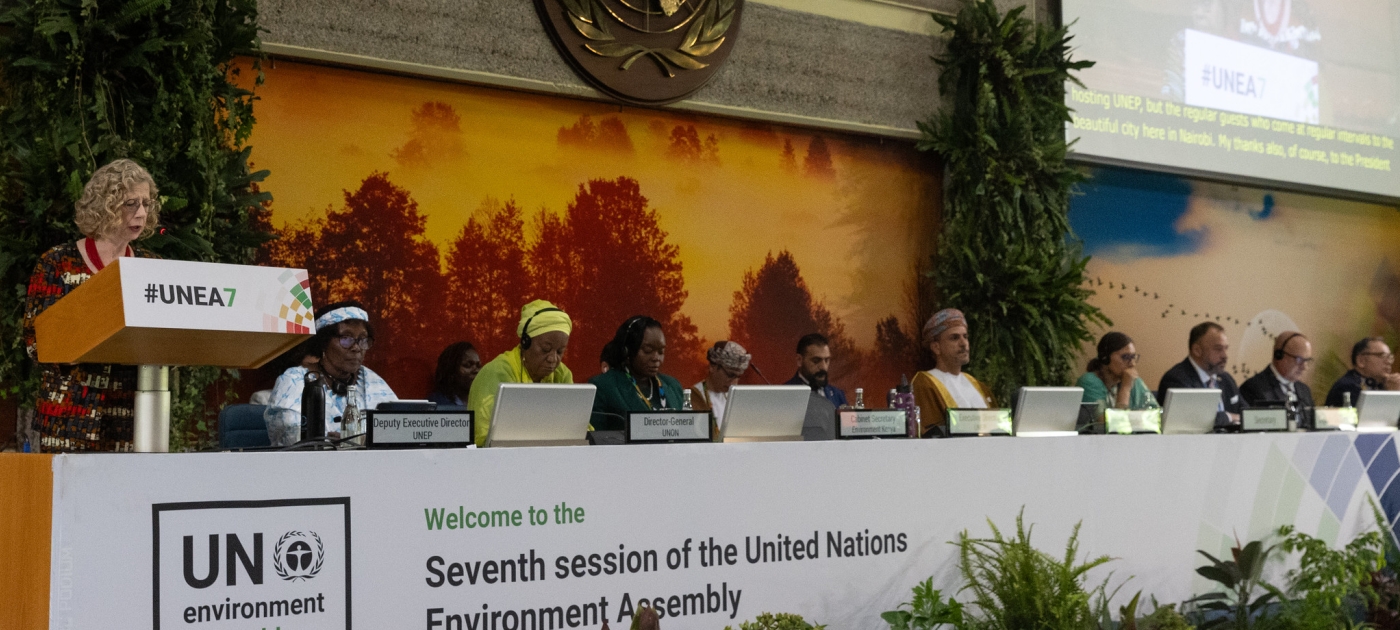
Your Excellency Abdullah Bin Ali Al-Amri, President of UNEA-7 and Chair of the Environment Authority of Oman,
Your Excellency Deborah Mlongo Barasa, Cabinet Secretary for Environment, Climate Change and Forestry of Kenya,
Your Excellency, Sultan Hajiyev, Chair of the Committee of Permanent Representatives,
Ms. Zainab Hawa Bangura, Director-General of UNON,
Elizabeth Mrema, Deputy Director of UNEP,
Ministers, delegates, distinguished guests and friends.
Welcome to Nairobi, the environmental capital of the world, and to the seventh session of the United Nations Environment Assembly, or UNEA-7. My deep thanks first go to the government of Kenya for their commitment to hosting UNEP and also to hosting our guests, who come at regular intervals to this beautiful city. My thanks also to the President of UNEA-7 and chair of the CPR for their hard work and leadership.
Warm and deep thanks to the many donors who contributed to the organization of this Assembly: Australia, Azerbaijan, Belgium, Denmark, the European Commission, the European Investment Bank, Finland, Germany, Hungary, Luxembourg, Monaco, Oman, Philippines, Sweden and Switzerland.
This Assembly is the world’s most-influential environmental decision-making body. This Assembly has a track record of success. This Assembly has consistently demonstrated unity to set the trajectory for action on the three planetary environmental crises: the crisis of climate change; the crisis of nature, land and biodiversity loss, which includes desertification; and the crisis of pollution and waste.
This year, this Assembly must draw on its history of unity to again deliver sustainable solutions for a resilient planet. Solutions that back long-term economic growth, poverty reduction, social cohesion, improved human and planetary health and more.
This Assembly must dig deeper than ever, because environmental challenges are accelerating. The rise in average global temperatures will likely exceed 1.5°C within the next decade, bringing escalating consequences with every fraction of a degree. Ecosystems are disappearing and land is degrading. Dust storms are intensifying. Toxins continue to pollute our air, water and land.
And this Assembly must dig deep, because the world is in turbulent geopolitical waters, which adds stresses and strains to multilateral processes. I ask that we all commit to keeping our eyes on the horizon, to reaching across the table for consensus, and to being ambitious so that we can safeguard our collective future.
But even through tough times, the environmental community found consensus in 2025. There were important advances at the climate talks in Belém, particularly on financing adaptation and deforestation efforts. The BBNJ Agreement on the sustainable use of marine biodiversity in areas beyond national jurisdiction entered into force. The new Intergovernmental Science-Policy Panel on Chemicals, Waste and Pollution was gavelled earlier this year in Uruguay – a panel that, I remind you, emerged from this Assembly, from a UNEA-5 resolution.
And we know exactly what we must do and what we stand to gain. The seventh edition of UNEP’s Global Environment Outlook, which will be released tomorrow, lays out pathways to transformation that would deliver higher global Gross Domestic Product, fewer deaths, less hunger and less poverty – all through action on climate, on nature and on pollution.
This Assembly can accelerate this transformation by leaning into inclusive multilateralism.
Excellencies, colleagues and friends,
We have the right ideas on the table.
Through the work of the Open-Ended Committee of the Permanent Representatives, 15 draft resolutions and 2 draft decisions have been negotiated and passed on to UNEA-7 for further deliberation. Informal negotiations continued over the weekend, moving us forward. My thanks to the Chair and Bureau of the Committee, and to the co-facilitators of resolution clusters.
Many of these draft resolutions strike at the heart of the environmental challenges facing the world. We have a draft on Artificial Intelligence, which could have both great benefits for environmental action and wide-ranging negative impacts in terms of energy, water and other resource use. We have a draft on the sustainable use of minerals and metals, which could be essential to the energy transition and to the development of many nations that hold such resources.
We have drafts related to the strengthening the environmental dimension of antimicrobial resistance, to the global hydrological cycle, to the deep sea, to the sound management of chemicals and waste, to elevating the voices of youth in environmental governance, and so much more.
And we have the right people here.
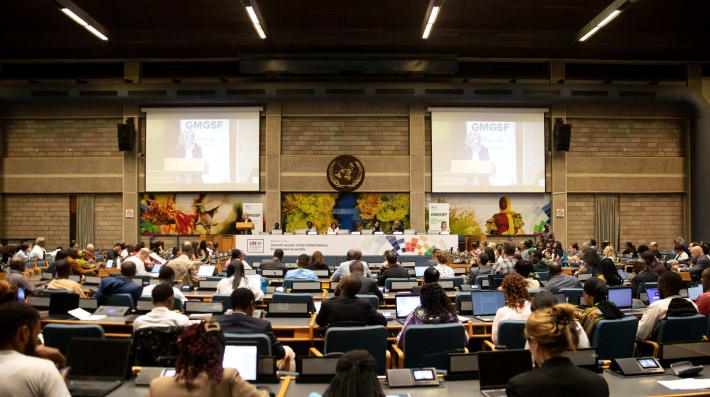
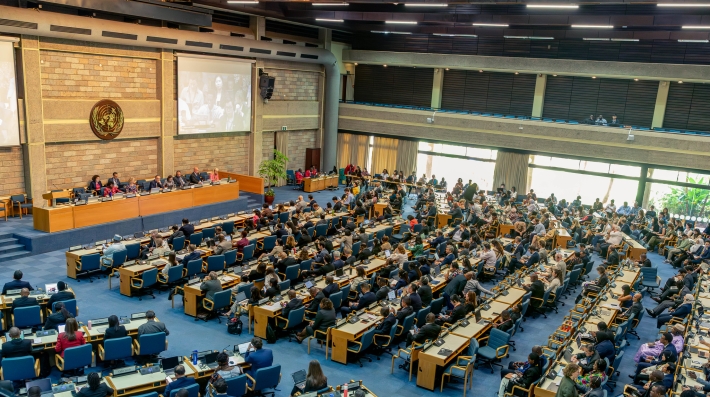
We have just under 6,000 registered participants from over 170 Member States, including 79 Ministers and 35 Vice-Ministers. On Friday, the Cities and Regions Summit brought together a crucial gathering of subnational actors who will be central to urban sustainability. We have diverse voices feeding in through the Youth Environment Assembly and Major Groups and Stakeholders Forum – business and industry; children and youth; farmers; Indigenous Peoples and their communities; local authorities; non-governmental organizations; the scientific and technological community; women; workers and trade unions.
This is a reminder that UNEA is more than resolutions and decisions: it is the place where the world also gathers outside the negotiating halls to bring new ideas and deliver new momentum to environmental action.
Of course, this Assembly must consider the context of the UN80 initiative and its workstreams looking at efficiencies and improvements, the review of mandates, and possible structural changes and programmatic alignment opportunities.
Also, in the context of the UN80 initiative, the second Multilateral Environmental Agreement Day, on Wednesday, will be a crucial contribution. We are seeking to promote coherence between UNEA resolutions and decisions taken by Multilateral Environmental Agreement governing bodies, whether hosted by UNEP or not. We are seeking to strengthen the tapestry of global environmental governance. And, ultimately, to spark stronger, faster, more joined-up action across the environmental challenges.
Excellencies, colleagues and friends,
I know that differences can sometimes feel insurmountable. But we all live on the same planet and face the same challenges. If my neighbour is suffering from climate change, so am I. If my ocean is empty of fish, so is my neighbour’s. If my neighbour is breathing foul air, so am I. We are all interconnected on this planet.
And we all want the same thing: a better future for ourselves and for our families. The foundation stones of such a future are a stable climate; a safe, clean and sustainable environment; and a pollution-free future.
So, I call on you to once again summon up that famous and indomitable Nairobi Spirit and let it guide you down from the ramparts of individual positions to meet on common ground. For only from there can you agree strong resolutions and decisions. And deliver sustainable solutions for a resilient planet.