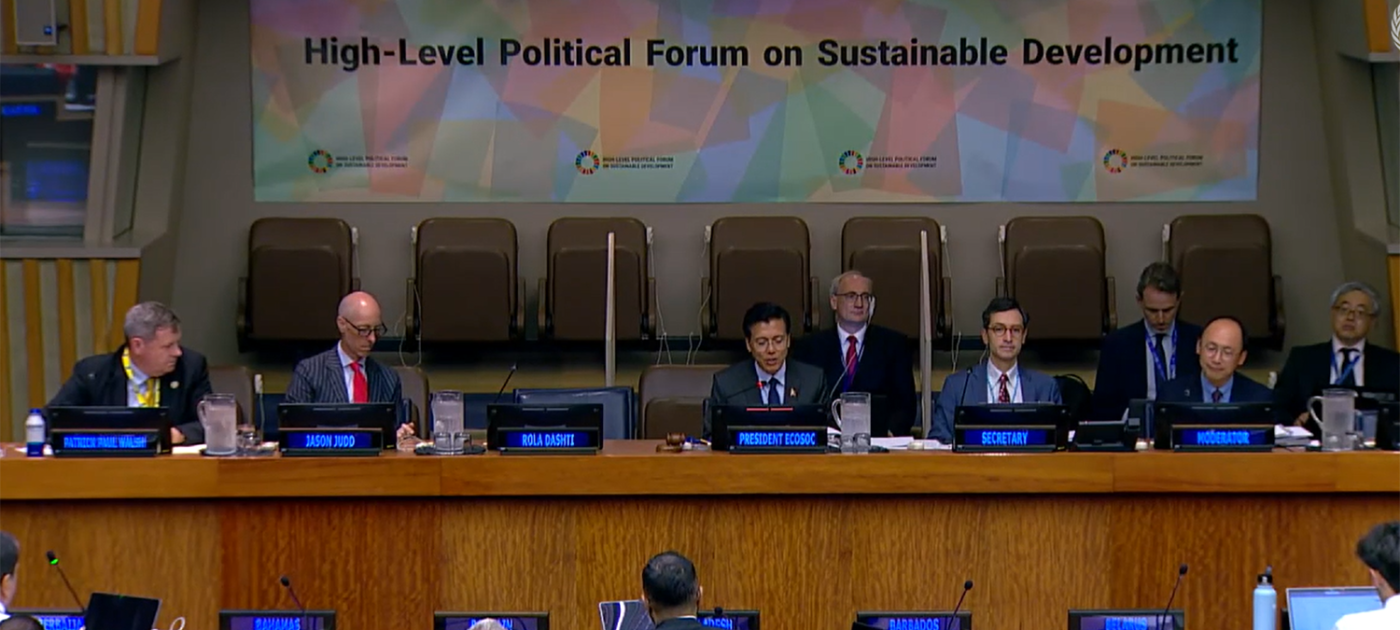
H.E. Mr. Lok Bahadur Thapa, Vice-President of ECOSOC
Excellencies,
Distinguished delegates,
UNEP is pleased to contribute to this important session on SDG 8, focusing on target 8.4 which calls for global resource efficiency in consumption and production and decoupling economic growth from environmental degradation.
The science is clear. Our economies can no longer rely on the relentless extraction, use and waste of natural resources. The health of the planet is increasingly deteriorating, threatening our collective well-being and that of future generations. Reports from the IPCC, the IPBES and the International Resource Panel highlight that unsustainable patterns of resource use drive the interconnected crises we face, both planetary and social. Without urgent and concerted action, by 2060 resource extraction could rise by 60% from 2020 levels, further exacerbating these crises.
Sustainable resource management is not a barrier to development. It is a catalyst for economic opportunity and torebalance the consumption differentials among nations. According to the IRP, high-income countries consume six times more materials per capita and contribute ten times more to climate impacts than low-income countries. Addressing these disparities will have implications for economies and bottom lines, for jobs and skills, for resource policies.
Three circular economy principles – eliminating waste and pollution, circulating products and materials, and regenerating nature – are win-wins for governments and enterprises, for more jobs and extended markets, enabling growth to improve lives but with less resource use and environmental impact. The circular economy could unlock $4.5 trillion of economic growth and create six million new jobs, many of which will be in developing countries and will support further industrialization. These principles also create options for more secure material access and availability within countries.
Equip young people with the skills to enable the transition to circularity and decoupling. The transition to circular economies brings real opportunities for young people to secure better jobs. It is critically important to equip young people with the necessary skills to match the demand of the labour market.
UNEP’s work to advance SDG 8 focuses on high-impact sectors, through nine circular actions: refuse, reduce, refill, repair, refurbish, remanufacture, repurpose, recycle, and redesign the system and the product, including through the 10 Year Framework of Programmes on Sustainable Consumption and Production and the Green Jobs for Youth Pact.
UNEP remains committed to supporting countries in their pursuit of greater global resource efficiency and the necessary new skills and jobs for this transition to happen.
Thank you.