Good morning,
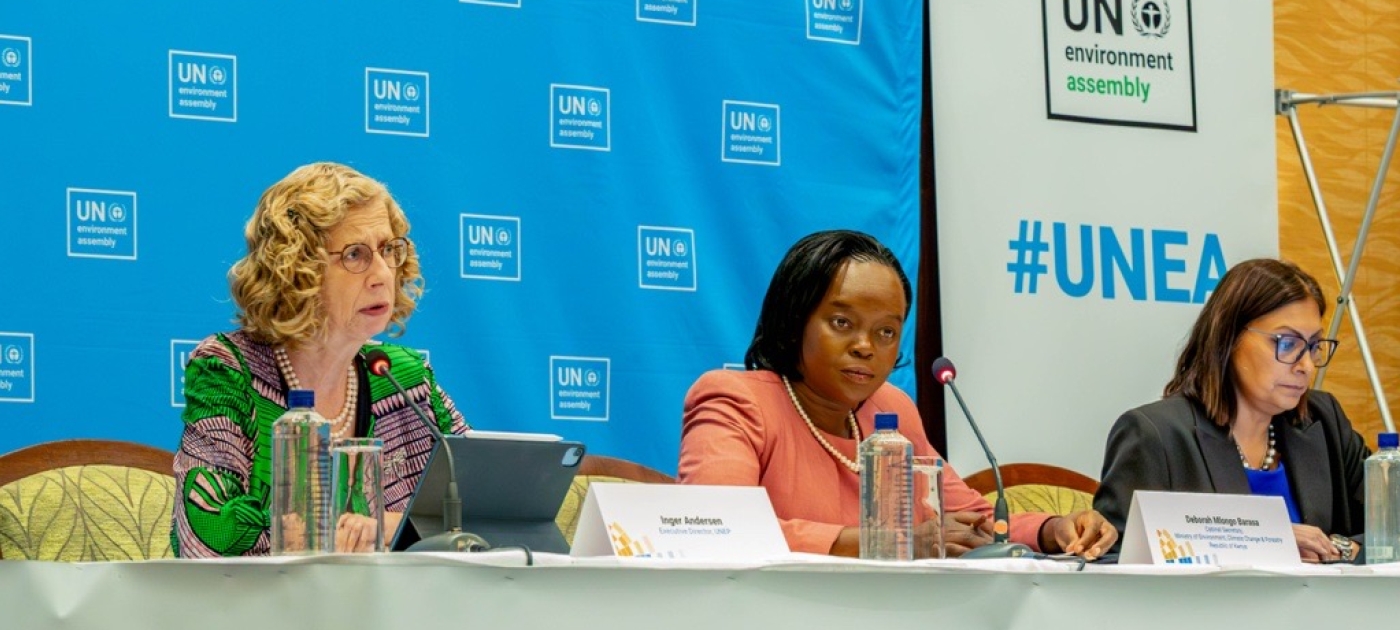
Thank you for joining this press briefing today. Let me begin by expressing my thanks to Deborah Barasa, Kenya’s Cabinet Secretary for Environment, Climate Change and Forestry, and to the Government of Kenya for their steadfast support in hosting the seventh session of the United Nations Environment Assembly (UNEA-7) here in the world’s environmental capital, as well as for Kenya’s ongoing partnership as UNEP’s host country. We at UNEP are proud to call Nairobi home.
UNEA-7 takes place in an ever changing, fragile geopolitical world and this is why this year’s theme, “Advancing sustainable solutions for a resilient planet,” is even more important.
We are expecting more than 55 Ministers and 3,500 delegates to join us in Nairobi next month for UNEA-7, with 19 draft resolutions and decisions submitted for countries to discuss. This includes resolutions on AI, on minerals and metals, on tackling wildfires, on issues related to the hydrological cycle, and on many others. My colleague, Ms. Ochalik, will share more.
Let me first offer some context that underscores why UNEA matters.
Recent UNEP data show that environmental and climate impacts are accelerating and intensifying. Rising emissions are fueling record heatwaves. Nature and ecosystems are vanishing. Toxins are polluting our air, water, and soil. These are global threats that spare no nation – including Kenya – and demand global solutions. And this is why, since the last UNEA in February 2024, environmental multilateralism has been delivering.
Governments agreed to establish the Intergovernmental Science-Policy Panel on Chemicals, Waste and Pollution – finally completing the “trifecta” of science bodies alongside the Intergovernmental Panel on Climate Change (IPCC) and the Intergovernmental Science-Policy Platform on Biodiversity and Ecosystem Services (IPBES). We saw the first dedicated body established under the Convention on Biological Diversity to ensure Indigenous Peoples and local communities have a voice in global decisions on nature conservation. And the BBNJ Agreement on the sustainable use of marine biodiversity in areas beyond national jurisdiction came into force, a major win for our ocean.
This, as well as much more, is important progress. Yet we are still not on track, so I can understand the frustration with the pace and scale of multilateral action at times.
That is why UNEA-7 will focus on how we can strengthen multilateralism to deliver united, inclusive action across every strand of the triple planetary crisis, treating it as the single, interconnected challenge it is. There will be a Youth Environment Assembly, convened by youth for youth, and a dedicated Multilateral Environmental Agreement Day that brings together major agreements – on everything from biodiversity to regional seas – to align and increase global action.
Finally let me also highlight that the seventh edition of UNEP’s flagship report, the Global Environmental Outlook, will be released at UNEA on December 9. As a quick preview, the report – which is the product of 287 multi-disciplinary scientists from 82 countries – will highlight real solutions across five interconnected areas: economics and finance; circularity and waste; environment; energy; and food systems.
So, as we look ahead to UNEA-7, we must remember that no single Assembly or event can put us on track or deliver our global goals. It is ongoing multilateral engagement – when countries continue to show up, sitting side-by-side – that keeps us moving forward. UNEA-7 can help propel the urgency and determination we need to confront our shared and emerging environmental threats.