By Sophie Loran, communication and advocacy lead on climate action at the United Nations Environment Programme
I live in one of the most beautiful cities in the world, Paris. Yet, during heatwaves, like the one sweeping across France right now, you hardly notice the beauty.
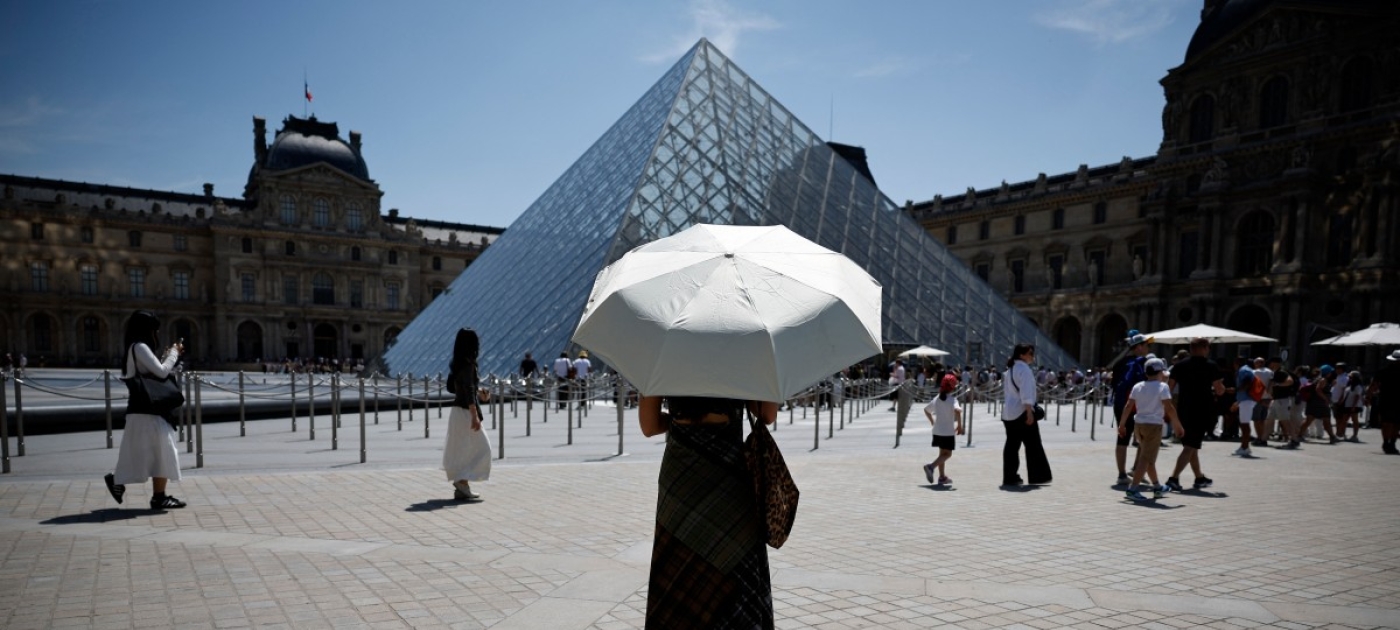
After another day at 35°C heat, Paris is no longer about charming cafés and Haussmann buildings. It’s about which side of the street has shade, which metro lines to avoid and how to stop your apartment from turning into an oven.
During a heatwave, Parisien’s redesign their days around the sun. In summer, I no longer “have a schedule.” I have heat windows. Before 10am I am efficient, optimistic. From 2:00 pm-6:00 pm, I almost disappear. After 9 pm: I re-emerge as a normal human being.
Paris, during a heatwave, becomes a city of early risers and late-night walkers. If you try to fight this rhythm, you lose.
In a city famed for its style, most people start dressing for survival. Gone are the structured outfits and put-together looks. Instead, linen becomes a lifestyle and oversized becomes essential. The heat humbles everyone eventually.
Transport, too, becomes a strategic decision
The metro, in summer, is stultifying. So, Parisiens adapt: fewer long underground journeys, more walking (carefully, in the shade) and more breaks in cool places. You start thinking: is this trip worth overheating for? Sometimes, the answer is no.
Many, like myself, build a mental map of cool refuges. This might be the most important survival skill. Over time, you learn where to go when it’s too much: museums, tree-filled parks, random supermarkets for a 10-minute cooldown
Then, there is the ultimate cope. On weekends, many leave. By the time Friday comes, the goal is simple: escape. I get out of the city and look for forests, rivers and lakes literally any place where air moves and water exists.
But the ability to leave, to find cooler air, to reset is a privilege. Most people don’t have that option. And that’s when it becomes clear: surviving extreme heat individually is not the same as solving the problem collectively.
It’s also where my work starts to feel much closer to home. I lead communication and advocacy on climate change. As part of that work, I help spread the word about solutions to extreme heat, like sustainable cooling and resilient buildings.
Those are messages that are becoming increasingly important as the world warms. Extreme heat events, once rare, now strike nearly three times as often.
But our cities don’t have to be swelting. There are several things we can do to make them more livable when temperatures spike.
We can expand so-called passive cooling by doing things like planting trees and painting our rooftops a reflective white. We can design our buildings to stay cool naturally by leveraging cross ventilation, using more breathable construction materials and making our ceilings higher so hot air rises up and away from us.
According to the Global Cooling Pledge, we can increase access to sustainable cooling by expanding passive cooling and cleaning up cooling technologies while boosting their efficiency. Yet, we must ensure these solutions are accessible to everyone, not just those who can afford them.
Some cities are already starting to move in this direction. In Paris, that means planting urban forests, greening schools thanks to green roofs and spaces and planning for extreme heat. Through its “Paris at 50°C” exercise, the city has already begun asking a difficult question: what happens if summertime temperatures reach 50°C and are we ready for that kind of heat? That thinking is now part of a wider global effort, with initiatives like Beat the Heat from the COP 30 Presidency and UNEP-led Cool Coalition and its 50@50 activation.
Because cooling isn’t just about comfort anymore. It will determine whether our cities remain livable in the years to come.