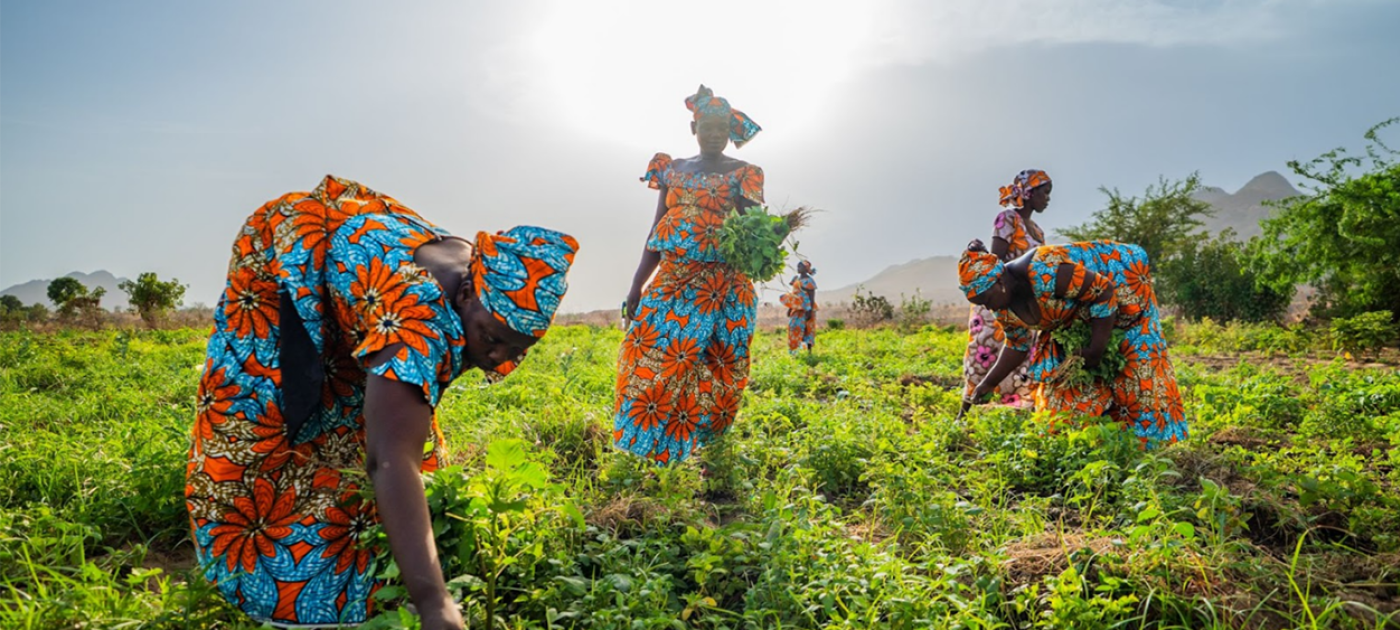
Rising temperatures, erratic rainfall and degraded soils make farming increasingly difficult. Climate change causes conflicts over water and arable lands, aggravating the impact. But across Africa, women and youth are reimagining food systems to secure healthy diets and stable incomes.
For World Food Day, here are three community-driven innovations supported by the UN Climate Technology Centre and Network — from Cameroon, Nigeria and Zimbabwe — that show how working with nature, embracing technology, and harnessing the power of local women can create greener, safer and more resilient futures.
Cameroon: Turning drylands into green oases with synecoculture
In the parched north of Cameroon, seven in ten families face food insecurity. But students and women farmers are proving that even cracked, dry soils can bloom again. Through synecoculture, a farming method that mimics natural ecosystems by planting dense, diverse crops without chemicals, farmers are harvesting food year-round.
This approach cools the soil, locks in moisture and boosts yields — offering both nutritious food and steady income. “Even in the dry season, we can grow crops. We can cultivate, produce, and sell. Is there anything better than that?!” exclaims Asta Jeanne, leader of the Femmes Guidar de Figuil Association.
For the women involved, the benefits go beyond food: Selling vegetables means financial independence in a region where men often control land and livestock. And in local schools, children now grow and eat fresh greens daily, linking food security to education and healthier futures.
Nigeria: Growing food without fear through hydroponics
In Kaduna State, Nigeria, climate change is acting as a threat multiplier, posing challenges for communities that share shrinking land and water resources. For women farmers, tending distant fields has often come with safety risks born from increases in local conflict.
Now, solar-powered hydroponic greenhouses are transforming that reality. Using no soil and a fraction of the water, these closed systems grow tomatoes, lettuce and peppers safely within village compounds. Women no longer need to walk for hours to insecure farmland — they can grow food steps from their homes.
“Hydroponic farming is going to increase the resilience of the woman farmer,” says Agera Teman Liti of the Small-Scale Women Farmers Organisation. “Even small spaces allow women to produce a lot.” Providing multiple harvests per year and reduced reliance on imports, hydroponics are helping incomes and reducing risks to women.
Zimbabwe: From forest fires to solar dryers
In Zimbabwe’s Gwanda District, the protein-rich mopane worm is both a delicacy and a vital source of rural income. But traditional harvesting and smoking methods relied on vast amounts of firewood, fueling deforestation, wildfires and risks to women who spent nights in unsafe forests.
Now, a solar-powered drying facility managed by the Lifalethu Cooperative — composed mostly of women — is changing everything. Using solar-powered drying machines, what once took three days of dangerous open-fire drying now takes 10 safe, clean hours much closer to the home. The system cuts greenhouse gas emissions, protects forests and ensures reliable processing of nutritious food.
And the benefits don’t stop with worms: The dryer is already being used for fruits, nuts and vegetables, expanding diets and incomes in one of the driest regions of the country. “We as women are looking at different projects,” says cooperative member Nyathi Ntombizodwa. “The first project we have identified is baking.”
The Climate Technology Centre and Network
The Climate Technology Centre and Network (CTCN) is the implementation arm of the Technology Mechanism of the United Nations Framework Convention on Climate Change and is hosted by UNEP. It promotes the accelerated transfer of environmentally sound technologies for low carbon and climate resilient development at the request of developing countries.
The Sectoral Solution to the climate crisis
UNEP is at the forefront of supporting the Paris Agreement goal of keeping global temperature rise well below 2°C, and aiming for 1.5°C, compared to pre-industrial levels. To do this, UNEP has developed the Sectoral Solutions, a roadmap to reducing emissions across sectors in line with the Paris Agreement commitments and in pursuit of climate stability. Key sectors identified are: energy; industry; agriculture and food; forests and land use; transport; and buildings and cities.