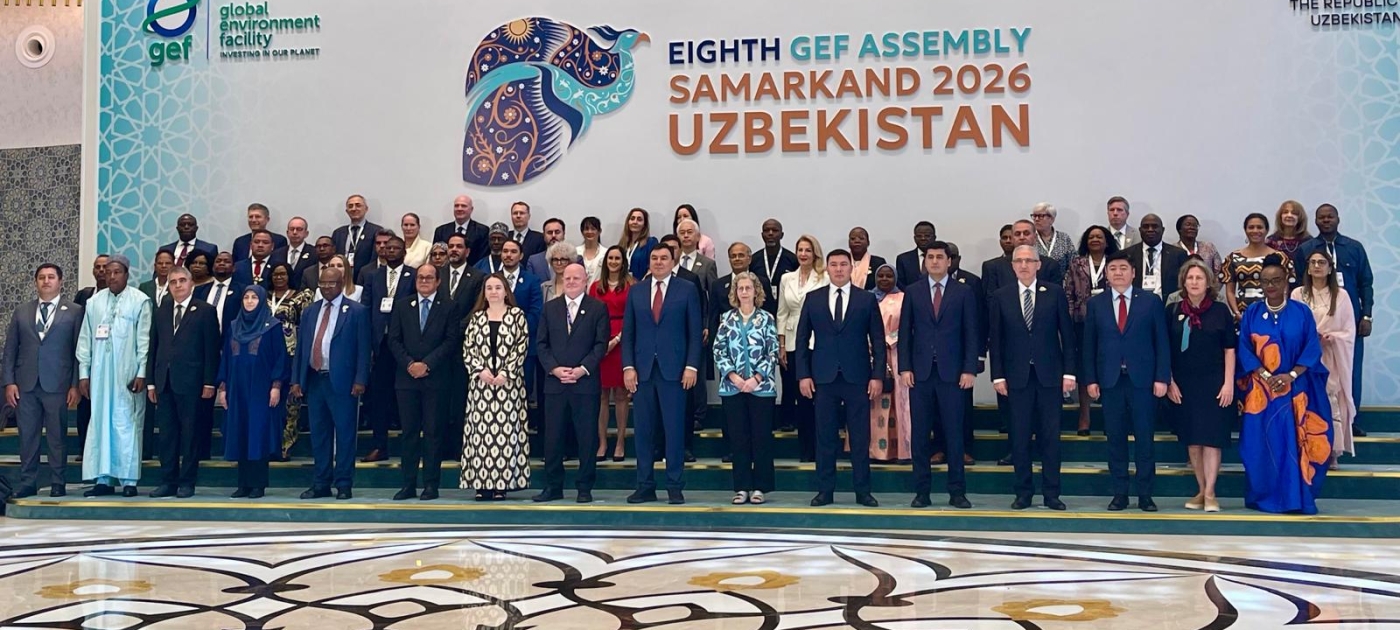
UNEP is proud of its long partnership with the Global Environment Facility (GEF), delivering transformative work in over 160 countries, backed by US$3.3 billion that leveraged US$11.5 billion.
Integrated, science-based solutions are UNEP’s core offer to the partnership. And so, we at UNEP welcome GEF’s Integrated Programme logic, which embraces co-benefit-generating interventions in climate stability, living in harmony with nature and a pollution-free planet – all of which are embedded in UNEP’s 2026-2029 Medium-Term Strategy.
UNEP hosts 15 Multilateral Environmental Agreement secretariats, including three of the six conventions for which GEF serves as the financial mechanism – the Stockholm Convention, the Minamata Convention and the Convention on Biological Diversity.
UNEP also provides secretariats for the science-policy panels: on climate, the Intergovernmental Panel on Climate Change (IPCC); on nature and land, the Intergovernmental Science-Policy Platform on Biodiversity and Ecosystem Services (IPBES); and on pollution, the recently established Intergovernmental Science-Policy Panel on Chemicals, Waste and Pollution (ISP-CWP).
UNEP also proudly hosts the Scientific Technical Advisory Panel (STAP). UNEP is committed to supporting STAP’s continued independence, credibility, effectiveness and impact. And UNEP welcomes the STAP review as an opportunity to further strengthen its work.
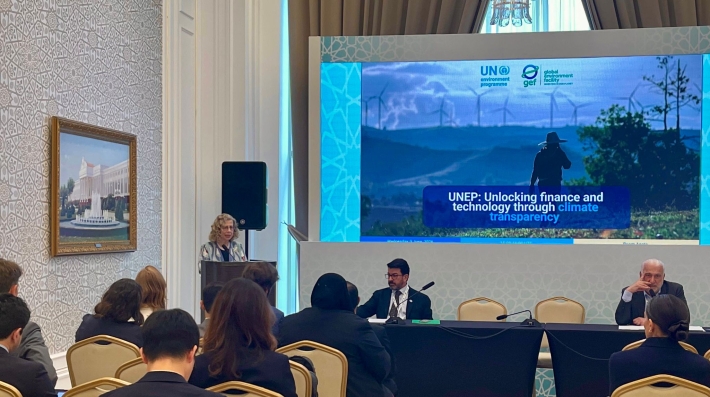
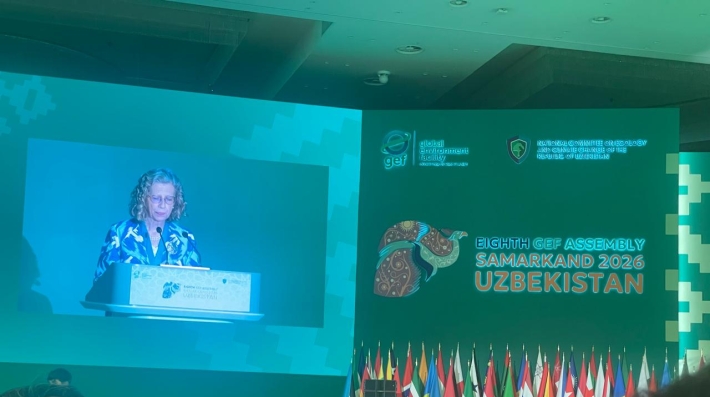
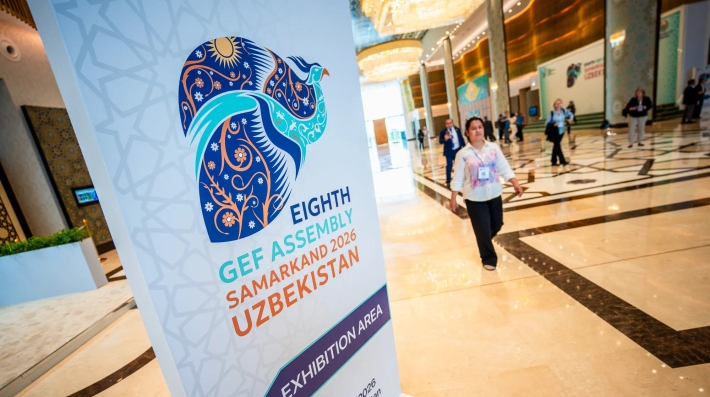
So, GEF-9 and UNEP’s Medium-Term Strategy are undoubtedly one integrated agenda. But to succeed with this agenda, we must close financing gaps for the conventions supported by the GEF – gaps of which you are all aware.
This means stepping up blended finance for nature, land, climate and pollution. Combining public grants, philanthropic capital and private investment. And aligning risks and incentives to make public budgets go further.
GEF-9 is targeting 25 per cent of resources going to projects that blend finance. UNEP, for its part, has three offers in this space.
First, UNEP is building the enabling conditions for such finance at country level — policy frameworks, taxonomies, fiscal tools, and fit-for-purpose regulations. UNEP is working with the financial system to align incentives with sustainable development priorities.
Second, UNEP is incubating project pipelines for investable opportunities.
Third, UNEP is as a science- and evidence-driven organization, informing and verifying what works from these investments.
UNEP asks that GEF-9 resources the enabling function as a key way to strengthen the policy and regulatory environment for private finance mobilization, which requires both derisking and pipeline incubation. This would ultimately multiply the catalytic value of GEF grants while ensuring strong credible measurable impacts.