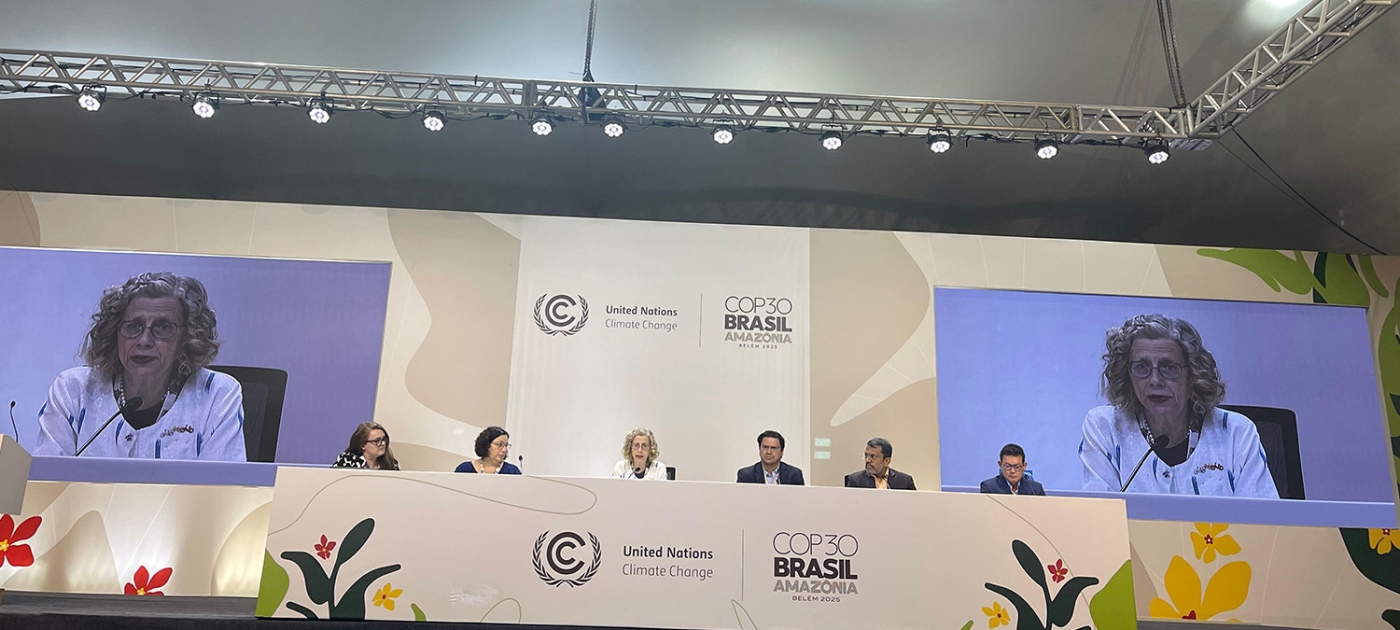
Welcome to the launch of the Global Cooling Watch 2025, which sets out how to increase cooling access to those who need it and dramatically decrease the expected emissions from a booming sector.
Extreme heat is the clearest signal of the climate crisis, already causing around 500,000 deaths per year. Many of these deaths come in cities, where the urban heat island effect can drive temperatures up to 10°C higher than surrounding rural zones. This is what many poor and vulnerable people are living with, at global warming of around 1.5°C.
But the urban oven is turning into a furnace. UNEP’s Emissions Gap Report 2025 finds that global warming is heading for at least 2.3-2.5°C. Deadly heat waves will become more regular and extreme: by 2050, the number of urban poor facing dangerous heat could increase by 700 per cent.
So, access to cooling must be treated as essential infrastructure, alongside water, energy and sanitation – because cooling saves lives and keeps economies, schools and hospitals running. But we cannot air condition our way out of the heat crisis, which would drive up greenhouse gas emissions, raise costs and cause grid collapse during peak demand. Instead, we must expand affordable cooling while cutting the sector’s energy and carbon footprint.
The Global Cooling Watch report show this can be done through a Sustainable Cooling Pathway. This Pathway leans on passive, nature-based cooling; on low-energy and hybrid cooling like fans combined with ACs; on energy efficiency; and on fast action to phase down hydrofluorocarbons – a powerful climate-warming gas used in cooling.
This pathway would cut expected sectoral emissions by 64 per cent by 2050, from an expected 7.2 billion tons of CO2e to 2.6 billion tons of CO2e. When paired with grid decarbonization, cooling emissions could fall to near zero.
At the same time, the Pathway would provide access to space cooling or refrigeration, resilient buildings and urban green spaces for three billion people and up to US$43 trillion in electricity and infrastructure savings. This is what is needed to protect people and economies from the impact of extreme heat.
Some 72 signatories to the Global Cooling Pledge, covering nearly 80 per cent of global cooling emissions, have committed to this Pathway. 29 countries have set dedicated cooling targets, while 134 have integrated cooling into national climate and energy strategies.
We now also have the Beat the Heat/Mutirão contra o Calor Extremo Implementation Drive, an initiative from the COP30 Presidency and UNEP-led Cool Coalition. Over 150 cities, from Rio de Janeiro to Chennai to Nairobi, have joined the movement to linking national action under the Global Cooling Pledge to local level.
So, we are moving in the right direction, but to make cooling sustainable, we must follow the Pathway to the end. Move from emergency response mode to proactive, multi-level governance on extreme heat and cooling. Treat heat protection and cooling as a public good. And prioritize passive and Nature-based Solutions to cut emissions, reduce grid stress and, ultimately, save lives.