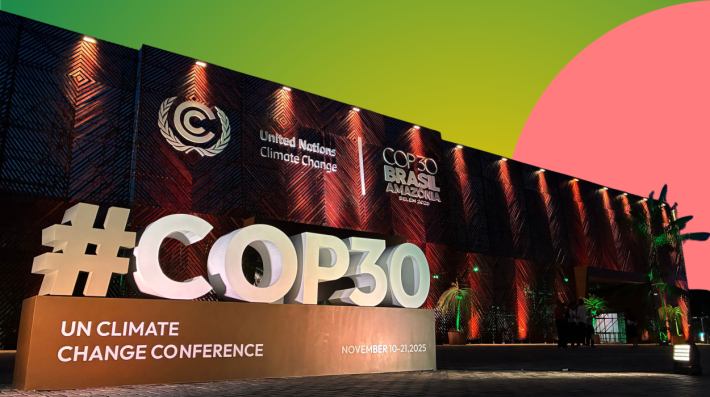
From 10 to 21 November, Belém, Brazil, hosted the 30th Conference of the Parties (COP30), the global decision-making body of the UN Framework Convention on Climate Change (UN Climate Change).
Key expectations included the presentation of new national climate action plans (NDCs), progress on the finance roadmap from COP29, and discussions on scaling up innovative climate finance mechanisms. The conference also featured the COP30 Action Agenda, a programme to engage businesses, civil society, and various levels of government in practical climate solutions.
The participation of UNEP at COP30 focused on the following key areas of negotiation:
- National Climate Plans – NDCs 3.0
- Mitigation work programme
- Baku-Belém finance roadmap
- Technology negotiations
- Global Goal on Adaptation indicator framework
UNEP also supported the COP30 Presidential Agenda, such as the following initiatives:
- Super pollutant Country Action Accelerator
- No Organic Waste Plan, including through the launch of the Food Waste Breakthrough, a joint UNEP-UN Climate High-Level Champions (13 Nov)
UNEP hosted and contributed to a range of ministerial meetings and high-level roundtables, including:
- Global Methane Pledge Ministerial (17 Nov)
UNEP-led Cool Coalition and Global Alliance for Buildings and Construction co-hosted the Buildings and Cooling Pavilion—a unified platform in the Blue Zone. The Pavilion spotlighted the essential role of buildings and cooling in delivering climate goals. See the programme here.
The COP30 Global Sustainable Insurance Summit convened by UNEP in partnership with the Brazilian Insurance Confederation highlighted the ambition and action needed across the insurance, financial, regulatory and supervisory communities to accelerate a just transition to inclusive, resilient and sustainable economies.
UNEP released a new COP30 factsheet series to explore the critical adaptation and mitigation themes that are shaping the global climate agenda.