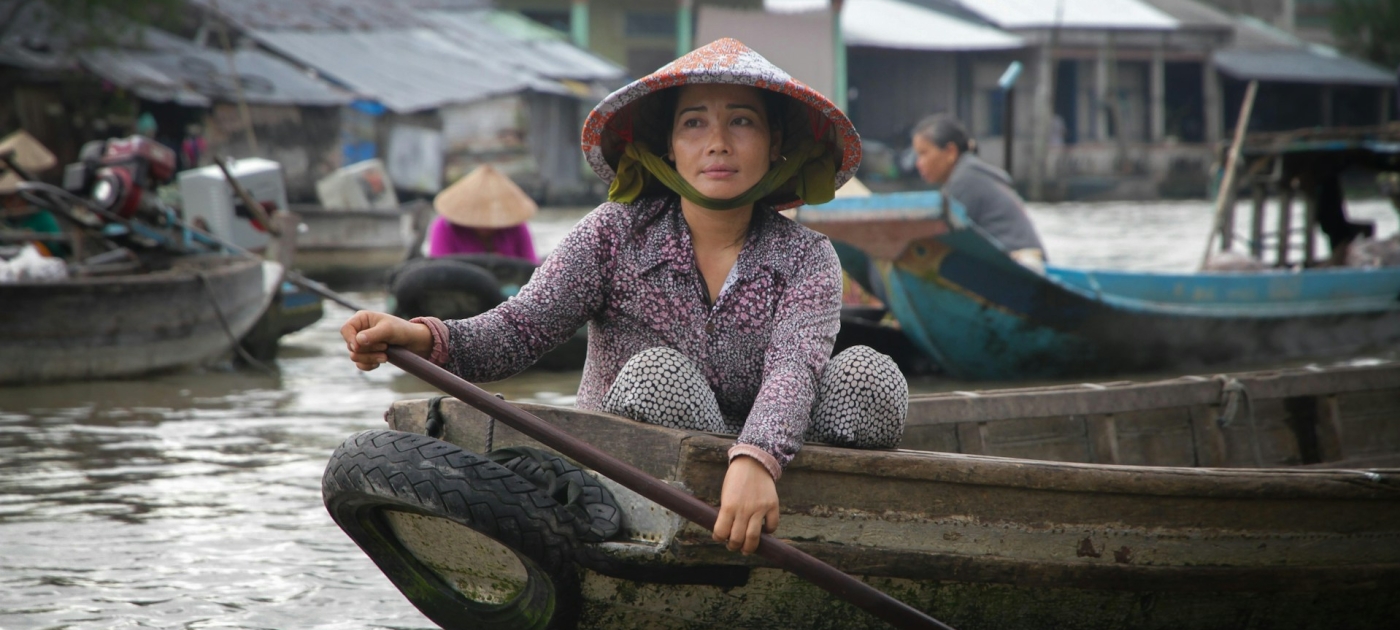
Like many in the central Philippines village of Tabon, Analyn Fedelis makes a living fishing at night. That’s when many fish come closer to the surface and are easier to catch. Bright lamps help draw them toward the boat. For years, though, blackouts made the after-dark sojourn a challenge.
“There’s not a day that goes by without a [power outage],” Fedelis says. “We rely on the lights to catch fish. If there is no light, there is no catch, and there will be nothing to sell.”
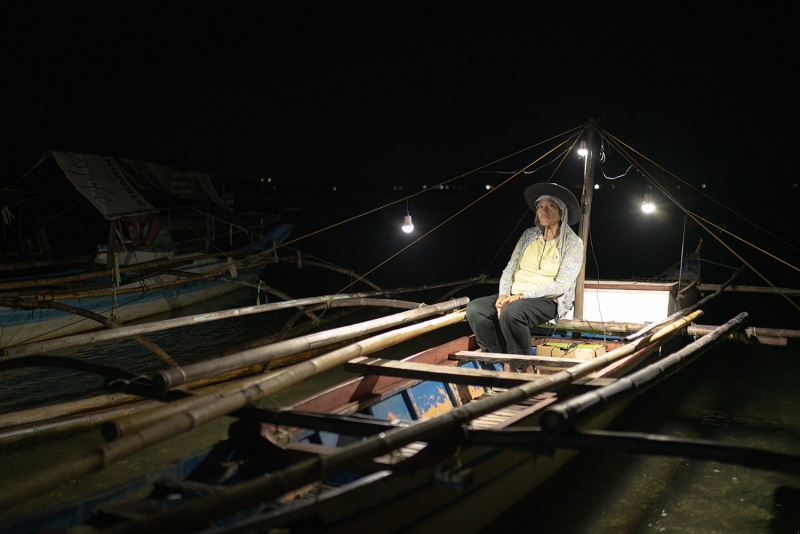
But for nearly a year, Fedelis has had insurance against blackouts: a small solar panel. The device powers a handful of lamps she keeps on her boat, along with some home electronics. The setup is especially valuable during typhoon season when strong winds and heavy rains often damage the local electric grid.
Fedelis is one of a growing number of women across Southeast Asia turning to small-scale solar systems to power fishing boats, farms and homes.
For thousands of people, the sun has become a welcome alternative to national electric grids, which in many places are patchy and prone to outages.

One of those women is Sumarni, a chili farmer on the Indonesian island of Lombok. With the help of the EmPower programme, a joint initiative of the UN Environment Programme and UN Women, she recently bought a solar dryer that dries agriculture produce. Like many Indonesians, she has only one name. The device allows her to grow chilies during Indonesia’s wet season, when damp conditions would normally cause them to wilt and spoil before they go to market.

“When we were introduced to the solar dryers, I got really excited,” says Sumarni. “The results were great. Even with less sunlight, the chillis dried properly and didn’t rot.”
In Southeast Asia, energy poverty is more pronounced in the informal sector, where women make up the majority of the workforce, found a UN Development Programme report. The lack of reliable energy forces many to work longer hours and exposes them to greater health and economic risks.

Solar powered devices have long been viewed as a potential solution to that problem. Yet for many rural women, cost remains a major barrier to clean power. “If money weren’t an issue, everyone here would want a solar dryer,” Sumarni says.
EmPower works across Asia and the Pacific to expand women’s access to clean energy and other climate solutions. By providing training, small grants and low-interest loans, the programme helps women overcome affordability barriers and adopt solar technologies that strengthen livelihoods and resilience to climate impacts. To date, the programme has mobilized more than US$48 million, engaged 225 partners, trained more than 4,000 policymakers and influenced action in 24 countries.

In the Philippines district of Bay-ang, Maridita Rufin, a hog farmer, made the switch to solar. A small, home-based system powers incubators for her piglets, along with a few household electronics, including lights, a standing fan and a radio. She says even when power lines go down, a common occurrence during typhoon season, she and her family carry on with life without anxiously awaiting repairs to the electric grid.

About EmPower
Jointly implemented by UN Women and UNEP, with support from the Governments of Germany, New Zealand, Sweden and Switzerland, the Women for Climate-Resilient Societies programme (EmPower) aims to strengthen gender equality and human rights in climate change and disaster risk actions in the Asia and the Pacific region.
This story was published for International Women’s Day 2026, led by UN Women, focused this year on “Rights. Justice. Action.”