With a population of about 3 million people, Toronto is not only the biggest city in Canada, but also the fastest-growing urban centre in North America.
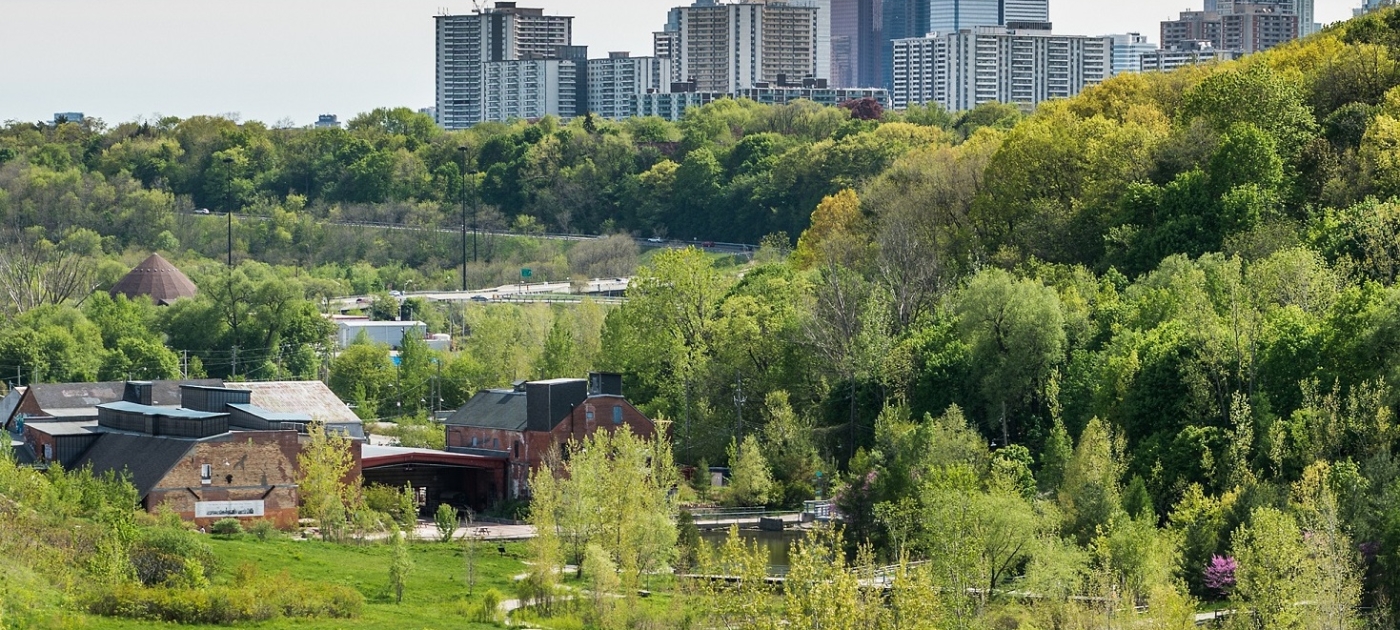
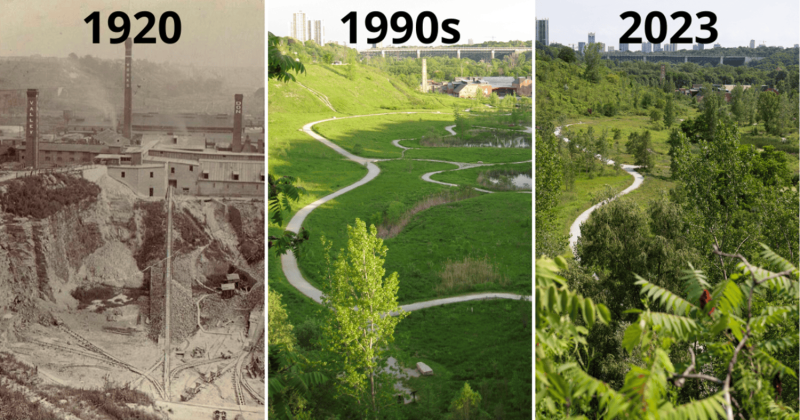
Its downtown core is a hub of activity but venture just a couple of kilometres northeast and you’ll find yourself in the Don Valley Brick Works, a former quarry that over the course of three decades has been transformed into a wetland. Fringed by houses and high rises, the marshlands and the valley that surrounds them are home to ducks, foxes, beavers and even the occasional deer.
The urban oasis is one of several spread across Toronto, which was recently recognized by the United Nations Environment Programme (UNEP) as a model for other cities aiming to restore their natural spaces.
"As in many other places, resource extraction initially prevailed,” says Mirey Atallah, Chief of the Adaptation and Resilience Branch in UNEP’s Climate Change Division. “With the restoration of this site, and by weaving nature into its urban fabric, Toronto is creating what more and more city dwellers are wishing for – sustainable, livable cities with nature at their core.”
In many parts of the world, large and expanding urban populations have led to breakneck development that destroys ecosystems and turns cities into sterile environments.
With more than half of Earth’s population already living in cities and that percentage rising fast, experts say reducing greenhouse gas emissions and ending biodiversity loss in urban areas is critical.
Greening cities can have huge benefits for their residents: nature-based solutions such as urban forests and wetlands moderate temperatures, purify air and protect against flooding. They also provide opportunities for recreation and spiritual well-being.

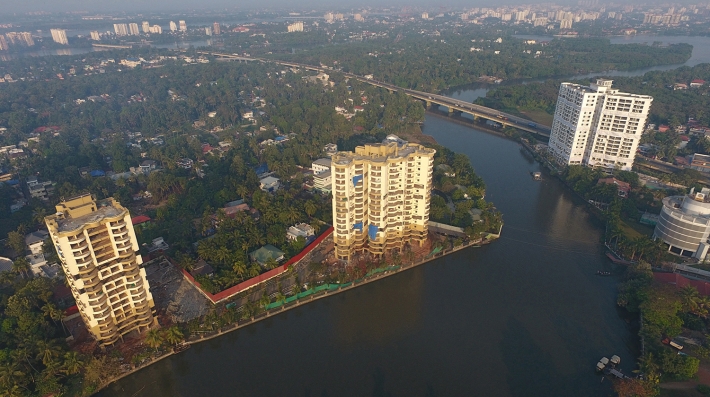
That’s why UNEP is implementing a project to help cities around the world value, restore and protect ecosystems, including by integrating them into their planning and development processes.
Funded by the Government of Germany, the Generation Restoration Cities project is part of the UN Decade on Ecosystem Restoration, a global initiative that aims to support countries deliver on their commitments to restore some 1 billion hectares of land.
As well as providing technical and financial support to more than a dozen pilot cities, Generation Restoration is showcasing role-model cities such as Toronto. It is the largest of a series of urban areas clustered around the western end of Lake Ontario. Dubbed the “Golden Horseshoe”, this is the most densely populated and industrialized area of Canada. But Toronto has managed to protect its natural heritage even as it has expanded.
Central to Toronto’s sustainability strategy are the hundreds of kilometres of ravines that slice through many city districts. Together, these valleys cover about 11,000 hectares, or 17 percent of the total city area, according to municipal officials.
Toronto has restricted development in the ravines and other low-lying areas since 1954, when a freak hurricane caused severe flooding that killed dozens of people and washed away homes and bridges.
Today, the ravines include restored and artificial wetlands that soak up rainfall and mitigate flood risk. There are more than 300 kilometres of maintained trails and even canoe-able rivers for Torontonians to rest and play.
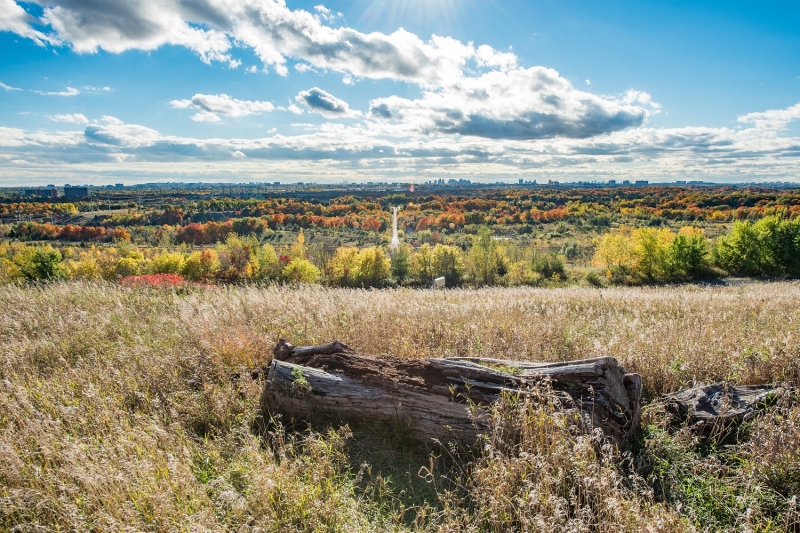
The ravines also hold much of Toronto’s “urban forest” – the collective term for the 11.5 million trees within the city limits. Those woodlands include sugar maple, white pine and hemlock trees that support birdlife, from barred owls to indigo buntings.
Keys to success
Underpinning their protection is a framework of laws and regulations that reflects how provincial and municipal leaders have come to recognize that the health and resilience of the city, including its capacity to mitigate and adapt to climate change, depend on nature.
According to the municipality, the restored ravines and urban forest provide ecosystem services worth hundreds of millions of dollars annually by offering recreational opportunities, removing pollution and saving energy.
“Framing it that way is how you get the political buy-in,” says Wendy Strickland, Toronto’s focal point for the Generation Restoration project and a manager of the city’s ravine strategy. “For some, nature is just ‘nice to have’, but resilience is critical to the city.”
Toronto’s legal framework also includes resilience and biodiversity strategies, and a forest management plan. Bylaws preserve street trees and require planting, and sustainable performance standards offer incentives for developers to go beyond legal requirements.
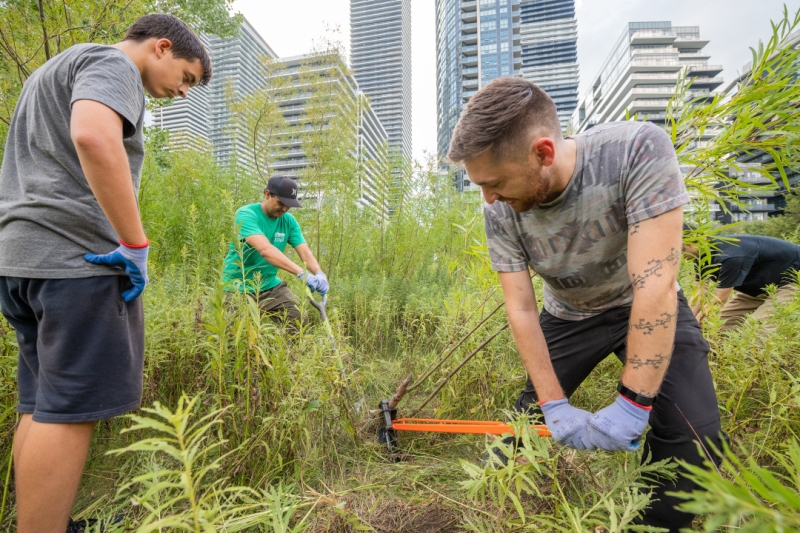
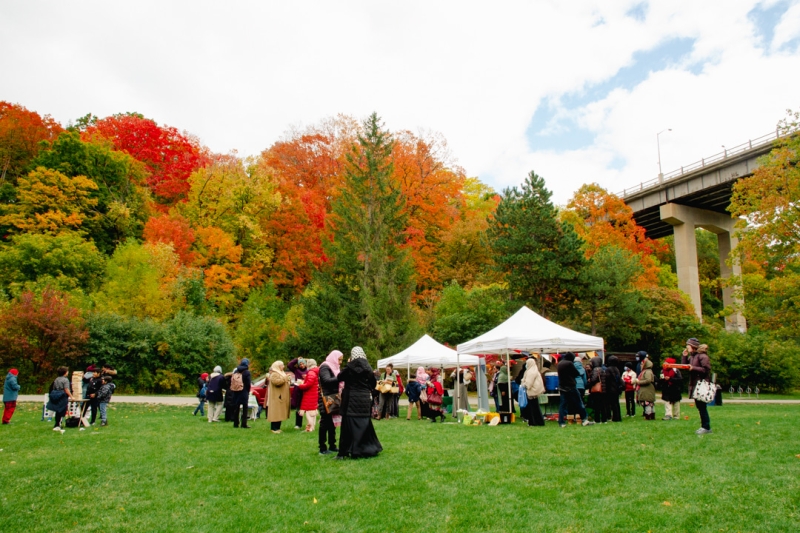
For example, the municipality prioritizes underserved areas with low tree cover for its tree-planting efforts and encourages residents to help maintain them. It also helps those communities access the ravines by, for instance, subsidizing private events and providing translation at guided nature walks. The city also offers volunteering opportunities and incentives for tree-planting on private land. Under a reconciliation plan, the city is also drawing on the land stewardship skills of Indigenous Peoples. For instance, authorities are learning from Indigenous community members as they carry out traditional controlled burns to restore savanna ecosystems in the city’s High Park, say municipal officials.
Other role model cities in the Generation Restoration project include Montreal, Canada’s second-largest city, and Glasgow, the third-biggest city in the United Kingdom.
Montréal is implementing its 2020–2030 Climate Plan and Nature and Sports Plan that foster many forms of restoration, including drives to plant trees throughout the city, the creation of new large parks, re-greening of public riverbanks, the conversion of municipal lawns into biodiversity-rich urban meadows, and the expansion of urban agriculture.
In Glasgow, an emphasis on community engagement, including through schools, aims to foster greater awareness and pride in the city’s green spaces, including through tree-planting and maintenance drives, and more opportunities for outdoor activities.
Global collaboration
To share experiences and collaborate on solutions, Toronto representative are holding workshops with counterparts around the world, including those from Douala in Cameroon, Quezon City in the Philippines and Sirajganj in Bangladesh. Strickland said Toronto is gaining from the exchange, citing a discussion with an official from the Brazilian city of Manaus on how to keep newly planted street trees watered.
“The pilot cities are doing some very innovative thinking,” she said. “It’s definitely not one-directional and the lessons we are all learning can help us to make nature an integral part of the sustainable cities of the future.”
About Generation Restoration (2023-2025)
The UNEP Generation Restoration project, funded by the German Federal Ministry for Economic Cooperation and Development (BMZ), focuses on scaling up urban ecosystem restoration. Running from 2023 to 2025, UNEP, in collaboration with the UN Decade on Ecosystem Restoration and ICLEI’s Global Biodiversity Centre, is working with 24 cities to address key political, technical, and financial challenges. The project has two key components: advocating for public and private investment in ecosystem restoration and job creation through nature-based solutions and empowering city stakeholders globally to replicate and scale restoration initiatives. This initiative stands as a contribution to the UN Decade on Ecosystem Restoration and the Global Biodiversity Framework.
About the UN Decade on Ecosystem Restoration
The UN General Assembly has declared 2021–2030 a UN Decade on Ecosystem Restoration. Led by the UN Environment Programme and the Food and Agriculture Organization of the UN, together with the support of partners, it is designed to prevent, halt, and reverse the loss and degradation of ecosystems worldwide. It aims at reviving billions of hectares, covering terrestrial as well as aquatic ecosystems. A global call to action, the UN Decade draws together political support, scientific research, and financial muscle to massively scale up restoration.
The Kunming-Montreal Global Biodiversity Framework
The planet is experiencing a dangerous decline in nature. One million species are threatened with extinction, soil health is declining and water sources are drying up. The Kunming-Montreal Global Biodiversity Framework sets out global targets to halt and reverse nature loss by 2030. It was adopted by world leaders in December 2022. To address the drivers of the nature crisis, UNEP is working with partners to take action in landscapes and seascapes, transform our food systems, and close the finance gap for nature.