

• Overview
  • Why it matters?
  • Projects
  • Countries
  • Thematic pillars
  • Community of Practice

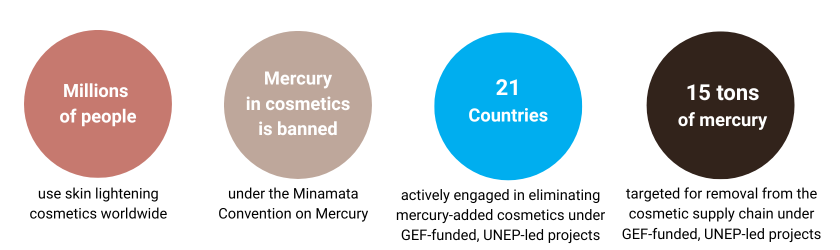
Hg in cosmetics key facts

Eliminating mercury containing skin lightening cosmetics and promoting the beauty of all skin tones.

Learn more why it matters, explore the work undertaken on the ground in 20+ countries, meet the community of practitioners, and explore the library of resources, news and events.

colored hands

Resources

News

Events

Spread the word and contribute to #MercuryFreeCosmetics by sharing this project website widely www.unep.org/mercuryfreecosmetics


Skin lightening - also referred to as skin whitening or bleaching – refers to the use of cosmetic products, mainly creams or soaps, to reduce the amount of melanin, or pigment, in the skin to make it appear lighter.

Demand for products is rooted in social, cultural and historical factors. In many cultures, harmful stereotypes associate lighter skin with beauty and better prospects of employment, marriage and social standing. 

Beauty standards promoted by media, advertising and marketing often reinforce the bias that a lighter skin tone is more desirable than darker skin tone.

Potentially harmful ingredients in skin lightening products

harmful ingredients in cosmetics

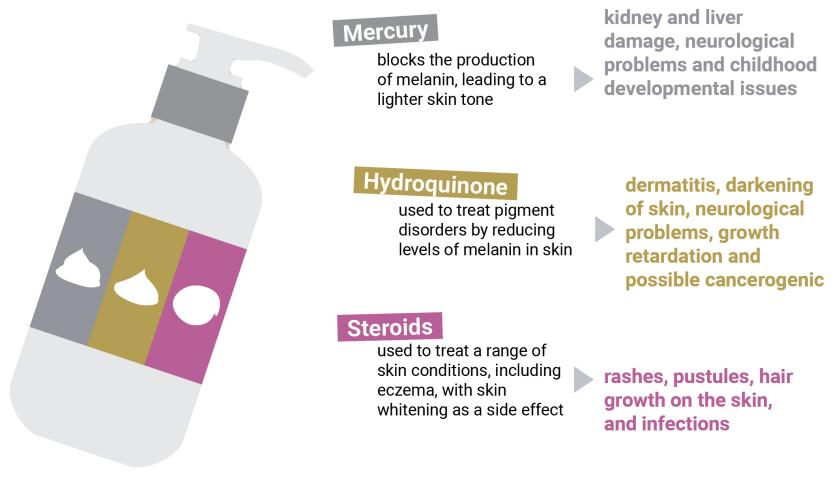
Skin lightening products (SLP) often contain potentially harmful ingredients, including steroids, hydroquinone and toxic mercury compounds, that not only damage the skin but can lead to serious health concerns. The Minamata Convention on Mercury at its 5th meeting of the Parties amended the Convention text to explicitly ban manufacture, import and export of mercury-added cosmetics. This amendment underscores the commitment of Parties to the Convention and many civil society groups to safeguarding human health and the environment from the dangers of mercury exposure. Yet many cosmetic products still contain mercury to increase the whitening effect. The concentration of mercury in SLP can vary based on manufacturing standards and labelling discrepancies, making it difficult for consumers and authorities to identify mercury in these products.  

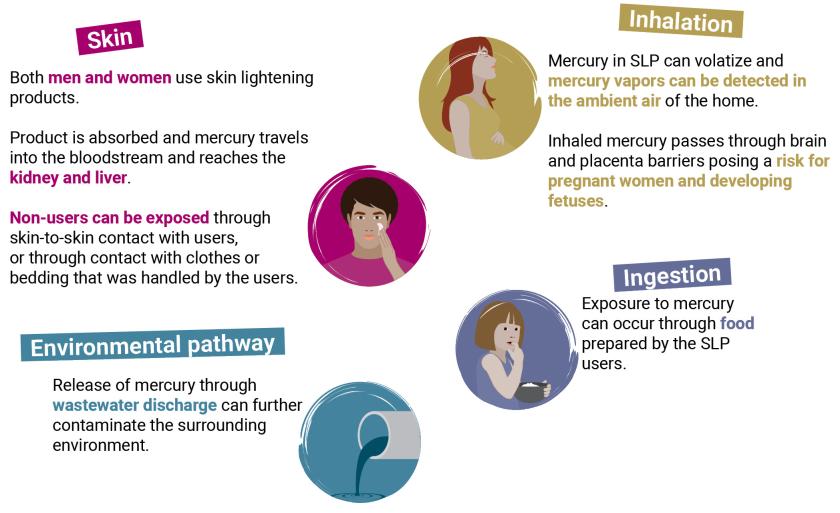
The danger does not just exist for those who use skin lightening products but also for their families who may become exposed by using washcloths or towels contaminated with mercury, through skin-to skin-contact or even by inhaling mercury vapor. The health impacts of exposure to mercury-containing SLPs include short-term effects such as skin rashes, skin discoloration, and scarring, as well as more lasting impacts such as damage to the nervous system or kidneys. Pregnant women, nursing babies, and young children are particularly at risk due to the harm mercury can cause to their developing nervous systems. Moreover, release of mercury through the application of the SLP can further contaminate the surrounding environment and contributes to global mercury pollution.

Mercury exposure from skin lightening products

Exposure to mercury in cosmetics


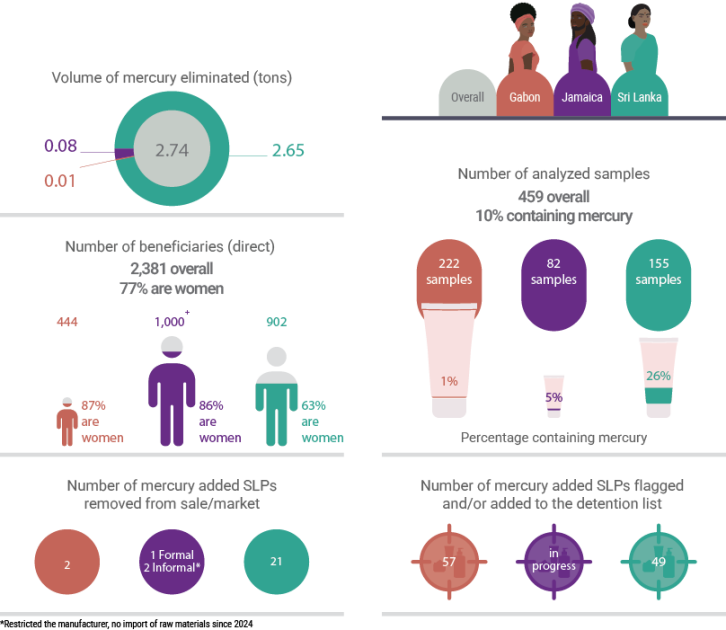
Key achievements of the pilot project to eliminate mercury-added skin lightening products in Sri Lanka, Jamaica and Gabon (2021 and 2026)
Key achievements


Concluded
Pilot project (2021-2026)

The Global Environment Facility (GEF) funds projects to tackle the problem. Approved in 2021, led by UNEP, the project “Eliminating Mercury Skin Lightening Products” is carried out by WHO and the Biodiversity Research Institute in collaboration with the Governments of Gabon, Jamaica, and Sri Lanka who spearhead the work at the national level.

Upcoming
African region 

Concept for the new project development was approved in June 2025. The new initiative "Elimination of mercury-added skin lightening products in Africa", aims to support additional 13 African countries Burkina Faso, Comoros, Côte d'Ivoire, Ethiopia, Guinea, Madagascar, Mauritania, Niger, Nigeria, Sierra Leone, South Africa, Togo, and Uganda in removing these products from both physical and online sale channels across the continent.

Upcoming
Asia, Latin America and Caribbean regions

Another GEF funded medium size project that will last 6 years is under development to address the issues as well in the Asia region and Latin America and Caribbean in Cambodia, Pakistan, Philippines, Antigua and Barbuda, and Mexico.

data

legal

surveillance

awareness


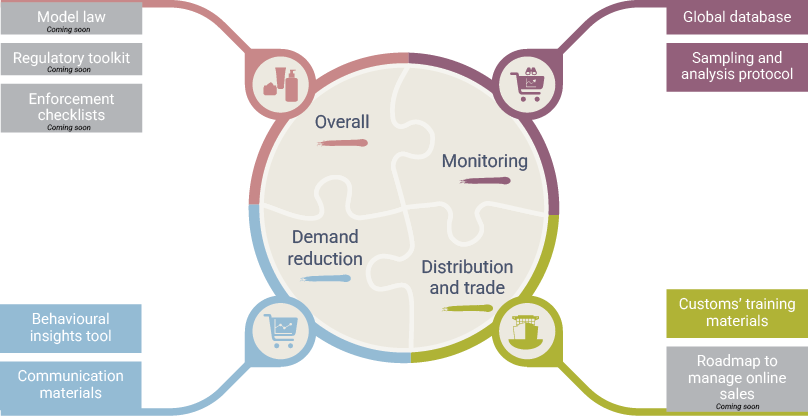
Tools to eliminate mercury-added skin lightening cosmetics

mercury cosmetics toolsGlobal databaseSampling analysing protocolBehaviourals toolCommunication materials

Multiplying project benefits through community of practice

Eliminating Mercury Skin Lightening Products project stakeholders group was established in the context of the GEF-funded, UNEP-led project “Eliminating Mercury Skin Lightening Products” that is carried out by WHO and the Biodiversity Research Institute in collaboration with the Governments of Gabon, Jamaica, and Sri Lanka.

The group acts as a platform for information and knowledge exchange between project countries and global stakeholders working on the issue. The community of practice is open to all relevant stakeholders and experts with knowledge and interest in the issue of eliminating mercury containing skin lightening products.

Join the Community of Practice

mercury free cosmetics community of practice

Spread the word and contribute to #mercuryfreecosmetics by sharing this project website widely www.unep.org/mercuryfreecosmetics