
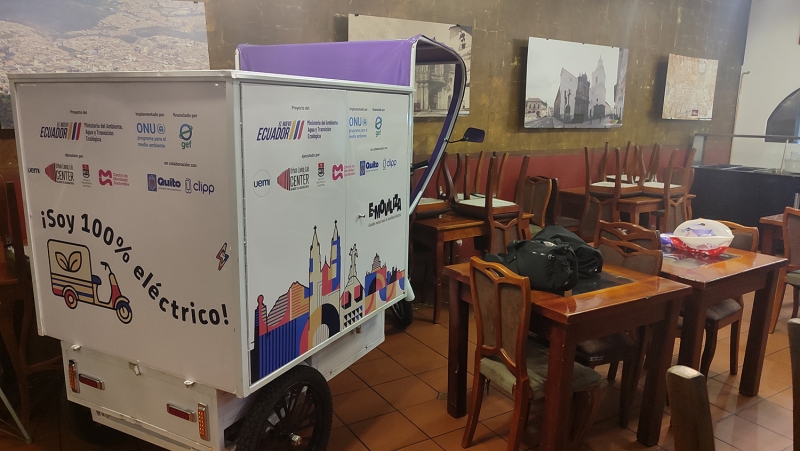
In the historical center of Quito, Ecuador, electric cargo bikes and trikes glide beneath the neoclassical façade of the Carondelet Palace, their hum replacing the growl of petrol-powered motorcycles that once ruled these UNESCO World Heritage streets.
Many of the electric vehicles are delivering meals for local restaurants as part of a pilot project led by the United Nations Environment Programme (UNEP).
One of those eateries is San Ignacio Restaurant. Its logistics manager, Juan Carlos Sanchez, says electric delivery vehicles have reshaped not only his business but also the character of one of Latin America’s most cherished urban landscapes.
“Zero tailpipe emissions, low noise levels, cost savings – the impacts add up,” says Sanchez, whose restaurant has an electric motorcycle, two electric three-wheelers and an electric van.
The UNEP-led effort, executed under the European Union-funded SOLUTIONSplus project, bolsters a government plan to turn historic Quito into a zero-emissions zone. But experts are also hopeful it will serve as a template for other cities struggling with air pollution from petrol-powered motorcycles and three-wheelers.
As e-commerce is taking off, so too are emissions from urban delivery vehicles – the number of which is projected to increase 36 per cent by 2030 globally. Without operational changes, urban delivery traffic and carbon dioxide emissions are projected to increase by approximately 60 per cent by 2030, finds the World Economic Forum, with deliveries forecasted to account for 13 per cent of overall city emissions. This worries experts who say an influx of petrol-powered vehicles could exacerbate climate change and air pollution, the latter of which is estimated to cause 7 million premature deaths a year.
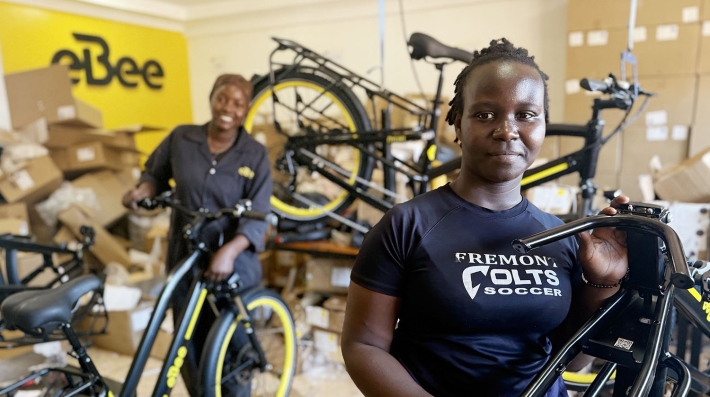
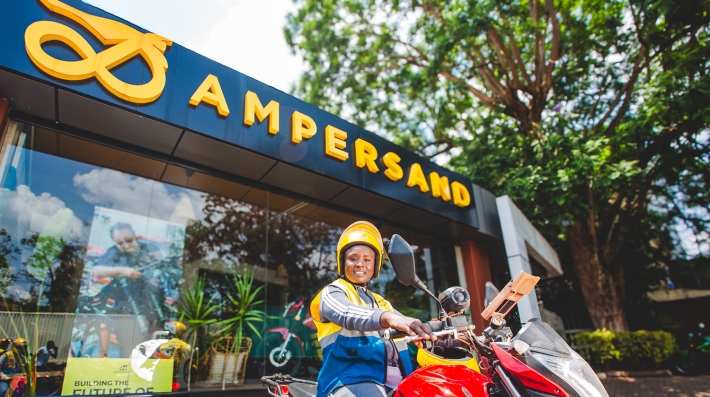
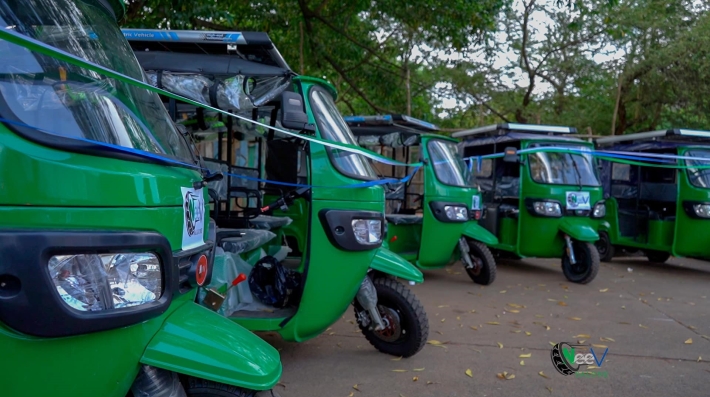
To address this, some of the world’s largest delivery platforms recently launched a push to electrify the vehicles that deliver their meals. Known as Deliver-E, the initiative was unveiled in Dubai, United Arab Emirates, with UNEP coordinating as the secretariat through its Global Electric Mobility Programme. The founding members — Delivery Hero, DoorDash, iFood, Mr. D, Swiggy, Uber, Wolt and Zomato — together account for 6 billion two-wheeler trips annually across 96 countries.
“Zero-emission two and three-wheeler vehicles are ready to scale,” says Sheila Aggarwal-Khan, Director of UNEP’s Industry and Economy Division. “They are cleaner, quieter and, paired with smarter operations, more cost-effective.”
“Through Deliver-E, companies will share what works and move faster together than any one company could alone,” she added.
The economic imperative
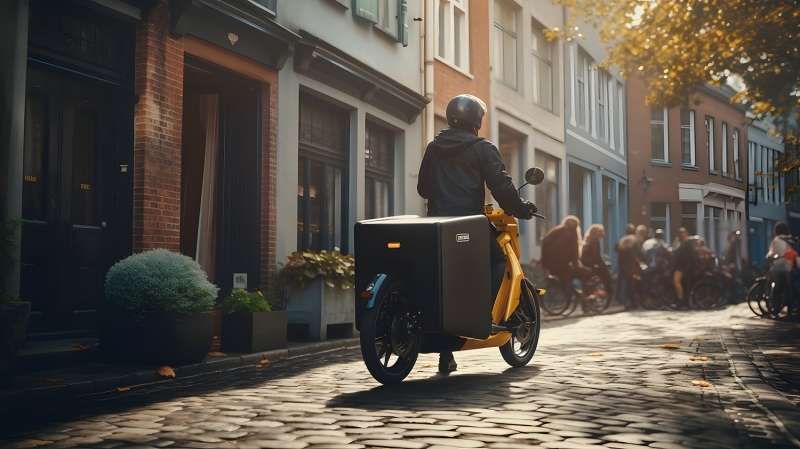
Swapping combustion bikes for their electric counterparts could cut delivery costs by a quarter while causing emissions to drop by 90 per cent. That would be a significant drop, as the transport sector is the second-largest source of greenhouse gas emissions after power generation.
“Electric delivery vehicles aren't just about environmental benefits – they make strong business sense,” says Rob De Jong, the Head of UNEP’s Sustainable Mobility Unit. “Lower operating costs, reduced maintenance needs and longer vehicle lifespans create a powerful economic argument for platforms to electrify their fleets.”
The path forward
In its first phase, members of the Deliver-E coalition will focus on building a shared evidence base, assessing technologies, exchanging lessons learned and aligning practical steps.
The Quito project is emblematic of the potential of e-delivery bikes, say observers. Its drivers have covered 25,000 kilometers and hauled 300 tonnes of goods, all while avoiding 6 tonnes of carbon dioxide emissions, according to data compiled by the Inter-American Development Bank’s Cities Lab.
Delivery couriers crossing Quito’s steep streets and spacious volcanic stone plazas also reported better workdays, bigger payload capacity and higher hourly earnings.
“What started as a small pilot has completely changed how we think about our delivery service,” says Sanchez of San Ignacio Restaurant as he watches an electric cargo bike depart with a fresh delivery. “It's not just better for the environment. It's better for our business, our customers and our historic city.”
Deliver-E is an industry-led alliance of major food and grocery delivery platforms to address zero-emission deliveries, beginning with the rapid electrification of two and three-wheeler operations and complementary operational improvements. Members share learnings, collaborate with policymakers, technology providers, financiers, and ecosystem partners, and communicate progress on commitments through a platform curated by UNEP, which serves as the Secretariat through its Global Electric Mobility Programme.
The associated partners of the Deliver-E Coalition are ClimateWorks Foundation, the Government of the Netherlands, and Prosus. UNEP’s role includes supporting governance, technical workstreams, convening, and communications. For more information, contact: sean.cooke@un.org