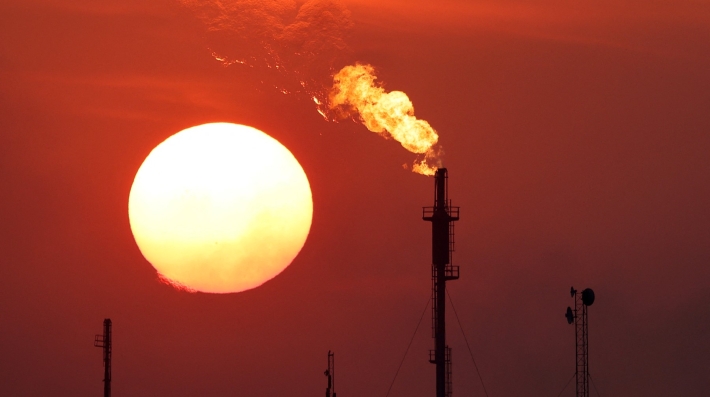

More than a decade after the Paris Agreement was signed, the world continues to pump out greenhouse gasses at a record pace.
These releases – which mostly come from the burning of fossil fuels – are superheating the planet and changing the Earth’s climate in often-disastrous ways.
But experts say humanity still has time to rein in greenhouse gas emissions and avoid the worst of climate change. And guess what: you can help with that.
“Governments and businesses, because of their size and influence, must bear most of the burden for reducing greenhouse gas emissions,” says Hongpeng Lei, Chief of Climate Change Mitigation at the United Nations Environment Programme (UNEP). “But you and I also have an important role to play. Every fraction of a degree of warming we can avoid will make the planet a healthier, more liveable place.”
Experts say it is especially important for the world’s wealthiest to get serious about their carbon footprint. Just 10 per cent of the planet’s population is responsible for nearly half of emissions.
So, if you want to live a more climate-friendly life, here are a few things you can do.
1. Consider walking, cycling or using public transport
Transport is one of the biggest sources of personal greenhouse gas emissions, a large chunk of which come from driving.
So, for short trips, experts recommend walking or cycling. Along with reducing emissions, those options will cut pollution, ease congestion and improve your health. For longer journeys, try public transport or carpooling.
Going car-free can save up to 2 tonnes of carbon dioxide emissions per year.
2. Be conscious about your energy use
Using less electricity — which still predominantly comes from the burning of fossil fuels — is one of the quickest, cheapest ways to cut emissions. As an added benefit, it will also lower your utility bills.
“Simple things, like switching to LEDs and energy-efficient appliances, washing clothes in cold water, and air-drying laundry, can make a significant difference,” says UNEP’s Lei. “Small habits add up.”
Our electronic devices can also be power-hungry, so experts recommend limiting unnecessary data use and choosing efficient tech, when possible. Since the production of things like phones and computers is also an energy-intensive process, consider keeping your devices longer and repairing them when they break, instead of tossing them away.

3. Make your home more efficient
Heating and cooling systems, like furnaces and air conditioners, are voracious consumers of energy. So, consider adjusting your thermostat slightly – either up or down – to minimize how much you use them. If hot temperatures are a problem, invest in what’s known as passive cooling. Things like reflective roofs, cross-ventilation, and natural shading can lower indoor temperatures by up to 8°C.
For a bigger impact on emissions, improve your home’s insulation or switch to a heat pump, a hyper efficient type of home heating and cooling system. These upgrades can cut your carbon footprint by around 900 kilogrammes per year and lower your energy bills at the same time.
4. Tweak your diet
Food choices matter in the campaign against climate change. Animal-based fare, especially red meat, dairy, and farmed shrimp, is associated with the highest greenhouse gas emissions. Meanwhile plant-based foods, such as fruits, vegetables, whole grains, beans, peas, nuts and lentils, are generally easier on the climate. (They also use less land and water.) So, try eating a more plant-rich diet, one that provides energy and nutrients from several different food groups.
5. Do not waste food
Households across the world waste more than 1 billion meals every day. Throwing away food means squandering the energy, land and fertilizer that went into producing it.
“Planning meals, buying only what you need, storing food properly and using leftovers can all help reduce waste,” says Lei. “By making these small changes, you’ll not only lower emissions and conserve resources for future generations, but also save money.”
If you do need to dispose of food, consider composting your leftovers. This can significantly reduce the amount of methane and carbon dioxide – two common greenhouse gases – released by organic waste.

6. Protect the forests around you
Forests are vital in the battle against climate change. They store massive amounts of planet-warming carbon, which, if released into the atmosphere, could supercharge the climate crisis. You can safeguard these crucial ecosystems by choosing sustainable wood and paper products, and backing efforts to revive forests.
7. Buy fewer things, use them for longer
Everything we buy comes with a carbon price tag. For example, it takes energy – often derived from fossil fuels – to extract raw materials, manufacture a product and ship it around the world. One of the most effective ways to cut emissions is simply to consume less. Repair what you can, reuse what you have and recycle when possible.
This is especially important in higher-income countries, where consumption is conspicuous, and per capita greenhouse gas emissions often dwarf those of developing nations. For example, the average person in North America emits about 20 tonnes of carbon per year, compared to 1.6 tonnes for someone in Sub‑Saharan Africa.
8. Use your voice – and your wallet.
By speaking up, supporting climate-friendly policies, and making conscious choices as consumers, voters, and community members, individuals can drive wider change. Consumers also have influence through the products they buy, the companies they support and the leaders they vote for, and even the bank you choose—since financial institutions fund projects that shape our future.
“While individuals alone cannot solve the climate crisis, personal choices can help cut emissions, influence markets and build support for wider action,” says Lei. “Our actions can help shift norms and systems over time. But it takes everyone pulling on the same rope.”
About World Environment Day
World Environment Day, celebrated annually on 5 June, is one of the planet's largest platforms for environmental outreach and is led by the United Nations Environment Programme (UNEP). This year's edition, hosted by Azerbaijan, will focus on solutions to the climate crisis. See how you can get involved.
Written by Alyona Synenko
Reviewed by Hongpeng Lei, Chief of UNEP’s Climate Mitigation Branch