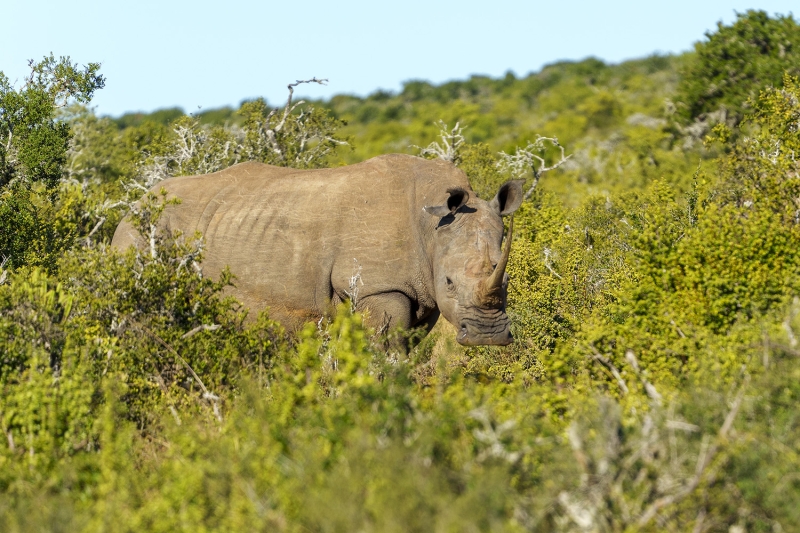
Doc Ndyawe is always on alert in case poachers target the black rhinos that browse the thickets along the Great Fish River in South Africa’s Eastern Cape province. But he worries more about another lurking danger: drought.
“It's wet here now, Kwandwe is looking beautiful,” says Ndyawe, a ranger at the 30,000-hectare Kwandwe Private Game Reserve. “But not even long ago, it was very dry here. Five years back it was almost like dust.”
The Eastern Cape still boasts the rhinos, elephants and big cats that draw international tourists, partly thanks to a growing drive to restore the dense thickets that once blanketed its valleys and plains.
At the heart of this push is spekboom (Portulacaria afra), a shrub or small tree that experts consider key to reviving vast areas extensively degraded by overgrazing, invasive species and drought, making both ecosystems and communities more resilient in the face of climate pressures.
This World Wildlife Day, which highlights the vital role of medicinal and aromatic plants in sustaining human health, cultural heritage and local livelihoods, South Africa’s thicket restoration movement shows how restoring native vegetation can deliver benefits for both human health and wildlife.
The thicket restoration initiative, which is creating hundreds of jobs in a region marked by poverty, unemployment and inequality, has been recognized by the United Nations as a World Restoration Flagship, an award given to outstanding efforts to restore nature and the critical benefits it provides to people.
“The thickets of the Eastern Cape are vital wildlife habitat, and they also underpin water security, food systems, sustainable livelihoods and climate resilience,” said Salman Hussain of the UN Environment Programme (UNEP). “Restoring them is one of the most powerful ecosystem-based approaches available to us. With sustained investment, we can protect biodiversity while strengthening communities and local economies.”
A plant with superpowers
South Africa’s thicket restoration movement brings together more than 60 initiatives with the goal of reviving an estimated 800,000 hectares of degraded land across the Eastern Cape by 2030. In 2025, it was named a flagship of the UN Decade of Ecosystem Restoration.
Some existing and largely small-scale efforts focus on the removal of invasive alien plant species and the introduction of more sustainable management regimes in degraded areas. Other initiatives, such as the Restoring Landscapes in South Africa project (ReLISA) funded by the German government and led by UNEP, are working to create the enabling conditions for restoration on a much larger scale, for instance by closing data gaps and leveraging significant public and private finance.
What many of these initiatives have in common is their reliance on spekboom, which has been dubbed a “miracle plant” for the many benefits it provides.
Spekboom’s ability to soak up and store water make it drought and fire resistant and a reliable source of fodder for both livestock and wildlife when other vegetation withers. Humans have also historically relied on the plant, sucking the moisture from its leaves to relieve thirst and avoid dehydration and using it to boost mothers’ milk and treat skin ailments.
As it grows, spekboom’s lower branches spread close to the ground, trapping leaf litter that enriches the soil and prevents erosion during downpours. Its roots let precious rain percolate into the ground. As if that wasn’t enough, it also boasts an outsized capacity to sequester carbon.
“It's considered an ecosystem engineer,” says Alastair Potts, a Professor of Ecology at Nelson Mandela University. “It fundamentally changes the nature of the soil in the thicket.”
According to Potts, generations of farmers let their livestock feed too heavily on the spekboom’s succulent leaves during times of need, unaware of its crucial ecological role in the landscape. As a result, only about 10 per cent of the thicket ecosystem remains intact.
Building financial muscle
So far, at least 10,000 hectares have been restored, “which is a fantastic number, but given the size of the problem, there's a lot more to do,” Potts said. “The great thing to see is that we're gaining momentum. There's a whole lot more buy-in across the landscape. There's a lot more investment going into the landscape, and we're seeing restoration efforts ballooning.”
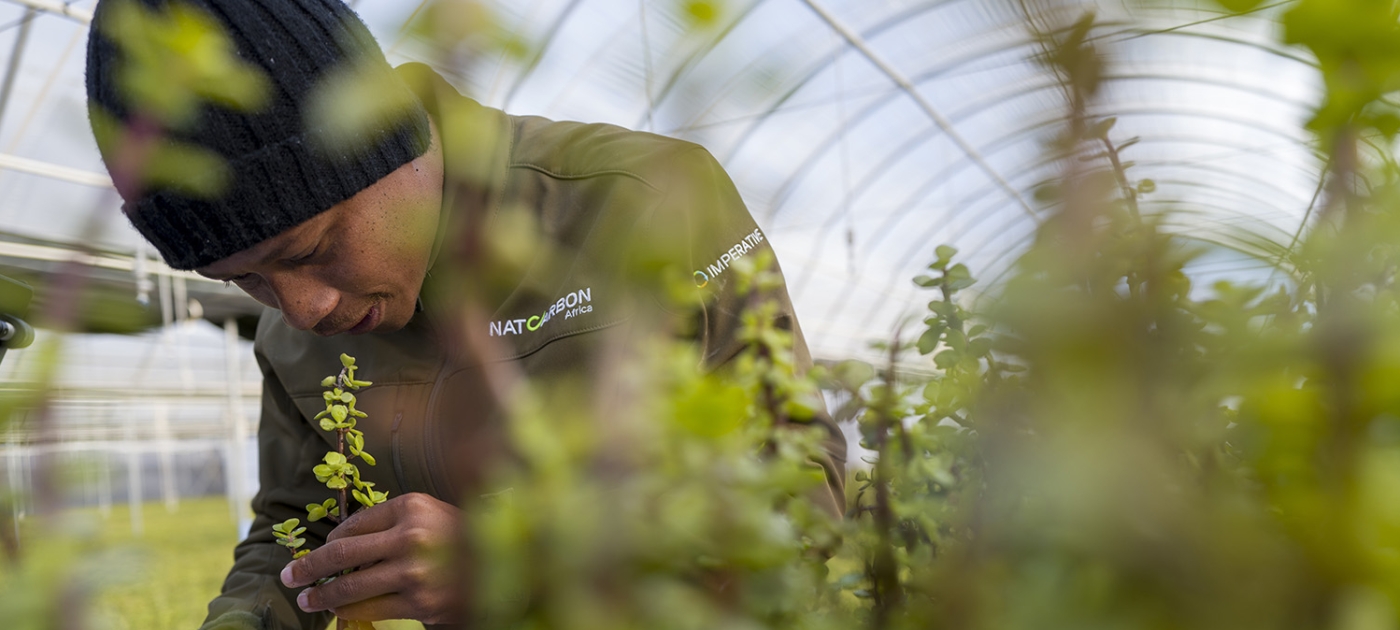
Some of the financial muscle needed is coming from nature-based finance, such as a project in the Eastern Cape restoring another 10,000 hectares near the town of Jansenville. At a nursery in the village of Klipplaat, Imperative, an international ecosystem restoration project developer working with its local partner, NatCarbon, has hired and trained scores of local community members to nurture the required spekboom cuttings.
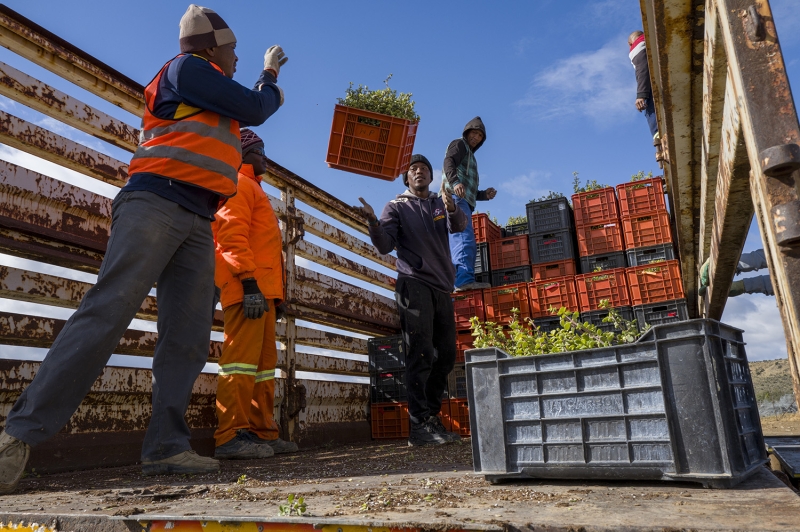
During a recent planting mission, employees in blue overalls and hi-vis vests used pickaxes to break the hard dry soil so that co-workers could plant the young shrubs. Team leader Stephane Molomba said the project was welcome in a place where jobs are hard to come by.
“Month by month – or whenever people are paid – then you see life returning to our village,” said Molomba.
Thousands more jobs are set to follow as ambitious projects unfold.
Imperative and NatCarbon, for example, hope to expand their project to restore a total of 100,000 hectares, sequestering the equivalent of an estimated 30 million tons of carbon. The ReLISA project, which launched in 2025, has already longlisted 11 landscapes in pursuit of its goal to restore a similar-sized area across South Africa, including subtropical thickets in two locations in the Eastern Cape, as well as areas in the grassland and savanna biomes.
Dreams for the future
Smaller-scale efforts are also making a difference.
Johannes de Lange said he began experimenting with spekboom more than 20 years ago after droughts made it nearly impossible to keep livestock on his farm near the town of Nqweba. Three years after planting, he said, restored plots were established enough to regularly provide fodder for cattle.
“But you mustn’t overgraze it,” he cautioned, explaining how he had learned to manage both the soil and the vegetation more carefully. “If you don't listen to nature you're going to damage the plants.”
De Lange said he wanted to leave his children with a farm in better condition than when he inherited it. “You must give back. And my way is to put as much spekboom into the soil as possible.”
Millions of spekboom cuttings are also being planted in and around the Kwandwe Private Game Reserve, which charges a levy from guests staying in its luxury cabins to fund both local development projects and the hard work of land restoration.
Potts, the ecologist, said he hoped that the growing restoration drive could ultimately reconnect fragments of intact habitat, allowing wildlife – including rhinos, elephants and big cats – to migrate more freely across the country.
“It might seem like an impossible dream, but it's an amazing thing to aim for because we're going to benefit from even just trying,” he said.
About the UN Decade on Ecosystem Restoration
The UN General Assembly has declared 2021–2030 a UN Decade on Ecosystem Restoration. Led by the UN Environment Programme and the Food and Agriculture Organization of the UN, together with the support of partners, it is designed to prevent, halt, and reverse the loss and degradation of ecosystems worldwide. It aims at reviving billions of hectares, covering terrestrial as well as aquatic ecosystems. A global call to action, the UN Decade draws together political support, scientific research, and financial muscle to massively scale up restoration.